

Key Takeaways
How Dealers Actually Appraise a Trade-In
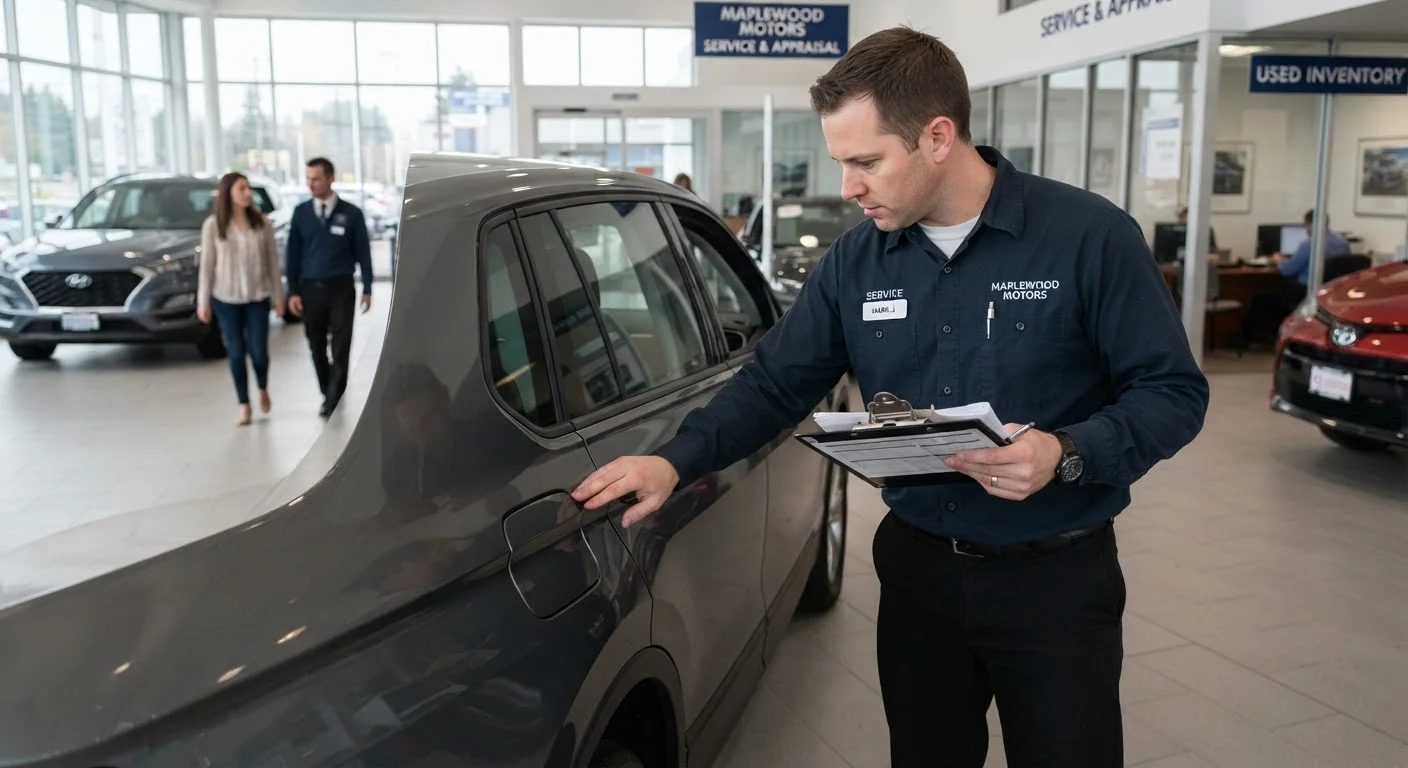
When a dealer appraises your vehicle, they're not calculating what it means to you — they're calculating what it will cost them to resell it. That gap between emotional value and market value is the source of most trade-in disappointment.
Appraisers typically consider four core factors: the vehicle's current wholesale market value (based on auction data and regional demand), its mechanical condition, its cosmetic condition, and how quickly similar vehicles are selling in their area. They then subtract estimated reconditioning costs — detailing, mechanical repairs, safety checks — plus their desired profit margin. The number they hand you reflects all of that math, not the price you've seen on a listing site for a similar model.
It's also worth knowing that dealers often sell trade-ins at auction rather than retailing them directly, particularly for older or high-mileage vehicles. That limits what they can offer, since auction prices run lower than retail. For a fuller picture of how this fits into your overall vehicle-shopping process, see the complete vehicle shopping overview.
Mistakes That Cost You Money on a Trade-In
Many owners unknowingly reduce their trade-in value — or misread the offer they receive — because of avoidable errors. Here are the most common ones.
Comparing the trade-in offer to retail listing prices rather than wholesale values.
Why it happens: Owners search listings for similar vehicles and assume those prices reflect what their car is worth to a buyer. Retail listings include dealer reconditioning, overhead, and profit margin.
Neglecting to address mechanical issues before the appraisal.
Why it happens: Owners often assume the dealer will factor in issues at face value. In practice, dealers apply a conservative repair estimate — sometimes higher than an independent shop would charge — and deduct it from the offer.
Accepting the first trade-in offer without seeking competing quotes.
Why it happens: Many buyers are focused on closing the new vehicle deal and treat the trade-in as a secondary transaction. This gives a single appraiser undue influence over the final number.
Presenting the vehicle without service records or ownership history.
Why it happens: Owners assume the vehicle's condition speaks for itself and don't think to gather documentation. Appraisers, however, factor in uncertainty — and no records means higher assumed risk.
Negotiating the trade-in and new vehicle price as a single bundled number.
Why it happens: Dealers sometimes present the deal this way, making it harder to evaluate whether the trade-in offer or the new vehicle price is favorable. Buyers focused on the monthly payment may not notice.
What You Can Do Before the Appraisal
Preparation matters. A vehicle that presents well — clean interior, no warning lights on the dash, service records in hand — signals lower reconditioning costs to an appraiser, which can translate to a stronger offer.
Avoid Over-Investing in Pre-Sale Repairs
Not every repair increases a trade-in offer by more than it costs. Major mechanical work — engine or transmission rebuilds, for instance — rarely returns full value in a trade-in context. Focus on repairs that directly affect drivability or safety, and consult an independent mechanic before committing to significant expense.
Gather your maintenance records before the appraisal. Even informal records (receipts, notes with dates and mileage) demonstrate that the vehicle has been cared for. Address minor cosmetic fixes that are inexpensive but visually impactful — a cracked trim piece or a dirty engine bay can suggest neglect even when the car is mechanically sound.
Most importantly, get more than one offer. Independent used-car retailers, online vehicle-buying platforms, and private-party sales each operate under different pricing models. Comparing offers gives you a real market range rather than one data point. Once you have that range, you're in a much stronger position — whether you trade in or sell privately. You may also find our guide on negotiating a car price useful when deciding how to use your trade-in as a bargaining point.