

| Number of terms defined | 30 budgeting terms |
| Primary audience | Everyday American consumers building or refining a budget |
| Most commonly misunderstood term | Discretionary income (often confused with total income) |
| Two core budget categories | Fixed expenses and variable expenses |
| Popular budgeting rule of thumb | 50/30/20 (needs/wants/savings) |
Why Budgeting Vocabulary Matters
You can't build a budget you don't understand. Terms like discretionary income, zero-based budgeting, and sinking fund appear constantly in personal finance articles, apps, and conversations — but they're rarely defined. This glossary fills that gap.
Whether you're setting up your first spending plan or refining one you've had for years, having a working vocabulary makes the whole process faster and less frustrating. These 30 terms cover the concepts you're most likely to encounter. For broader financial vocabulary — APR, net worth, liquidity, and more — see our plain-language financial terms guide.
| Number of terms defined | 30 budgeting terms |
| Primary audience | Everyday American consumers building or refining a budget |
| Most commonly misunderstood term | Discretionary income (often confused with total income) |
| Two core budget categories | Fixed expenses and variable expenses |
| Popular budgeting rule of thumb | 50/30/20 (needs/wants/savings) |
Core Budget Terms: The Essentials
These are the foundational concepts that underpin nearly every budgeting conversation.
Gross Income
Your total earnings before any taxes or deductions are taken out. This is the number on your offer letter or contract, not what lands in your bank account.
Net Income
Your take-home pay after taxes, insurance premiums, and other deductions. This is the figure your budget should be built around.
Fixed Expense
A recurring cost that stays the same each month, such as rent, a car loan payment, or a subscription. Easy to plan for because the amount doesn't change.
Variable Expense
A cost that fluctuates month to month, like groceries, gas, or utilities. Variable expenses require regular monitoring since they can creep up unexpectedly.
Discretionary Income
Money left over after paying for necessities like housing, food, and transportation. This is the portion of your budget you have the most control over.
Non-Discretionary Expense
Essential costs you cannot reasonably eliminate — rent, utilities, loan minimums, insurance premiums. These come first in any responsible budget.
Zero-Based Budgeting
A method where every dollar of income is assigned a job — spending, saving, or debt repayment — so income minus expenses equals zero at month's end. No dollar sits unaccounted for.
50/30/20 Rule
A budgeting guideline suggesting 50% of net income go to needs, 30% to wants, and 20% to savings and debt repayment. It's a rough framework, not a hard rule.
Emergency Fund
A dedicated pool of savings set aside for unexpected financial shocks — job loss, medical bills, car repairs. Typically kept in a liquid, accessible account.
Pay Yourself First
A savings strategy where you transfer money to savings or investments before spending on anything else. It treats saving as a non-negotiable expense rather than an afterthought.
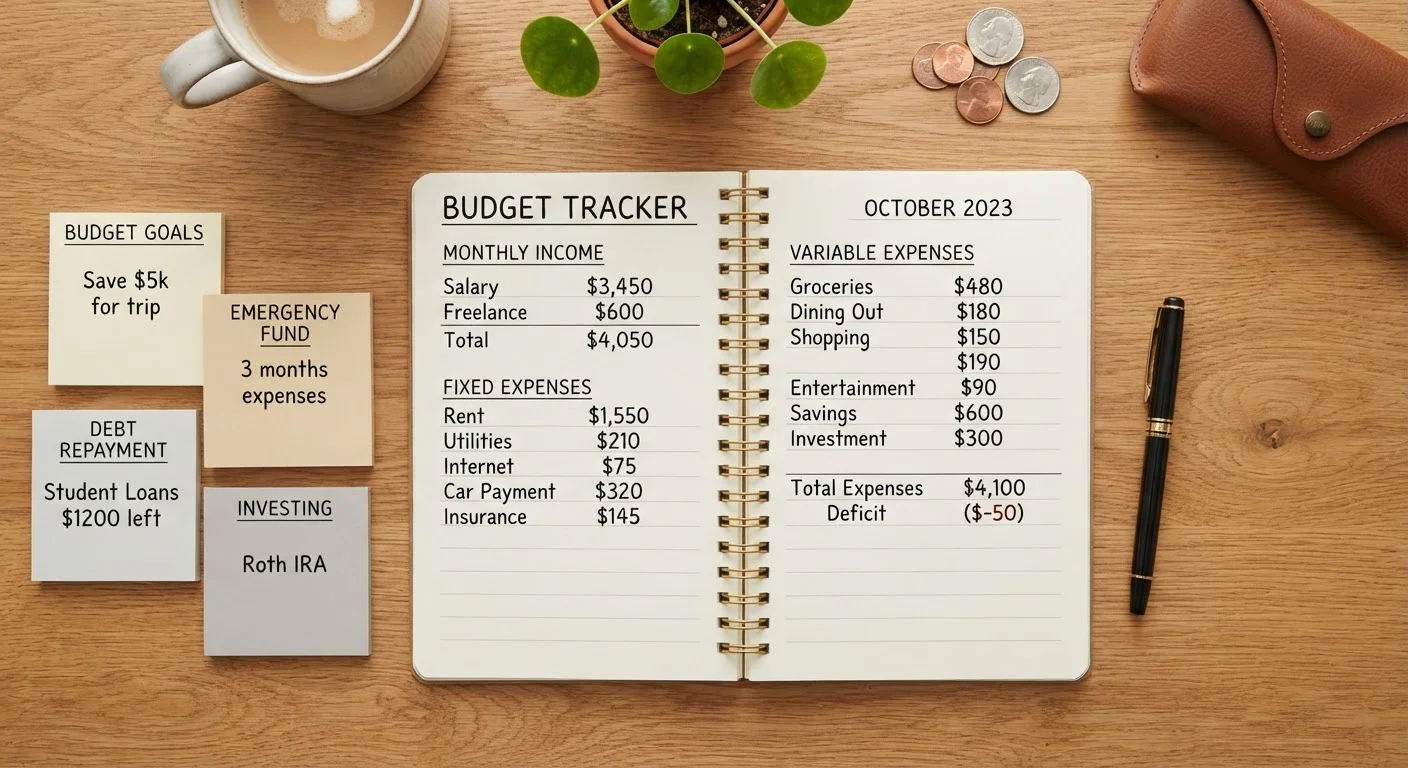
Budget Deficit
When your spending exceeds your income in a given period. A recurring deficit signals a need to either cut expenses or increase income.
Budget Surplus
When your income exceeds your spending. A surplus is an opportunity to accelerate savings, pay down debt, or build a buffer for future months.
Once you're comfortable with these basics, it's worth exploring how different frameworks put them to work. Different budget methods suit different lifestyles — from envelope budgeting to pay-yourself-first approaches.
If you've ever told yourself budgeting isn't for people in your situation, check out common budgeting myths examined and corrected. Many of the most persistent beliefs about budgeting simply aren't true.
Savings and Debt Terms You'll Run Into
Once a budget is running, the next questions usually involve saving and debt payoff. These terms come up constantly in both areas.
~57%
Americans who report living paycheck to paycheck
According to a 2023 LendingClub report tracking U.S. consumer financial health.
3–6 months
Recommended emergency fund coverage
A widely cited guideline from financial educators; actual needs vary by household.
$6,000+
Average American household credit card balance
Based on Federal Reserve consumer credit data; balances vary significantly by income and region.
Sinking fund: Money set aside over time for a known future expense — like car insurance renewal or holiday gifts. Unlike an emergency fund, a sinking fund targets a predictable cost.
Debt avalanche: A payoff strategy where you target the highest-interest debt first while making minimum payments on the rest. Mathematically efficient.
Debt snowball: A payoff strategy that targets the smallest balance first, regardless of interest rate. Psychologically motivating for many people.
Liquidity: How quickly an asset can be converted to cash. A savings account is highly liquid; a house is not.
For a deeper look at saving and debt concepts, the Saving & Debt hub and key saving and debt terms glossary are good next steps.
Debt Strategies Are Not One-Size-Fits-All
The debt avalanche saves the most in interest mathematically, but the debt snowball works better for many people who need motivational wins to stay on track. Neither is objectively correct — the best strategy is the one you'll stick with. Consider your own habits and psychology when choosing an approach, and consult a financial professional if your debt situation is complex.
Putting These Terms Into Practice
Knowing definitions is a starting point, not an end. The goal is to move from understanding terms to applying them in your own financial life. A few practical notes:
- Track before you categorize. Before labeling spending as discretionary or non-discretionary, spend at least one month recording what you actually spend.
- Build your emergency fund first. Most financial educators suggest having three to six months of essential expenses accessible before aggressively tackling other goals — though your situation may differ.
- Use sinking funds proactively. For any expense you can anticipate — annual subscriptions, car registration, back-to-school costs — a sinking fund prevents it from disrupting your monthly budget.
For everyday habits that support a working budget, Everyday Money Moves offers practical, actionable guidance without the jargon.
This article is for general informational and educational purposes only. It does not constitute personalized financial, tax, or legal advice. Consult a qualified financial professional for guidance specific to your circumstances.