

Key Takeaways
Start here
Why a Versatile Wardrobe Beats a Full One
Next
Set a Realistic Wardrobe Budget
Then
The Foundation Pieces to Prioritize First
Apply it
Building Outfits, Not Just Buying Clothes
Refine
How to Choose Colors That Work Together
Stay on track
Common Mistakes to Avoid
Why a Versatile Wardrobe Beats a Full One
There's a common assumption that more clothes means more options — but anyone who's stood in front of a packed closet feeling like they have nothing to wear knows that's not quite right. A versatile wardrobe is built on a different principle: every piece works with multiple others, so your options multiply without your closet growing endlessly.
This approach is especially powerful when you're starting from scratch, because it gives you a clear framework for every purchase decision. Rather than accumulating clothes reactively — grabbing whatever catches your eye on a given day — you're building a system. The result is a closet that feels manageable, gets used fully, and actually reflects your life.
For a deeper look at the full picture of dressing well day to day, the Everyday Fashion from Wardrobe Foundation to Finishing Details guide covers everything from fit and fabric to outfit building and care.
Capsule wardrobe
A small, curated collection of clothes designed so that every piece works with the others, reducing decision fatigue and creating many outfit options from few items.
Foundation pieces
Core wardrobe items — like basic tops, versatile bottoms, and layering pieces — that form the backbone of your outfits and get the most regular use.
Neutral palette
A group of low-saturation colors (such as white, black, navy, grey, and tan) that pair easily with most other colors and serve as a flexible wardrobe base.
Outfit cost-per-wear
The idea that a piece's true value comes from how often you actually wear it — a more expensive item worn frequently can cost less per use than a cheap item worn rarely.
Silhouette
The overall shape or outline of a garment — classic silhouettes tend to remain stylish over time, while trend-driven ones can look dated more quickly.
Set a Realistic Wardrobe Budget
Before you buy a single item, decide how much you're willing to spend in total — and give yourself a timeline. Trying to build a complete wardrobe in one shopping trip often leads to rushed decisions, buyer's remorse, and pieces that don't actually integrate well together.
A more effective approach is to divide your budget into phases. Allocate the largest portion to foundation pieces — the items you'll wear most often and that form the backbone of your outfits. Set aside a smaller amount for secondary pieces, and leave a little room for seasonal additions over time. For general guidance on structuring your spending, the Budgeting Basics hub offers practical frameworks that apply just as well to wardrobe planning as to any other spending category.
Phase Your Spending for Better Decisions
Rather than spending your full budget at once, try setting a soft cap for your first shopping round — enough to cover three to five foundation pieces. Live with those for a few weeks before the next round. This real-world testing period reveals what you actually reach for versus what sounded good in theory, and it makes every subsequent purchase smarter.
The Foundation Pieces to Prioritize First
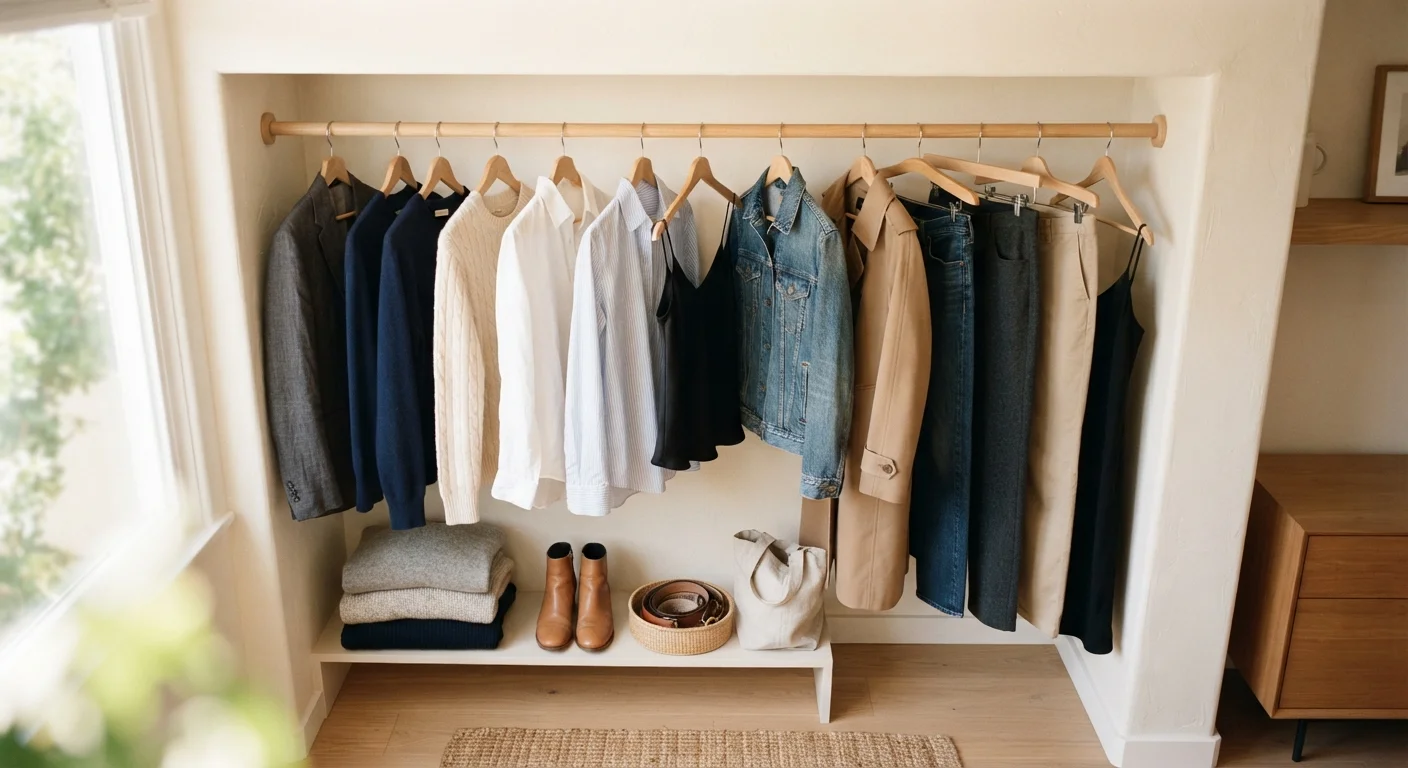
Foundation pieces are the workhorses of a versatile wardrobe — items you reach for repeatedly because they're comfortable, well-fitting, and easy to combine. When starting from scratch, these deserve your attention and budget first.
- Well-fitting bottoms: A pair of dark trousers and a pair of jeans in a classic cut cover a wide range of occasions.
- Simple tops: Crew-neck or V-neck tees and a button-front shirt in neutral tones layer easily and dress up or down.
- A layering piece: A cardigan, lightweight sweater, or denim jacket extends your temperature range and adds visual interest.
- Versatile shoes: One pair of clean, simple everyday shoes and one that handles more dressed-up occasions covers most situations.
- A functional outer layer: A coat or jacket appropriate for your climate that complements multiple outfits.
Once these are in place, you'll find that wardrobe essentials that transition across seasons naturally slot in as the next logical additions.
How to Choose Colors That Work Together
Color is where many people accidentally make their wardrobe less versatile. Buying pieces in lots of different, unrelated colors feels exciting in the store but creates coordination puzzles at home.
A practical approach: build your foundation in neutrals — think white, black, grey, navy, tan, and camel — and then choose one or two accent colors that genuinely appeal to you and appear in multiple pieces. This way, almost everything you own can combine with almost everything else.
Skin Tone and Undertone Are Worth Knowing
Certain colors tend to complement different skin tones and undertones — warm, cool, or neutral. This isn't a strict rule, but knowing roughly which tones make you look more energized can guide your accent color choices. If you're unsure, simply notice which colors earn you compliments most often and look for more pieces in that family.
The goal isn't a boring, monochrome closet — it's a cohesive one. Patterns, textures, and that accent color you love are what make it feel like yours.
Building Outfits, Not Just Buying Clothes
The mindset shift that makes the biggest difference: stop shopping for individual items and start shopping for outfits. Before anything makes it into your cart, ask yourself how many distinct combinations it creates with what you already own. A piece that works with three existing items is worth far more than one that only works alone.
Try the three-outfit test — if you can't quickly picture at least three ways to wear something, reconsider. Once your foundation is in place, you might be surprised how many looks you can create. The Getting More Outfits from Fewer Pieces guide dives deep into practical mix-and-match strategies that stretch a modest wardrobe further.
Common Mistakes to Avoid
Even with the best intentions, a few missteps can derail a wardrobe build early on. Watch out for these:
- Buying for an imagined life: If you work from home five days a week, buying formal attire because it seems impressive rarely pays off. Buy for the life you actually live.
- Ignoring fit: A well-fitting piece at any price point will look more polished than an ill-fitting one at any price point. Fit is non-negotiable.
- Skipping the audit step: If you have any existing clothes, taking stock of what you own before buying anything new is essential. The Closet Audit guide walks through exactly how to do this.
- Chasing trends too early: Trend pieces are fun once your foundation is solid, but they can feel out of place — and out of date quickly — when they're carrying too much weight in your closet.
Don't Let Perfect Be the Enemy of Started
Waiting until you can afford the "ideal" version of every piece often means wearing nothing functional in the meantime. A modest, practical wardrobe you actually use is far more valuable than a theoretical perfect one. Start with what you can, and upgrade gradually as your needs and budget allow.
Building a wardrobe from scratch is genuinely exciting when approached with patience. Each intentional addition moves you closer to a closet that works for you every single day.