

Key Takeaways
What Mold Actually Needs to Survive
Mold is a fungus, and like all living organisms, it has specific requirements for growth. Understanding these requirements is the foundation of effective prevention. Mold needs four things: moisture, a food source (any organic material, including drywall paper, wood, and dust), oxygen, and temperatures roughly between 40°F and 100°F — a range that covers most of the interior of a typical American home.
Of these four, moisture is the variable homeowners have the most control over. Mold spores are naturally present in virtually all indoor and outdoor air. They become a problem only when they land on a surface with adequate moisture and begin to germinate. Relative indoor humidity above 60% creates favorable conditions; most building science guidance suggests keeping indoor humidity between 30% and 50% to meaningfully reduce mold risk.
This is why ventilation matters so much. By moving humid air out of the home and replacing it with drier air, ventilation directly attacks the single most controllable growth requirement.
Myth
If a surface looks dry, mold can't grow on it.
Fact
Mold can grow on surfaces that feel dry to the touch if moisture is trapped beneath, such as inside walls or under flooring.
Hidden moisture is one of the most common causes of surprise mold discoveries during renovations. A slow pipe leak, condensation on a cold wall, or water infiltration through a foundation can saturate building materials on the inside while the visible surface appears perfectly dry. Moisture meters — available at most hardware stores — allow homeowners and inspectors to detect elevated moisture levels behind walls without opening them up. Visible dryness is not a reliable indicator of mold-safe conditions.
Myth
Bleach kills mold completely and prevents it from coming back.
Fact
Bleach can disinfect mold on non-porous surfaces, but it does not penetrate porous materials and does not address the moisture source causing regrowth.
On tile grout or glass, a diluted bleach solution can be effective at removing visible mold. But on drywall, wood, or grout that has absorbed mold deeply, bleach's active ingredient (sodium hypochlorite) does not fully penetrate the material. The water in the solution can actually add surface moisture, feeding remaining spores. More importantly, mold that returns within weeks of treatment almost always signals an unresolved moisture problem — poor ventilation, a slow leak, or chronic condensation. Treating the surface without fixing the underlying moisture issue means mold will reliably return.
Myth
Opening windows is enough to prevent mold year-round.
Fact
Opening windows can increase indoor humidity in warm, humid climates, sometimes making mold conditions worse rather than better.
Ventilation strategy has to account for outdoor conditions. In humid summer months across much of the US South and Mid-Atlantic, outdoor air can carry more moisture than the conditioned air already inside the home. Letting that air in raises indoor relative humidity and can accelerate mold growth. In these conditions, mechanical ventilation paired with air conditioning — which both cools and dehumidifies — is far more effective than simply opening windows. In dry climates or during cooler seasons, window ventilation can be genuinely helpful. The right approach depends on your climate and the season.
Myth
Mold only grows in visibly dirty or neglected homes.
Fact
Mold growth is driven by moisture and airflow, not cleanliness — well-maintained homes can develop mold if ventilation is inadequate.
This misconception carries a stigma that can cause homeowners to feel embarrassed about mold rather than treating it as the structural and environmental issue it actually is. New construction is not immune; in fact, tightly sealed modern homes with superior insulation sometimes have worse ventilation than older, drafty homes, creating conditions where moisture accumulates more readily. A spotless home with a poorly vented bathroom or a minor plumbing condensation issue can develop a mold problem just as easily as a less-maintained property.
Myth
All mold is equally dangerous and any amount requires professional remediation.
Fact
Mold species and health risks vary widely; small contained patches can often be safely addressed by homeowners following proper safety protocols.
The term "toxic mold" is often applied broadly and inaccurately in public conversation. While certain mold species — such as Stachybotrys chartarum — can produce mycotoxins and are associated with more serious health concerns, the vast majority of household mold is not this species. The US Environmental Protection Agency (EPA) has published guidance indicating that small mold areas (under roughly 10 square feet) in a single location can generally be handled by a careful homeowner using appropriate personal protective equipment. Persons with respiratory conditions, allergies, or compromised immune systems should take extra precautions and consult a healthcare professional before attempting any mold remediation.
How to Use Ventilation as a Practical Defense
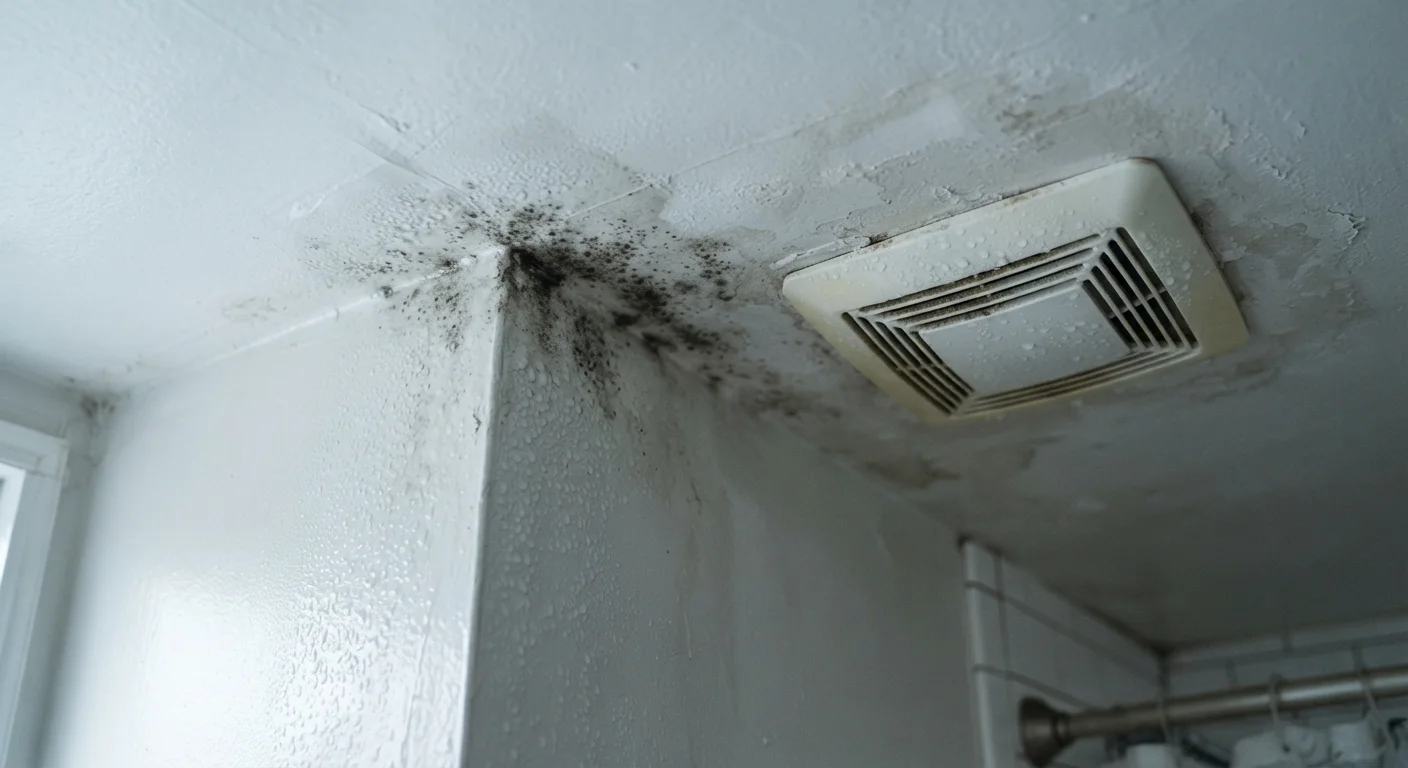
Ventilation works in two ways: it exhausts moisture-laden air before it can condense on surfaces, and it reduces the overall indoor humidity that mold needs to thrive. The key spaces to prioritize are bathrooms, kitchens, laundry rooms, and basements — all high-moisture zones where mold most commonly appears.
50%
US homes with some dampness or mold
Research published in Indoor Air has estimated that roughly half of US homes have conditions conducive to mold or dust mite growth, pointing to how widespread the issue is.
30–50%
Recommended indoor relative humidity range
ASHRAE (the American Society of Heating, Refrigerating and Air-Conditioning Engineers) identifies this range as optimal for limiting mold growth while maintaining indoor comfort.
Bathroom exhaust fans should run during every shower or bath and continue for at least 15–20 minutes afterward to clear residual steam. Many homeowners run them only during the shower, which is not long enough for moisture to fully evacuate. In kitchens, range hood fans vent both cooking moisture and combustion byproducts from gas stoves — using them while cooking makes a measurable difference.
Crawl spaces and attics deserve specific attention. Inadequate airflow in crawl spaces allows ground moisture to accumulate; a vapor barrier combined with cross-ventilation or a mechanical dehumidifier is the standard approach in humid climates. Attics need sufficient soffit-to-ridge ventilation to prevent warm, moist air from condensing on the underside of roof sheathing — a common but often overlooked mold site.
Know When to Call a Professional
If mold covers more than 10 square feet, is present in your HVAC system, or appears after flooding, do not attempt DIY remediation. Disturbing large mold colonies without professional containment can spread spores to unaffected areas of the home. A certified industrial hygienist or mold remediation contractor can assess the scope and recommend a safe plan. Check that any contractor you hire follows EPA or IICRC S520 standard protocols.
For homeowners dealing with a mold patch smaller than about 10 square feet, the EPA's general guidance allows for careful DIY cleaning using protective gear (gloves, an N-95 respirator, and eye protection). Larger areas, or any mold found in HVAC systems, should be assessed by a certified mold inspector or remediation professional. Disturbing large mold colonies without proper containment can spread spores throughout the home.
This article is for general informational purposes only and does not constitute professional mold remediation, construction, or health advice. Local building codes, humidity conditions, and home construction types vary significantly. Consult a licensed contractor or certified indoor air quality professional for guidance specific to your home.