

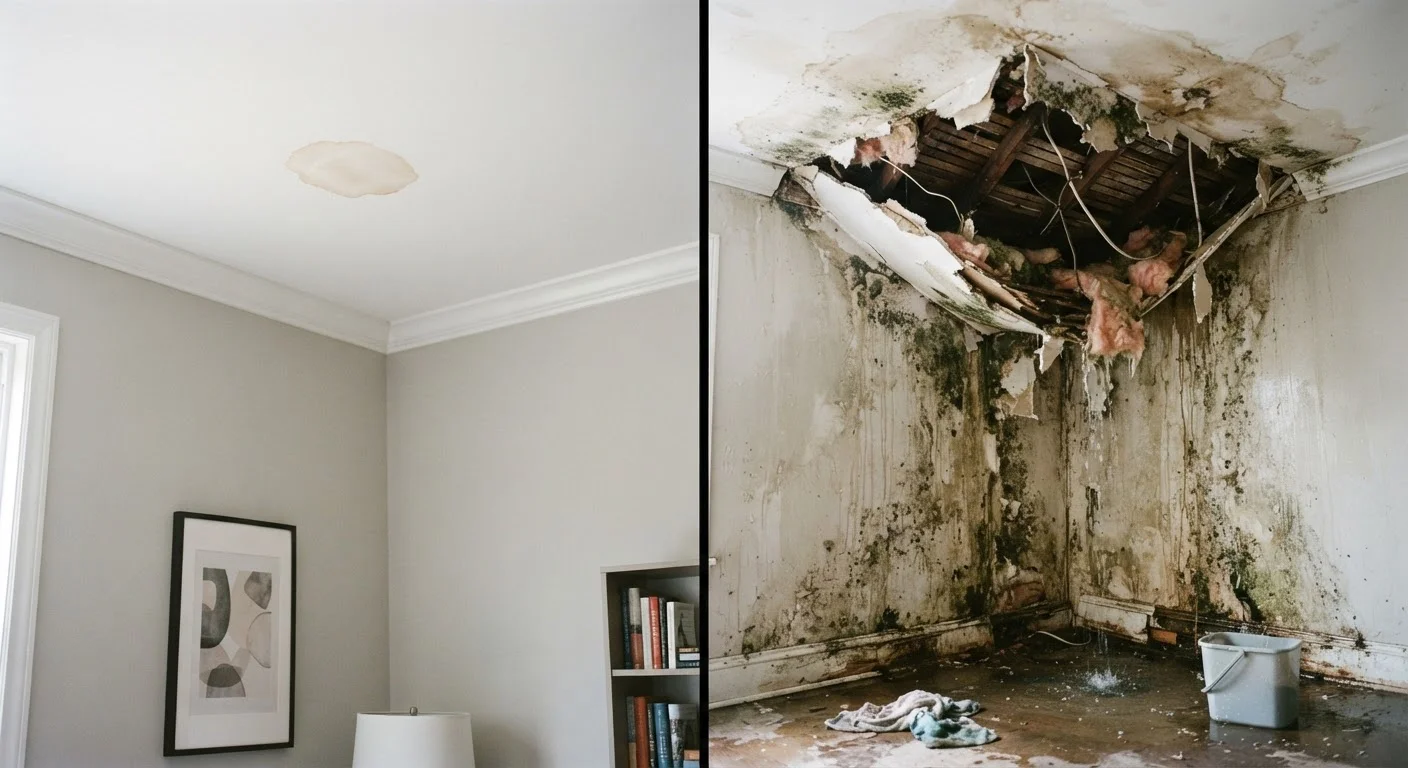
Key Takeaways
Deferred Maintenance
Deferred maintenance refers to upkeep tasks that a homeowner postpones or skips rather than addressing on schedule. These are repairs or inspections that aren't emergencies yet — but become more expensive the longer they wait. The word "deferred" simply means delayed, but in home ownership, delay almost always means added cost.
In real estate appraisal and inspection reports, deferred maintenance is a formal term used to describe visible neglect that affects a property's condition rating and market value.
The Real Cost of Putting Things Off
Most homeowners don't skip maintenance out of carelessness. A leaking gutter in October feels manageable when winter bills are looming. A cracked caulk line around a window seems minor until it isn't. The logic of "I'll get to it later" is understandable — but it carries a hidden financial penalty that grows over time.
Deferred maintenance rarely stays contained. A small problem left alone tends to involve neighboring systems, materials, and structures. That's what makes it economically different from simply delaying a discretionary purchase.
1–4×
Cost multiplier for neglected repairs
Industry estimates from home inspection and contractor sources suggest that many deferred repairs cost several times more once secondary damage is factored in.
1–2%
Annual maintenance budget as share of home value
A widely cited homeownership guideline recommends setting aside 1–2% of a home's value each year for routine upkeep and maintenance reserves.
$5,000+
Average cost of water damage repair
According to restoration industry data, the average water damage repair — often stemming from preventable leaks or drainage failures — frequently exceeds $5,000.
Understanding why deferred maintenance is expensive — not just that it is — helps homeowners make better decisions about what to prioritize, even on a tight budget.
How Small Issues Become Large Repairs
The compounding nature of home damage follows a predictable pattern: a minor vulnerability exposes a secondary system, which then fails or degrades faster than it otherwise would. Water is the most common catalyst.
- Roof and flashing gaps allow moisture into the attic, which leads to insulation degradation, mold growth, and eventually compromised roof decking or ceiling joists.
- Clogged gutters cause water to pool against the foundation, contributing to basement seepage, efflorescence, or long-term settlement issues.
- HVAC filter neglect forces the system to work harder, shortening its lifespan and increasing energy costs well before a breakdown occurs.
- Deferred caulking and weatherstripping allows conditioned air to escape and outside moisture to enter, affecting both energy bills and interior finishes.
Each of these starts as a task that costs under a few hundred dollars. Ignored long enough, any one of them can generate repair bills in the thousands. For a deeper look at how exterior vulnerabilities escalate, see our overview of exterior maintenance tasks that protect structural integrity.
Why the Math Rarely Favors Waiting
From a purely financial standpoint, deferring maintenance is often a poor trade. You avoid a smaller, predictable cost — and expose yourself to a larger, unpredictable one. This mirrors the same logic that applies to skipped vehicle upkeep. As explored in our article on why deferred maintenance tends to cost more than the original repair, a modest service skipped today can generate a repair bill many times larger later.
Prioritize by Consequence, Not Visibility
When you can't address everything at once, focus first on issues involving water, structural systems, or heating and cooling. Cosmetic problems like chipped paint or a squeaky door are less urgent than a compromised roof seal or failing sump pump. Ranking tasks by potential consequence — not appearance — helps you allocate limited time and money more effectively.
For homeowners operating on tight margins, the challenge is real: an unexpected $4,000 HVAC replacement is harder to absorb than a $150 annual tune-up. This is precisely why building a maintenance reserve matters — not just as financial advice, but as a practical risk-reduction tool. Our home maintenance budget guide outlines approaches that work for a range of income levels.
If you're new to managing a home, your first year as a homeowner explains which tasks matter most and when to schedule them.
This article provides general home maintenance information for educational purposes. Costs vary by region, home age, and condition. Consult qualified contractors or inspectors for assessments specific to your property.