

Key Takeaways
Reading and Signing a Lease
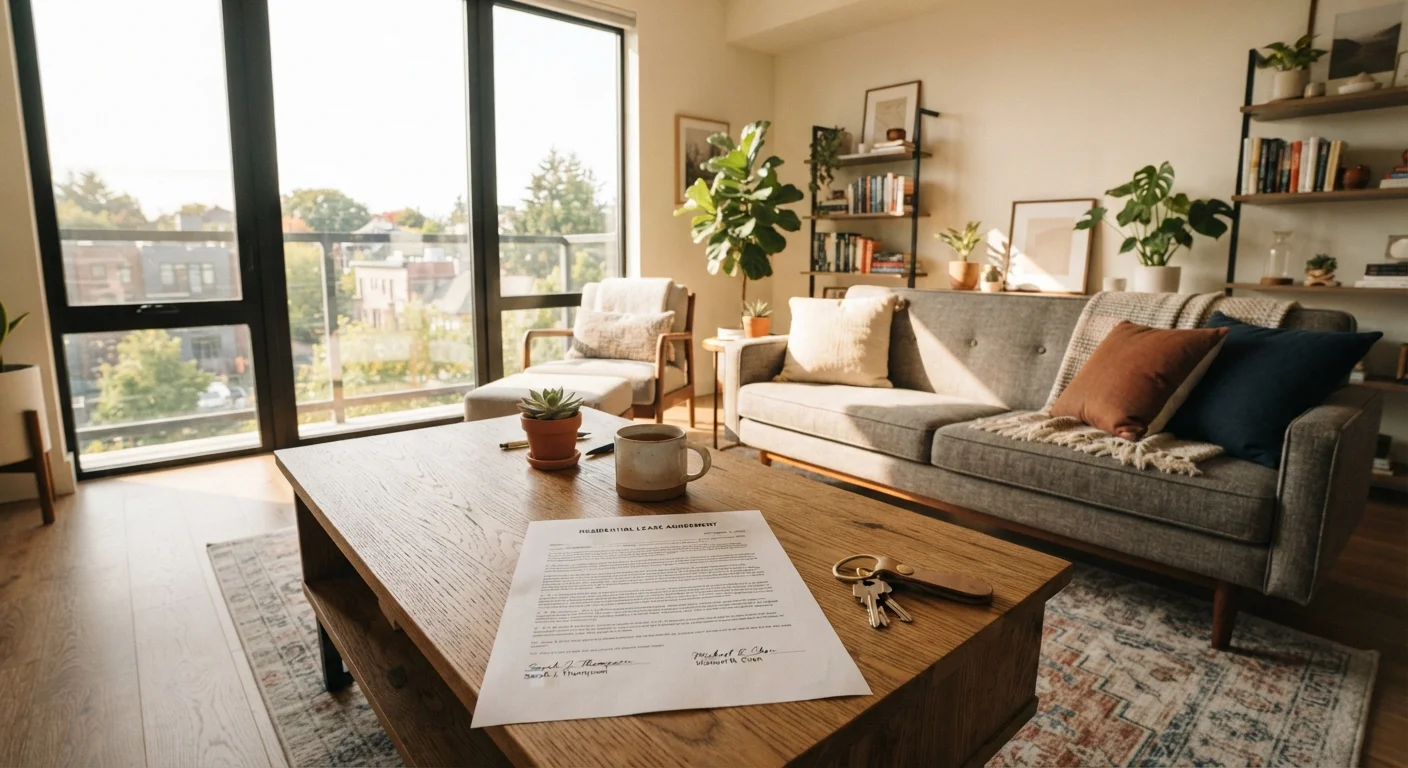
A lease is a legally binding contract, and every clause in it can be enforced against you in court. Before you sign, read the entire document — not just the rent amount and move-in date.
Pay close attention to these clauses:
- Rent amount and due date — Confirm the figure matches what was advertised and note any grace periods or late fees.
- Lease term — Fixed-term leases (commonly 12 months) lock in your rent but also your obligation to pay through the end. Month-to-month arrangements offer flexibility at a higher cost.
- Renewal and termination rules — Many leases auto-renew unless you give 30–60 days' written notice. Missing this window can cost you months of unwanted rent.
- Subletting policy — If you might need to sublet, verify the landlord's rules now, not when you're scrambling to leave.
- Pet and guest policies — Violations can lead to fines or eviction in some states.
- Maintenance responsibilities — The lease should state who handles lawn care, appliance repair, and pest control.
If something seems unreasonable, you can try to negotiate before signing. Ask for changes in writing and get any verbal promises added to the lease as an addendum — verbal agreements are nearly impossible to prove later.
Before signing, run the landlord's name and the property address through your county court's public records to check for past eviction filings or housing code violations.
A landlord with a pattern of disputes or code violations is a red flag that's far easier to avoid before signing than after.
Send a move-in condition report to your landlord via email within 48 hours of getting your keys, attaching your timestamped photos. If they don't dispute it, the record stands.
This single habit resolves the majority of security deposit arguments before they start, because the burden shifts to the landlord to prove damage occurred during your tenancy.
If you're still deciding between renting and buying, see our comparison of renting vs. buying for a full breakdown of the financial and lifestyle trade-offs.
Your Rights as a Renter
Federal and state law provides a baseline of protections for every renter in the US, regardless of what your lease says.
Federal Protections
- Fair Housing Act — Landlords cannot discriminate based on race, color, national origin, religion, sex, disability, or familial status. Many states extend this list to include sexual orientation and source of income.
- Implied warranty of habitability — This legal principle, recognized in nearly every state, requires landlords to maintain the property in a livable condition: working heat, plumbing, electricity, and no significant pest infestations.
State and Local Rights
Beyond federal law, your state may grant additional rights such as:
- Rent control or rent stabilization (in select cities and states)
- Right to repair and deduct (allowing tenants to fix habitability issues and subtract the cost from rent, subject to strict conditions)
- Retaliation protections — your landlord cannot raise your rent or threaten eviction because you filed a complaint
Don't Assume Federal Minimums Are Enough
Federal law sets a floor, not a ceiling. Tenant protections in states like California, New York, and Oregon are substantially broader than the federal baseline. Conversely, some states offer renters very few protections beyond federal law. Always look up your specific state and city rules before assuming what applies to you.
To learn your state's specific rules, search your state attorney general's website or look for your local housing authority. Laws vary significantly — what applies in California may not apply in Texas.
Security Deposits: What the Law Requires
Security deposits are among the most common sources of conflict between renters and landlords. Understanding the rules in advance puts you in a much stronger position.
44M+
Renter households in the US
According to US Census Bureau data, more than 44 million households rent their primary residence.
~$200
Average disputed deposit per renter
Tenant advocacy organizations commonly report that improper deposit deductions are among the most frequent renter complaints filed with housing agencies.
14–30 days
Typical deposit return window by law
Most US states require landlords to return security deposits within 14 to 30 days of move-out, with itemized deductions.
How Much Can a Landlord Charge?
Most states cap security deposits at one to two months' rent, though some have no cap at all. Always confirm your state's limit before handing over money.
What Can Be Deducted?
Landlords may generally deduct for:
- Unpaid rent
- Damage beyond normal wear and tear (defined as the ordinary deterioration from everyday use)
- Cleaning costs if the unit is left significantly dirtier than it was received
Landlords cannot deduct for pre-existing damage or normal aging of carpets, paint, and fixtures.
Return Timelines
State law typically requires landlords to return the deposit — along with an itemized list of deductions — within 14 to 30 days of move-out. Failure to meet this deadline can result in the landlord forfeiting their right to any deductions and, in some states, paying the tenant double or triple the deposit amount as a penalty.
Protect Your Deposit Before Moving In
On move-in day, photograph every room, appliance, and surface — including inside cabinets and closets. Email the photos to your landlord immediately so they are timestamped and on record. This simple step is your strongest evidence if deductions are disputed at move-out.
Handling Disputes with Your Landlord
Most rental disputes can be resolved without lawyers or courts — but only if you handle them correctly from the start.
Step 1: Document Everything
From day one, photograph the entire unit before you move in and share the images with your landlord via email, creating a time-stamped record. Keep every written communication — emails, texts, and formal letters. Clear, documented communication is the single most effective way to prevent disputes from escalating.
Step 2: Communicate in Writing
When a problem arises — a broken heater, a mold issue, an unauthorized fee — report it in writing and keep a copy. Verbal complaints leave no trail. Written complaints create a legal record.
Step 3: Escalate Methodically
If the landlord does not respond within a reasonable timeframe, your options include:
- Filing a complaint with your local housing authority or code enforcement office
- Contacting a tenant rights organization or legal aid clinic (many offer free advice)
- Filing in small claims court for monetary disputes, typically up to $5,000–$10,000 depending on the state
Never Withhold Rent Without Legal Guidance
Withholding rent — even when a landlord has failed to make repairs — can put you at risk of eviction if not done through a legally recognized process. Some states allow rent escrow or repair-and-deduct procedures, but they come with strict procedural requirements. Consult a tenant rights organization or attorney before taking this step.
Eviction Defense
If you receive an eviction notice, do not ignore it. Read it carefully — it must state a legal reason (non-payment, lease violation, or end of tenancy) and give you a specific number of days to respond or remedy the situation. Contact a local tenant legal aid organization immediately if you believe the eviction is wrongful.
Moving Out and Leaving Cleanly
How you leave a rental shapes your deposit return and your rental history — both of which follow you to your next home.
Give Proper Notice
Check your lease for the required notice period — typically 30 to 60 days in writing. Send your notice via email or certified mail so you have a timestamped record of delivery.
Request a Move-Out Walkthrough
Ask your landlord to walk through the unit with you before your final day. This gives you an opportunity to address any concerns on the spot and document the condition of the unit together. Some landlords will decline — if so, conduct your own detailed photo and video documentation on move-out day.
Clean and Repair Thoughtfully
Fill small nail holes, clean appliances, and return the unit to the condition you received it. You are not responsible for repainting walls that simply show age, but you may be charged for large scuffs or gouged surfaces.
Forward Your Address
Give the landlord your forwarding address in writing. In most states, a landlord must send the deposit return (and any deduction itemization) to your last known address — if they can't reach you, that can complicate your recovery of funds.
If you're thinking ahead to homeownership after renting, the home buying hub covers the full process from mortgage basics to closing day. Managing the savings needed for a down payment is explored in our saving and debt resources.
This article provides general information about renting in the United States and is not legal advice. Landlord-tenant laws vary significantly by state and locality. Consult a licensed attorney or local tenant rights organization for guidance specific to your situation.