

Key Takeaways
Credit Score
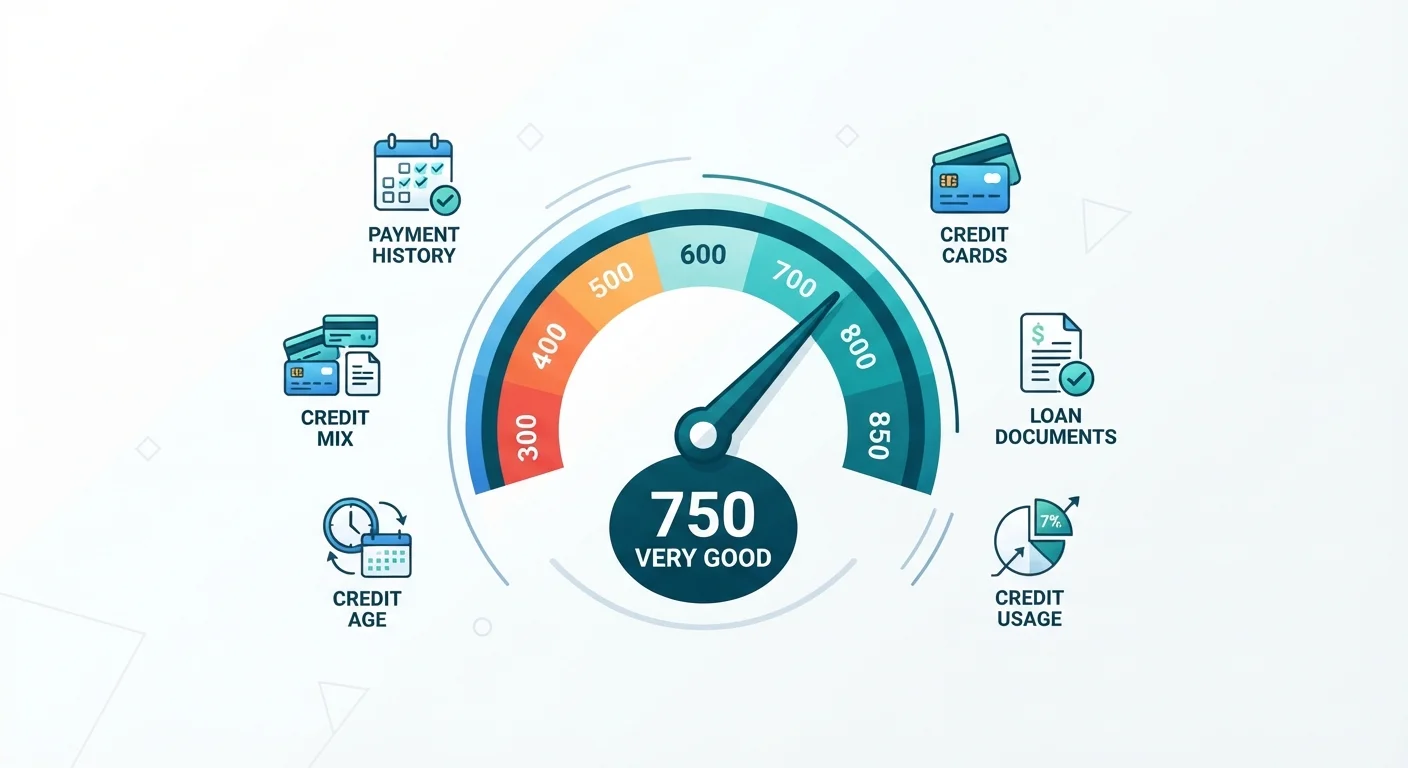
A credit score is a three-digit number — most commonly ranging from 300 to 850 — that summarizes how reliably you have managed borrowed money based on your credit history. Lenders use it to help decide whether to extend credit and at what interest rate. The higher the score, the lower the perceived risk to the lender.
The most widely used scoring model in the U.S. is the FICO® Score. VantageScore is also used by some lenders. Both draw from the same credit bureau data but weight the underlying factors somewhat differently.
How a Credit Score Is Built
The most widely used credit scores in the U.S. — FICO® scores — range from 300 to 850 and are derived entirely from data in your credit report. That data is organized into five weighted factors:
- Payment history (35%): Whether you pay on time. This single factor carries the most weight; a consistent record of on-time payments is the strongest foundation a borrower can build.
- Amounts owed (30%): How much of your available revolving credit you're currently using — commonly called credit utilization. Lower utilization generally correlates with a stronger score.
- Length of credit history (15%): How long your accounts have been open, including your oldest account and the average age of all accounts combined.
- Credit mix (10%): The variety of account types you carry — credit cards, auto loans, student loans, mortgages, and similar products.
- New credit (10%): Recent applications for credit. Each hard inquiry from a lender can cause a small, temporary dip.
35%
Weight of payment history in a FICO score
According to FICO, payment history is the single largest factor in standard FICO score calculations.
30%
Weight of credit utilization in a FICO score
FICO designates amounts owed — which includes your credit utilization ratio — as the second-largest scoring factor.
300–850
Standard FICO score range
FICO scores are the most widely used credit scoring model among U.S. lenders, with higher scores indicating lower perceived credit risk.
Recognizing these weights gives you a practical map for where your efforts carry the most leverage — and which factors are largely outside your short-term control.
What Your Score Doesn't See
Here's what surprises many people: your credit score has no visibility into your income, savings, investments, or net worth. A high earner who never uses credit could have no score at all. Someone with a modest income and a spotless repayment record could have an excellent one.
Standard credit scores also ignore:
- Cash held in checking, savings, or investment accounts
- Whether you pay rent, utilities, or phone bills on time — in most cases, though some opt-in programs are beginning to incorporate rent payment data
- Day-to-day spending behavior, unless it eventually leads to missed payments
- Total personal assets or net worth
Treating your credit score as a broad measure of financial health is a common mistake. It measures one narrow thing: how reliably you've managed debt over time. For a fuller grounding in the money concepts that shape your actual financial picture, our plain-language glossary of financial terms covers the wider landscape.
FICO vs. VantageScore: Same Data, Different Math
The two dominant credit scoring systems in the U.S. are FICO and VantageScore. Both pull from the same credit bureau data at Equifax, Experian, and TransUnion, but they apply different weighting formulas and may produce different numbers for the same person. Most major lenders rely primarily on FICO scores, while many free credit monitoring services use VantageScore. Knowing which model you're looking at helps explain why your score can appear to vary across platforms.
Misconceptions Worth Clearing Up
Several widely held beliefs about credit scores don't hold up under scrutiny.
Carrying a credit card balance builds credit. This is false. Lenders report whether your account is active and whether you pay on time — not whether you carry a balance and pay interest. Paying your statement balance in full each month keeps utilization low without the added cost. Common myths about revolving credit card debt are explored in more detail in a related article.
Checking your own credit hurts it. It doesn't. Viewing your own report or score is classified as a soft inquiry — invisible to lenders and with no effect on your number. Only hard inquiries, triggered when you formally apply for new credit, can lower your score temporarily.
Closing old accounts is always harmless. It may not be. Closing an account reduces your total available credit, which can push your utilization ratio higher. It can also shorten the average age of your accounts — both potentially negative effects worth weighing before acting.
If you're considering debt consolidation, understanding how opening or closing accounts during that process can affect your score is worth factoring into the decision before you move forward.
This article is for general informational purposes only and does not constitute financial or credit advice. For guidance specific to your situation, consult a qualified financial professional.