

Key Takeaways
Significantly reduced risk from traffic and predators
Cars, dogs, coyotes, and other hazards pose serious threats to free-roaming cats. Keeping a cat indoors removes these acute dangers entirely.
Lower exposure to infectious disease and parasites
Diseases like feline leukemia virus (FeLV) and feline immunodeficiency virus (FIV) spread through contact with infected cats. Parasites such as fleas, ticks, and intestinal worms are far less likely to affect cats without outdoor exposure.
Easier health monitoring and earlier problem detection
Changes in a cat's eating, drinking, or litter box habits are much easier to observe when the cat lives fully indoors, enabling earlier veterinary intervention.
No risk of getting lost, stolen, or injured by humans
Outdoor cats face the possibility of being trapped, rehomed by well-meaning strangers, or harmed. Indoor cats are protected from these unpredictable social risks.
Risk of boredom and behavioral problems without enrichment
Cats kept indoors without adequate stimulation can develop stress-related behaviors including over-grooming, destructive scratching, or inter-cat aggression in multi-pet homes.
Outdoor hazards: traffic, predators, and disease
Free-roaming cats face genuine dangers outside the home. Injuries from vehicles and animal encounters are among the most common reasons outdoor cats present to emergency veterinary clinics.
Reduced ability to express natural hunting and territorial behavior
Indoor environments rarely replicate the complexity of the outdoors. Without intentional enrichment, cats may lack outlets for stalking, climbing, and territorial patrol.
Greater owner responsibility for exercise and mental stimulation
Indoor cat owners must actively provide play, environmental variety, and social interaction to keep their pets healthy — this requires consistent time and effort.
Our Verdict
Both indoor and outdoor lifestyles carry genuine trade-offs. Indoor cats tend to live longer and face fewer acute dangers, but require intentional enrichment to stay mentally and physically healthy. Outdoor cats experience natural stimulation but face real risks from traffic, disease, predators, and weather. For most cats in urban or suburban settings, a primarily indoor life with supervised outdoor time — such as a catio or leash walks — offers a meaningful middle ground.
Cat owners who want to balance their pet's natural instincts with safety will benefit most from evaluating their specific neighborhood, their cat's personality, and their own capacity to provide enrichment.
Why This Decision Matters More Than You Might Think
The indoor-versus-outdoor question is one that many cat owners revisit throughout a cat's life — sometimes triggered by a new home, a health scare, or simply a growing awareness of the risks outside. There's no universally correct answer, but the stakes are real in both directions.
Understanding what your cat gains and gives up under each lifestyle is the starting point for making a thoughtful, informed choice. Just as a cat's dietary needs are rooted in its biology, so too are its behavioral and environmental needs — and those needs don't disappear just because a door stays shut.
No One-Size-Fits-All Answer
A cat that has lived outdoors its whole life may experience significant stress if suddenly confined indoors. Conversely, a cat raised entirely indoors may lack the skills to navigate outdoor hazards safely. Your cat's individual history, age, and personality all factor into what transition — if any — is appropriate. Always involve your veterinarian in major lifestyle changes.
The Case for Keeping Cats Indoors
Indoor living removes a long list of immediate dangers: moving vehicles, exposure to parasites and infectious disease, encounters with predators or aggressive animals, and the risk of ingesting toxic plants or substances outside. Veterinary and animal welfare organizations broadly note that indoor cats tend to live longer on average than outdoor cats, though individual circumstances vary widely.
Significantly reduced risk from traffic and predators
Cars, dogs, coyotes, and other hazards pose serious threats to free-roaming cats. Keeping a cat indoors removes these acute dangers entirely.
Lower exposure to infectious disease and parasites
Diseases like feline leukemia virus (FeLV) and feline immunodeficiency virus (FIV) spread through contact with infected cats. Parasites such as fleas, ticks, and intestinal worms are far less likely to affect cats without outdoor exposure.
Easier health monitoring and earlier problem detection
Changes in a cat's eating, drinking, or litter box habits are much easier to observe when the cat lives fully indoors, enabling earlier veterinary intervention.
No risk of getting lost, stolen, or injured by humans
Outdoor cats face the possibility of being trapped, rehomed by well-meaning strangers, or harmed. Indoor cats are protected from these unpredictable social risks.
Beyond safety, indoor cats are easier to monitor for health changes. Subtle shifts in appetite, litter box habits, or energy levels — all important early indicators of illness — are far easier to notice when a cat lives entirely within your home.
10–15 years
Typical indoor cat lifespan
Many veterinary sources cite indoor cats living an average of 10–15 years, compared to estimates of 2–5 years for free-roaming outdoor cats, though ranges vary significantly by source and circumstance.
~50%
Cats at risk of obesity indoors
Animal welfare researchers have noted that indoor cats are at elevated risk of weight gain due to reduced activity levels, underscoring the importance of play and portion management.
The Case for Allowing Outdoor Access
Cats are predatory animals with strong instincts to hunt, climb, patrol territory, and explore. For many cats — particularly those raised outdoors or with high energy levels — full-time indoor confinement without adequate enrichment can contribute to boredom, stress, and behavioral issues like over-grooming or aggression.
Risk of boredom and behavioral problems without enrichment
Cats kept indoors without adequate stimulation can develop stress-related behaviors including over-grooming, destructive scratching, or inter-cat aggression in multi-pet homes.
Outdoor hazards: traffic, predators, and disease
Free-roaming cats face genuine dangers outside the home. Injuries from vehicles and animal encounters are among the most common reasons outdoor cats present to emergency veterinary clinics.
Reduced ability to express natural hunting and territorial behavior
Indoor environments rarely replicate the complexity of the outdoors. Without intentional enrichment, cats may lack outlets for stalking, climbing, and territorial patrol.
Greater owner responsibility for exercise and mental stimulation
Indoor cat owners must actively provide play, environmental variety, and social interaction to keep their pets healthy — this requires consistent time and effort.
Outdoor time can support physical fitness, natural mental stimulation, and expression of normal feline behaviors. For cats in rural areas with lower traffic density and predator risk, the risk-benefit calculation may look different than it does for a cat in a busy urban neighborhood.
Middle-Ground Options Worth Considering
Many cat owners find that a hybrid approach addresses both sets of concerns. A few approaches that veterinarians and animal behaviorists commonly discuss include:
- Catios: Enclosed outdoor structures that allow fresh air, sunlight, and visual stimulation without unsupervised roaming.
- Leash and harness walks: With patient training, some cats adapt well to supervised outdoor exploration on a leash.
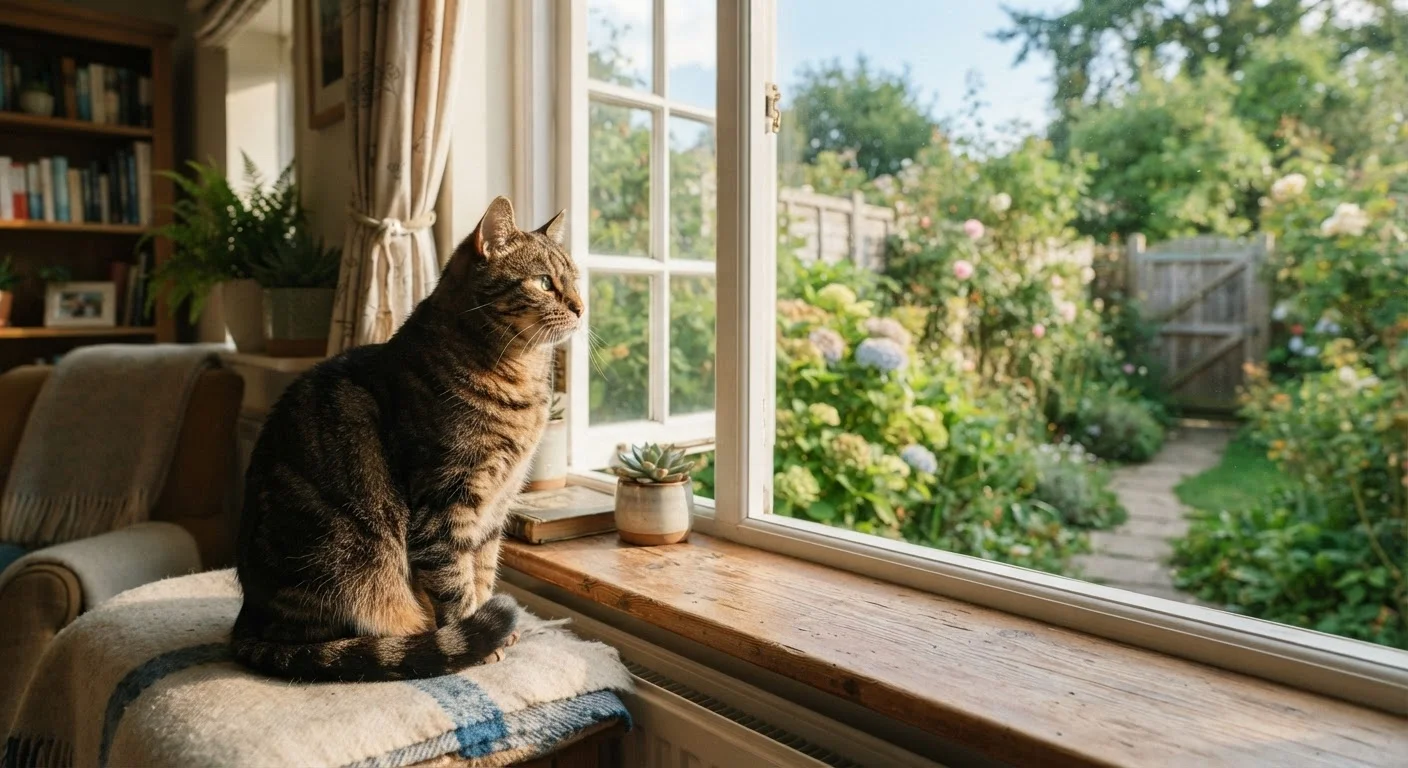
- Window perches and bird feeders: Positioning feeders outside a window gives indoor cats visual stimulation from wildlife without any outdoor exposure.
- Environmental enrichment indoors: Puzzle feeders, climbing structures, rotating toys, and interactive play sessions can meaningfully reduce boredom for indoor cats.
The goal in each case is to honor the cat's natural instincts while managing risk to a level that feels reasonable for your household and location. Consulting your veterinarian about your individual cat's history and temperament is always a worthwhile step before making changes.
This article is for general informational purposes only and is not a substitute for personalized veterinary advice. Always consult a qualified veterinarian for guidance specific to your cat's health and circumstances.