

Key Takeaways
Why a Morning Routine Is Worth the Investment
A morning skincare routine doesn't have to be elaborate to be effective. In fact, the research on skin health consistently points to consistency over complexity — a simple routine you actually do every day will serve your skin far better than a 10-step regimen you abandon after a week.
The morning routine has a specific job: protect skin from the day ahead. Sun exposure, pollution, and environmental stressors are cumulative, meaning small daily protections add up meaningfully over time. That's why the three core steps — cleanse, moisturize, and protect — are so foundational. Everything else is optional enhancement.
If you're trying to build other healthy habits alongside this one, the principle is the same. Just as a beginner exercise routine works best when you start small and build gradually, skincare sticks when it's manageable from day one.
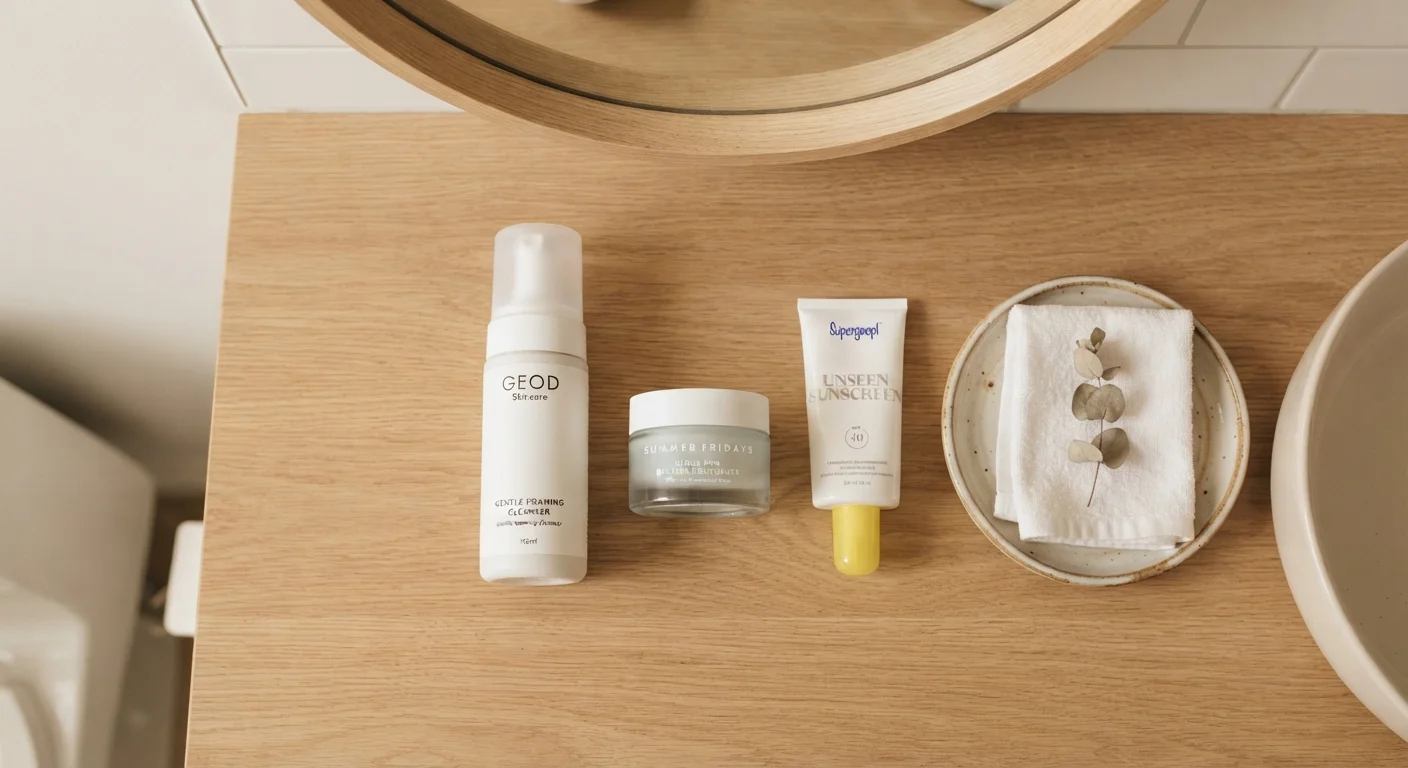
What you will need
Once you've got the essentials in hand, here's how to layer them in the right order.
The Four-Step Morning Routine (Step by Step)
The steps below follow the correct layering sequence: thinnest to thickest, water-based before oil-based, treatments before protection. This order isn't arbitrary — it directly affects how well each product can do its job. For more on the logic behind this, learn how layering sequence affects absorption.
Gentle Facial Cleanser
Removes overnight oil, sweat, and residue without stripping the skin's natural moisture barrier.
Moisturizer
Hydrates and seals the skin barrier, keeping skin supple and reducing water loss throughout the day.
Broad-Spectrum Sunscreen (SPF 30+)
Protects skin from UVA and UVB rays that cause premature aging and damage.
Facial Serum
An optional targeted treatment (such as vitamin C or hyaluronic acid) applied between cleanser and moisturizer.
Clean Washcloth or Soft Towel
For gently patting the face dry without causing friction or irritation.
Cleanse with a gentle, pH-balanced cleanser
Wet your face with lukewarm water — not hot, which can strip moisture. Apply a small amount of cleanser (roughly the size of a nickel) to your fingertips and massage it gently across your face in circular motions for about 30 to 60 seconds. Rinse thoroughly and pat dry with a clean, soft towel. Avoid rubbing, which can irritate skin.
In the morning, most people don't need a heavy cleanse — a gentle, low-lather formula is enough to clear overnight oil and prep skin to absorb what comes next. If your skin feels tight immediately after washing, that's a signal your cleanser may be too stripping for your skin type.
Apply a serum (optional but effective)
If you choose to use a serum, this is the moment to apply it — after cleansing, while skin is still slightly damp. Serums contain smaller molecules than moisturizers, allowing active ingredients to penetrate more deeply when applied first. Press 2–3 drops gently into your skin; don't rub aggressively.
Common morning serums include vitamin C (which may help with brightness and antioxidant protection) and hyaluronic acid (which draws moisture to the skin). You don't need both — one targeted serum is plenty when you're starting out. For a deeper look at how serums fit into your layering strategy, see how serums and moisturizers differ.
Moisturize to seal in hydration
Apply your moisturizer while your skin is still slightly damp from cleansing or serum — this helps lock in existing moisture rather than just sitting on the surface. Use a pea-to-dime-sized amount and spread it evenly across your face and neck using gentle upward strokes.
Texture matters here: gel-based formulas tend to suit oily or combination skin, while richer creams are better for dry or mature skin. Sensitive skin often does well with fragrance-free, minimal-ingredient options. The moisturizer's job is to support your skin barrier, which is the outermost layer that regulates moisture and shields against environmental stressors.
Finish with broad-spectrum sunscreen
Sunscreen goes on last in your morning routine, after all other skincare products have had a moment to absorb. Apply a generous amount — most guidance suggests about a quarter-teaspoon for the face alone — and blend it evenly, including your ears and neck if they'll be exposed.
Both mineral (zinc oxide, titanium dioxide) and chemical sunscreen formulas offer effective protection when used correctly. Mineral formulas sit on top of the skin and reflect UV rays; chemical formulas absorb into the skin and neutralize UV energy. Neither type is universally superior — the best one is the one you'll actually use consistently. Understanding how products layer is key to making this step work; the science behind layering skincare products explains why sequence affects absorption.
Keep It Next to Your Toothbrush
Habit stacking — pairing a new behavior with an existing one — is one of the most reliable ways to make a skincare routine stick. Setting your three products next to your toothbrush means you'll see them at the exact moment you're already in the bathroom. Most people find a consistent three-step routine takes under five minutes once it becomes automatic.
SPF Is Non-Negotiable Every Morning
Dermatologists broadly agree that daily broad-spectrum sunscreen (SPF 30 or higher) is the most effective topical step for protecting skin from UV-related damage. This applies even on cloudy days and when you spend most of your time indoors near windows. Skipping SPF regularly can undermine the benefits of every other product in your routine. If you have specific concerns about sun sensitivity or skin conditions, consult a licensed dermatologist for personalized guidance.
Tailoring Your Routine Over Time
Once your three-step routine feels automatic — typically within two to four weeks — you may want to refine it. Common additions at that stage include a vitamin C serum for antioxidant support, or a dedicated eye cream if that's a concern for you. The key is introducing one change at a time so you can accurately judge how your skin responds.
Patch-Test New Products First
Introducing multiple new products at once makes it nearly impossible to identify what's causing a reaction if irritation occurs. Start with one new product at a time and apply a small amount to your inner forearm or jawline for a few days before using it on your full face. Anyone with sensitive skin, rosacea, or active skin conditions should check with a dermatologist before starting new topical products.
Exfoliation is another consideration, though it's generally better suited to an evening routine rather than mornings — harsh exfoliation before sun exposure can increase sensitivity. If you're curious about how chemical and physical exfoliation compare, see what's actually happening when you exfoliate.
Your morning skincare routine is also just one piece of a broader self-care picture. Building sustainable grooming habits from head to toe explores how skincare fits alongside haircare, body care, and other routines into a consistent daily practice. Start simple, stay consistent, and let the routine grow with you.
This article is for general informational purposes only and does not constitute medical or dermatological advice. Consult a licensed dermatologist or healthcare professional for concerns about your skin health or specific skin conditions.