

Key Takeaways
Why Most Wardrobes Don't Reflect the People Who Own Them
It's a familiar frustration: a closet packed with clothes and still the feeling that nothing fits who you are. This disconnect usually isn't about quantity — it's about accumulation without intention. Pieces collected during different phases of life, impulse purchases driven by sales or trends, and gifts that were kind but never quite right all end up in the same space, creating visual noise that makes getting dressed harder, not easier.
A wardrobe that genuinely reflects you requires deliberate subtraction before it requires any addition. The process below will take you from "I have nothing to wear" to a clear, functional closet that actually serves the way you live and the way you want to show up.
What you will need
Before you dive in, gather your tools:
Full-length mirror
Lets you evaluate how pieces actually look and feel on your body during the audit.
Notebook or notes app
Use it to record style words, gap observations, and what categories feel overstocked.
Donation bags or boxes
Keeps items sorted clearly as you work through categories so you don't second-guess decisions.
Clothes rack or clear floor space
Helps you lay everything out visually so patterns and gaps become easier to spot.
The Step-by-Step Audit and Build Process
Work through these steps at your own pace. Some people complete the full audit in one afternoon; others prefer to move through it over a few days. Both approaches work — what matters is that you're honest and deliberate throughout.
This Process Takes Honesty, Not Perfection
Curating a wardrobe is a personal exercise, not a competition. There's no single "right" aesthetic or correct number of items to own. Be honest with yourself about what you actually wear and how you genuinely want to present yourself — not how you feel you should want to. The goal is a closet that works for your real life, today.
Pull Everything Out and Create a Full Inventory
Before you can make any decisions, you need a complete picture. Remove every item of clothing from your closet, dresser, storage bins, and even the back of chairs. Group items by category — tops, bottoms, dresses, outerwear, shoes, accessories — and lay them out where you can see them all at once.
This step is often the most surprising. Most people discover duplicates they forgot about, items still with tags, and things they genuinely can't remember owning. Seeing it all together interrupts the mental shortcut of "I have nothing to wear" and replaces it with accurate data.
Sort Each Piece Into Three Honest Piles
Work through every item individually and assign it to one of three groups:
- Keep: You wear it regularly, it fits well right now, and it feels like you.
- On the fence: You're uncertain — it might fit differently, you rarely reach for it, or it belongs to an older version of your style.
- Let go: It doesn't fit, it's damaged beyond repair, or you consistently skip it when getting dressed.
The "on the fence" pile deserves a second pass. Try each piece on. If putting it on doesn't give you a clear "yes," that's useful information. Items that require you to talk yourself into wearing them rarely earn their closet space.
Identify the Style Language of Your "Keep" Pile
Look at what remains after your sort. What patterns do you notice? Are the pieces you love consistently casual, structured, colorful, neutral, textured? Write down five to eight words that describe the common thread — words like relaxed, earthy, graphic, polished, layered, or minimal are all valid.
This exercise surfaces your actual aesthetic rather than the one you think you should have. If you're not sure where to start, our guide on finding your aesthetic can walk you through the process more deeply before you return to this step.
Map Your Gaps — But Don't Rush to Fill Them
Using your style words as a guide, look at what's missing. Do you have plenty of tops but almost no bottoms that match your aesthetic? Are you heavily stocked in one formality level but underserved in another you actually need for your daily life? Note the gaps without immediately shopping to fill them.
Understanding the difference between a true gap (something missing that would increase how often you wear what you have) and an impulse want (something appealing but disconnected from your style language) takes practice. The types of pieces that transition across seasons can help you evaluate whether a potential addition is genuinely versatile.
Reorganize What Remains With Intention
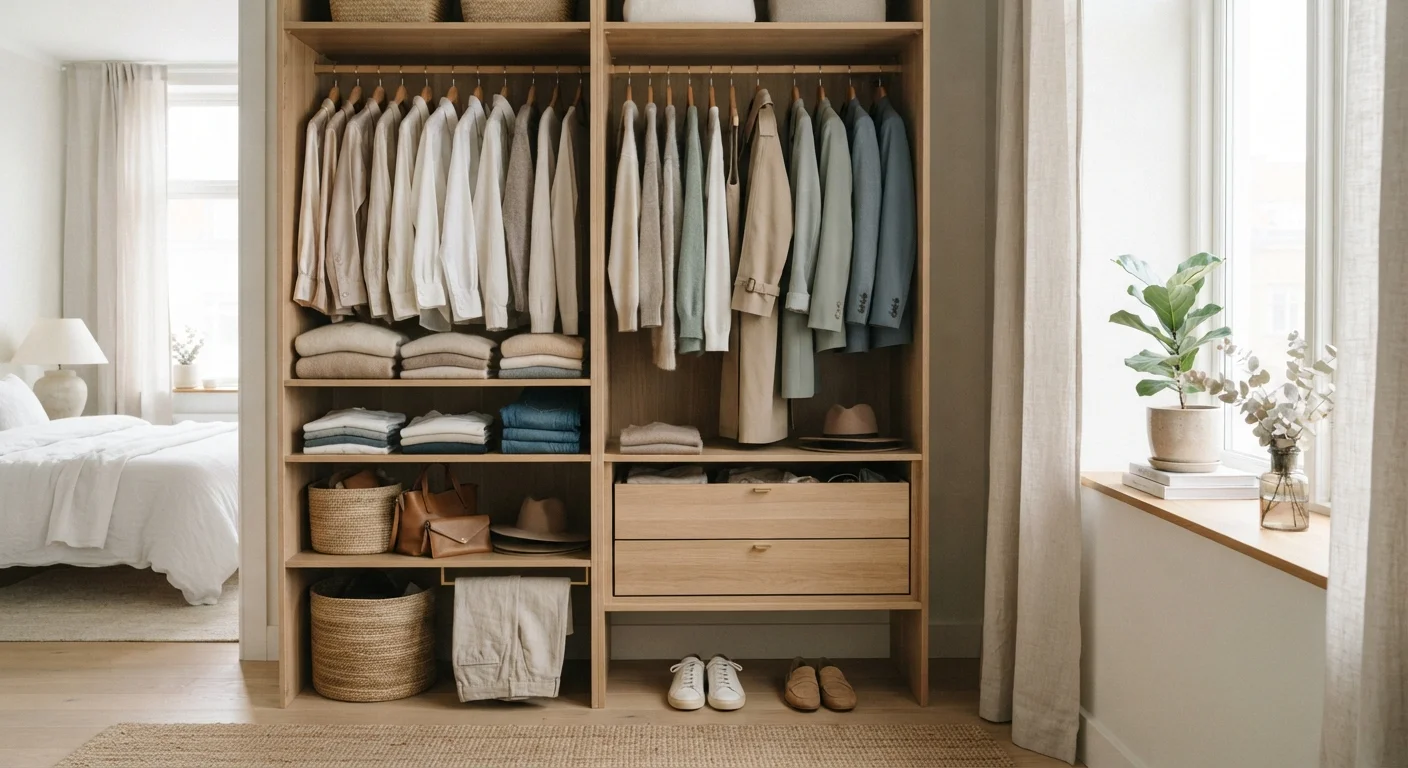
Return your "keep" items to your closet in a way that makes them easy to see and reach. Organizing by category, then by color within each category, tends to work well for most people — but the system that keeps you using your wardrobe is the right one for you.
The goal is a closet where you can see your options clearly every morning. Hidden clothes don't get worn. If certain pieces are only right for specific occasions, consider a separate section rather than burying them in the main rotation.
For a more thorough approach to organizing and evaluating what you own, see our room-by-room closet audit guide.
Build Forward Slowly and Deliberately
Now that you have a clear picture of your actual wardrobe, any additions you make can be intentional rather than reactive. Before purchasing something new, hold it against your style language from Step 3. Does it fit? Does it fill a genuine gap from Step 4? Will it work with at least three things you already own?
If you're rebuilding from a mostly empty base, our guide on building a versatile wardrobe from scratch offers a practical framework for doing that without overspending. And if environmental or ethical values are part of how you want your style to reflect you, aligning your wardrobe with your values is worth exploring alongside this process.
Avoid the Purge-and-Repurchase Trap
Clearing out your closet can feel liberating, but resist the urge to immediately fill the space back up. Shopping before you've clarified your style often recreates the same mismatched wardrobe problem you just solved. Give yourself at least a few weeks between auditing and intentional restocking.
Your Style Can Evolve — That's Normal
A wardrobe that reflects you today might look different in two years, and that's not failure — it's growth. Rather than building a static collection, think of your closet as something you revisit and refine seasonally. Small, intentional updates over time are far more sustainable than periodic overhauls.