

Key Takeaways
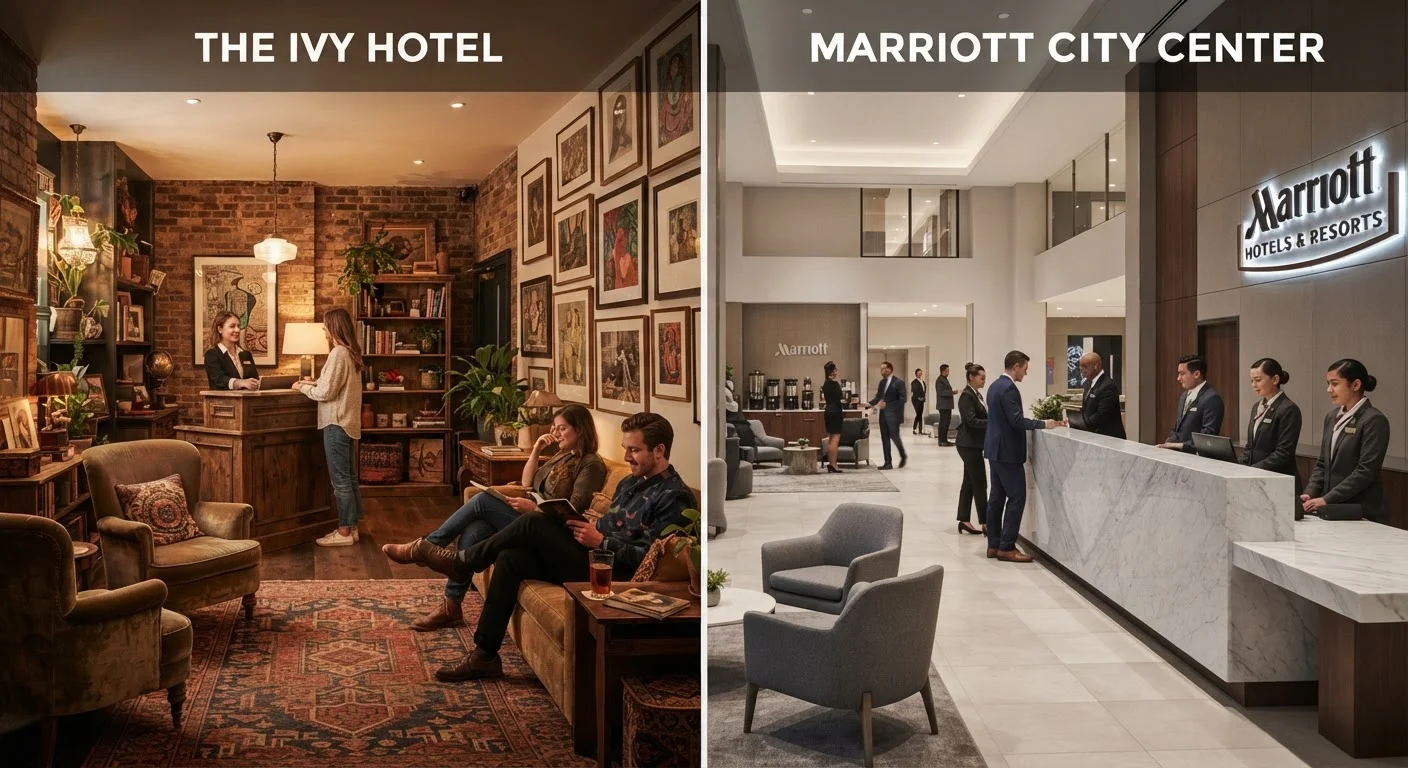
Option A
Boutique Hotel
The character-driven, locally rooted experience.
Best for: Travelers who prioritize atmosphere, individuality, and a sense of place over predictability.
Option B
Chain Hotel
The consistent, loyalty-rewarding, globally recognized choice.
Best for: Travelers who value standardized service, loyalty point accumulation, and reliable expectations across destinations.
If you travel frequently for business and rely on loyalty perks
Chain Hotel
Points accumulation, reliable Wi-Fi, consistent breakfast options, and guaranteed room standards make chain hotels a natural fit for road warriors.
If you want your hotel to feel like part of the destination
Boutique Hotel
Boutique properties are often locally owned and designed to reflect the culture and character of their surroundings, enhancing the travel experience itself.
If you're traveling with a large family or group needing predictable amenities
Chain Hotel
Standardized room configurations, pools, and on-site dining make chain hotels easier to plan around when managing multiple needs.
If you're on a romantic getaway or celebrating a special occasion
Boutique Hotel
Boutique hotels frequently offer personalized touches, intimate settings, and memorable design that chains rarely replicate.
What Actually Defines Each Hotel Type
The term boutique hotel typically refers to a smaller, independently styled property — usually under 100 rooms — that prioritizes distinctive design, curated experiences, and a strong sense of local identity. These hotels are often independently owned, though some boutique-style brands have emerged under larger hospitality umbrellas. The defining quality is character: no two boutique hotels feel the same.
A chain hotel, by contrast, operates under a recognized brand (or parent company) and maintains standardized service protocols, design guidelines, and amenity offerings across all its locations. Whether you stay at the same brand in Chicago or Phoenix, the experience is intentionally consistent. For a broader look at how different lodging categories compare, see our guide to accommodation types.
| Criterion | Boutique Hotel | Chain Hotel |
|---|---|---|
| Typical Size | Under 100 rooms | 100–1,000+ rooms |
| Design & Atmosphere | Unique, locally inspired | Standardized, branded |
| Service Style | Personalized, intimate | Consistent, protocol-driven |
| Loyalty Programs | Rarely available | Widely available |
| Price Range | Budget to ultra-luxury | Budget to ultra-luxury |
| Predictability | Lower — varies by property | High — consistent standards |
| Local Character | Strong — central to the concept | Limited — brand identity dominates |
Service Style and Personalization
Boutique hotels often compete on the quality and warmth of their service. With smaller guest counts, staff can remember preferences, offer tailored restaurant recommendations, and create moments that feel genuinely personal. The tradeoff is that staffing and amenities can be thinner — a boutique property may not have a 24-hour concierge or an on-site gym.
Chain hotels invest heavily in service consistency. Training standards, escalation protocols, and brand guarantees mean that if something goes wrong, there's a clear path to resolution. This reliability is especially valuable for business travelers or anyone who simply can't afford a subpar stay. For those weighing how room types factor into this decision, understanding hotel room configurations is worth a read before booking.
~150
Average boutique hotel room count
Industry definitions vary, but most hospitality analysts define boutique hotels as properties with roughly 10 to 150 rooms focused on distinctive design.
50%+
U.S. travelers enrolled in hotel loyalty programs
According to travel industry surveys, more than half of American leisure and business travelers belong to at least one hotel loyalty program, primarily offered by major chains.
Pricing, Loyalty Programs, and Value
Pricing for both hotel types spans a wide range. Boutique hotels exist at every price point — from charming budget inns to ultra-luxury design properties. The absence of a loyalty program is the most notable financial difference: staying at boutique hotels generally means forgoing points accumulation, elite status, and member-rate discounts that chain programs offer.
Chain hotel loyalty programs can deliver meaningful value for frequent travelers — complimentary upgrades, free nights, and status perks compound over time. That said, boutique hotels sometimes partner with independent loyalty platforms or credit card travel portals, so options do exist. If you're still weighing the broader lodging landscape, vacation rentals vs. hotels offers another angle on accommodation trade-offs worth considering.
The 'Soft Brand' Middle Ground
Some major hotel groups have introduced 'soft brand' collections — independent hotels that affiliate with a larger chain to gain distribution and loyalty program access while maintaining their own identity. Examples include collections marketed under names like Curio, Tribute Portfolio, and Autograph. These properties blend boutique character with chain infrastructure, and may suit travelers who want both worlds. Always review what's included before booking, as amenity standards can still vary significantly within these collections.