

Key Takeaways
Why Rome's Neighborhoods Are the Real Attraction
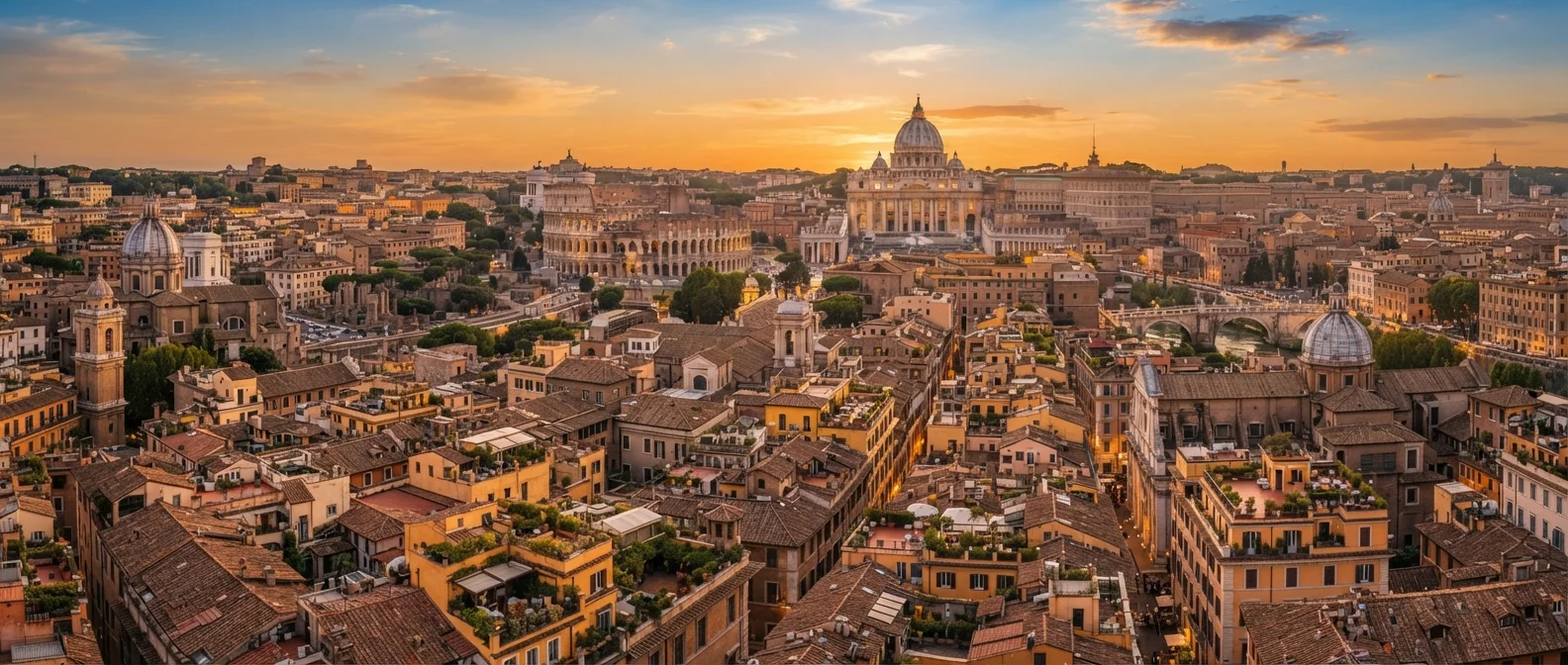
Rome is not one city — it is a dozen layered villages that happen to share ancient ruins. Thinking of it as a single destination is the first mistake most visitors make. Each rione (historic district) carries its own architectural DNA, social character, and culinary identity. Knowing which neighborhood fits your travel style transforms a whirlwind sightseeing trip into a genuinely immersive experience.
The city's topography reinforces this separation. Hills, the Tiber River, and centuries of urban evolution have kept pockets of Rome distinct even as the broader city expanded. A morning in Testaccio feels nothing like an afternoon in Prati, even though they sit just a few kilometers apart.
2,500+
Years of continuous urban settlement
Rome has been continuously inhabited since at least the 8th century BCE, making it one of the world's oldest continuously occupied cities.
22
Historic rioni (districts) in the city center
Rome's historic center is officially divided into 22 rioni, each with documented histories stretching back to ancient times.
~7M
International tourist arrivals annually
Rome consistently ranks among Europe's most visited cities, drawing tens of millions of overnight visitors each year according to Italian tourism data.
Trastevere: The Soul of Old Rome
Trastevere — literally «across the Tiber» — is the neighborhood visitors picture when they dream of cobblestone Rome. Its ochre and terracotta façades, draped with climbing vines and laundry lines, frame a medieval street grid that predates the Renaissance. The Basilica of Santa Maria in Trastevere, one of Rome's oldest churches, anchors the central piazza with 12th-century golden mosaics that glow at night.
Daytime Trastevere belongs to artisans, students from the nearby university quarter, and locals running errands. By evening, the neighborhood transforms: restaurants spill onto narrow lanes, and the piazza fills with a relaxed social energy that Italians call dolce vita. It is lively without feeling manufactured.
Visit Trastevere on a weekday morning rather than a weekend evening — you'll encounter the neighborhood's authentic daily rhythm rather than its party-tourism face.
Weekend nights draw large crowds and inflate wait times at restaurants; the quieter morning hours reveal the local color that makes Trastevere genuinely special.
Book timed-entry tickets for the Vatican Museums and the Borghese Gallery well in advance — both have hard capacity limits that sell out weeks ahead in peak season.
Without reservations, visitors regularly queue for hours or are turned away entirely, which is a significant waste of limited travel time in a city this rich with alternatives.
Practically speaking, Trastevere is walkable from the Colosseum (roughly 30 minutes on foot) and is well-served by trams. Accommodation here skews toward boutique guesthouses and apartment rentals rather than large hotels.
The Historic Center (Centro Storico): Monuments and Markets
The Centro Storico is Rome's showpiece: the Pantheon, Piazza Navona, Campo de' Fiori, and the Trevi Fountain all occupy this compact zone. It is the Rome of postcards, and for good reason — the density of remarkable buildings per square block is staggering.
That popularity comes with trade-offs. Crowds peak between 10 a.m. and 4 p.m., prices at cafés near major monuments are noticeably higher, and navigating with a stroller or mobility aid requires patience on uneven sampietrini (cobblestone) paving. The payoff is unmatched historical immersion: you can walk from a Roman temple to a Baroque fountain to a Renaissance palazzo in under ten minutes.
Beat the Centro Storico Crowds
The Pantheon and Trevi Fountain are dramatically less congested before 9 a.m. and after 7 p.m. Planning major monument visits around these windows can transform the experience. Many of Rome's churches — including hidden gems just steps from the main sites — have no entry fee and are rarely crowded at any hour.
Campo de' Fiori hosts a daily morning market where Romans shop alongside tourists. It is one of the few places in the Centro Storico where the neighborhood's older, working character still surfaces amid the sightseeing buzz.
Prati: Vatican Side with a Local Heartbeat
Built in the late 19th century, Prati feels more Parisian than Roman — wide boulevards, Liberty-style apartment buildings, and a grid layout that actually makes navigating straightforward. It sits directly across the Tiber from the Vatican Museums and Castel Sant'Angelo, making it a logical base for visitors with a heavy Vatican itinerary.
What distinguishes Prati from the tourist-heavy areas nearby is its everyday normalcy. Via Cola di Rienzo is a full-service commercial street where Romans buy groceries, suits, and hardware alongside gelato and espresso. Restaurants here are generally priced for locals, and the quieter evening streets allow for a more relaxed pace than the Centro Storico.
“The thing about Rome is that every neighborhood gives you a completely different city. You could spend a week just in Prati and feel like you've lived somewhere real — not just visited it.”
— Claudio Magris, Italian cultural essayist and author
Testaccio: Rome's Working-Class Kitchen
If food is your primary reason for visiting Rome, Testaccio deserves priority. Built around a 19th-century slaughterhouse that defined the neighborhood's economy for generations, Testaccio gave rise to Rome's celebrated cucina povera (humble kitchen) — offal-based dishes like coda alla vaccinara (oxtail stew) and trippa alla romana that are now considered Roman classics.
The neighborhood's covered market, the Mercato Testaccio, is among the city's most authentic: vendors sell seasonal vegetables, aged pecorino, cured meats, and street food like supplì (fried rice balls) to a mixed crowd of locals and food-focused travelers. The Monte dei Cocci — a hill made entirely from millions of broken ancient amphorae — rises at the neighborhood's edge, a quirky reminder that even Rome's trash has history.
Pigneto and Ostiense: Rome's Creative Fringes
For a Rome that feels contemporary and lived-in, Pigneto and neighboring Ostiense offer a counterpoint to the ancient city center. Pigneto, once a working-class district featured in Pasolini films, has become a hub for independent music venues, street art, and aperitivo bars that fill up with young Romans on weekday evenings. It is accessible by tram from Termini station and rewards slow, curious exploration.
Ostiense anchors Rome's street art scene around the Ostiense-Garbatella axis, and the former industrial zone hosts the MACRO Asilo contemporary art space. The Centrale Montemartini museum — where ancient Roman sculptures share exhibition space with industrial machinery — is one of the city's most distinctive and least-crowded cultural experiences.
Check Current Museum Hours and Access
Rome's cultural sites — including national museums, archaeological areas, and churches — frequently adjust their hours, admission fees, and reservation requirements. The information in this guide reflects general patterns, not current operational specifics. Always confirm entry requirements, booking needs, and accessibility details directly with each site or through official tourism sources before your visit.
Practical Tips for Moving Between Neighborhoods
Rome's city center is more walkable than it appears on a map, but hills, heat, and cobblestones mean most visitors cover less ground per hour than expected. The Metro has two main lines (A and B) that are useful for longer crossings — Colosseo station drops you at the Forum, while Ottaviano serves the Vatican area. Trams connect Trastevere, Testaccio, and Pigneto efficiently.
Taxis and app-based ride services are metered and regulated; always confirm the meter starts at the official fixed rate. For the Centro Storico and Trastevere specifically, walking between sites is almost always faster than sitting in traffic.
Accommodation choices materially affect your experience. Staying in Trastevere or Prati places you in neighborhoods with a genuine after-hours atmosphere; staying in the Centro Storico offers unbeatable proximity to monuments but a noisier, more tourist-dense environment. Consider your priorities before booking.
Rome's Official Tourism Portal (turismoroma.it)
The city's official tourism authority publishes updated event calendars, neighborhood guides, and practical visitor information in English. A reliable first stop for current hours and exhibitions.
Vatican Museums Official Site
The only source for official timed-entry reservations to the Vatican Museums and Sistine Chapel. Book directly to avoid third-party markups and verify current capacity rules.
ATAC Rome Transit Planner
Rome's public transit authority provides route planning for buses, trams, and metro lines. Essential for mapping connections between Trastevere, Testaccio, Pigneto, and beyond.
This article is for general informational and travel inspiration purposes only. Hours, prices, entry requirements, and local conditions change frequently. Always verify details with official tourism sources, your accommodation, and relevant government travel advisories before your trip.