

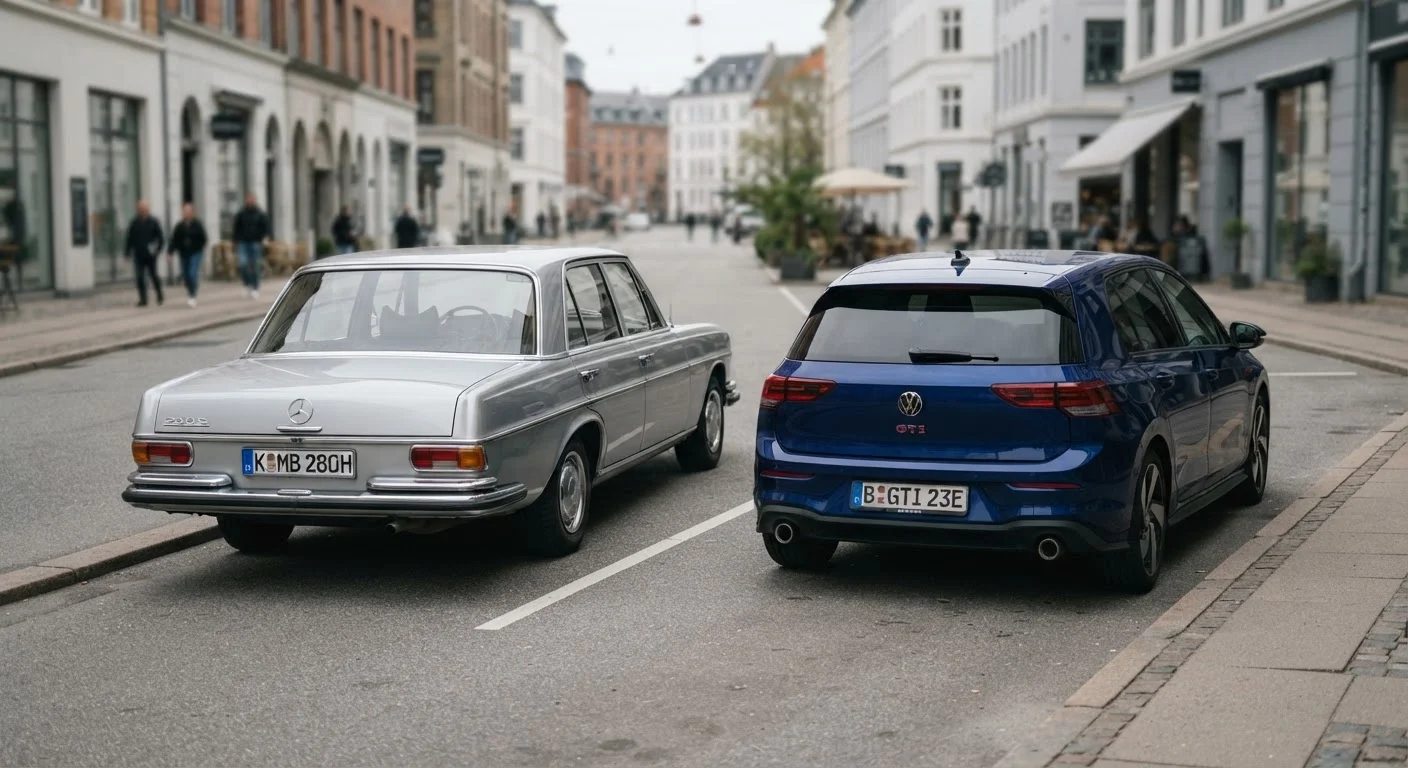
Key Takeaways
Option A
Hatchback
The flexible, cargo-friendly compact.
Best for: Drivers who want a small footprint with maximum interior utility and easy rear cargo access.
Option B
Sedan
The traditional, refined everyday commuter.
Best for: Drivers who prioritize a quiet, polished cabin and a separate, secure trunk compartment.
If you frequently haul bulky or awkward items
Hatchback
The wide, upward-swinging rear gate and flat load floor make loading and unloading significantly easier than lifting over a sedan's trunk lip.
If a quiet, refined cabin is your top priority
Sedan
The enclosed trunk acts as a natural sound buffer, reducing road and cargo noise from entering the passenger compartment.
If you live in a city and need maximum urban versatility
Hatchback
Hatchbacks tend to have a shorter overall length and flexible interior configurations well suited to city parking and varied daily tasks.
If security and hidden cargo storage matter to you
Sedan
Items locked in a sedan's trunk are completely out of sight, which can be a meaningful advantage in high-traffic or urban parking situations.
If you're balancing family practicality with a compact size
Hatchback
Fold-flat rear seats and a taller cargo opening let hatchbacks punch above their weight class for occasional hauling without stepping up to a larger vehicle.
What Actually Separates These Two Body Styles
The difference between a hatchback and a sedan comes down to one structural decision: how the rear of the car is designed. A sedan has three distinct compartments — engine, passenger cabin, and trunk — with the trunk sealed off from the interior by the rear seatback. A hatchback compresses that into two functional areas by extending the roofline rearward and fitting a top-hinged rear door that opens the cargo space directly into the cabin.
This architectural difference sounds subtle, but it ripples through nearly every practical aspect of ownership: how you load groceries, how much noise travels from the back seat, and even how the car looks parked at the curb. For a broader look at how these two body styles fit into the full landscape of vehicle types, see our guide to vehicle categories.
| Criterion | Hatchback | Sedan |
|---|---|---|
| Cargo access | Wide rear gate, lower load floor | Trunk lid, higher load lip |
| Cargo flexibility | Fold-flat seats expand space significantly | Fixed trunk, occasional ski pass-through |
| Cabin noise | Cargo area open to cabin | Sealed trunk buffers road and cargo noise |
| Overall length | Typically shorter | Typically longer |
| Hidden cargo security | Cargo visible through rear glass | Items fully concealed in trunk |
| Styling profile | Roofline slopes into rear gate | Distinct three-box silhouette |
| Interior headroom (rear) | Often slightly more due to roofline angle | Can be constrained by trunk lid line |
Cargo: More Than Just Cubic Feet
Raw cargo volume numbers can be misleading when comparing hatchbacks and sedans. A sedan might list a respectable trunk capacity in cubic feet, but that figure doesn't capture the shape of the space or the height of the load lip — the ledge you lift items over to place them inside. Hatchbacks generally have a lower, wider opening and a more rectangular cargo bay, which makes loading larger or irregularly shaped items considerably easier.
The real advantage of the hatchback, however, is the fold-flat rear seat. When rear passengers aren't needed, folding the seatbacks creates an uninterrupted floor stretching from the tailgate to the front seat area. Sedans occasionally offer a pass-through ski slot in the rear seatback, but the trunk remains a fixed, enclosed box regardless.
~20–30%
Typical cargo volume increase with rear seats folded
Folding hatchback rear seats commonly increases usable cargo space by 20–30% or more depending on the model, a figure sedans cannot match with their fixed trunks.
~60%+
Share of passenger car sales in Europe that are hatchbacks
European new car registration data has consistently shown hatchbacks accounting for the majority of passenger car sales, reflecting the body style's strong practical appeal in dense urban markets.
For buyers weighing whether either body style is enough — or whether a larger vehicle type makes more sense — our article on matching a vehicle to how you actually use it offers a useful framework.
Ride, Noise, and the Daily Driving Experience
Sedans have a structural advantage when it comes to cabin quietness. The sealed trunk acts as a barrier, dampening road noise, exhaust resonance, and cargo rattle before it reaches the passenger area. Hatchbacks, by contrast, share airspace between the cargo area and the cabin. Well-engineered hatchbacks address this with sound-deadening material and careful sealing, but the physics still favor the sedan in most comparisons.
Handling characteristics are shaped far more by suspension tuning and weight distribution than by body style. That said, hatchbacks tend to be marginally shorter in overall length, which can make them feel more nimble in tight urban environments. Neither body style has an inherent fuel economy advantage — that's determined by the powertrain and aerodynamics, not the roofline shape.
Aerodynamics and the Hatchback Shape
A common misconception is that the hatchback's sloping roofline automatically makes it more aerodynamic than a sedan. In practice, aerodynamic efficiency depends on detailed engineering choices like underbody panels, mirror shape, and rear diffuser design. Some sedans achieve lower drag coefficients than comparable hatchbacks. Fuel economy should always be evaluated using the EPA estimates specific to each model, not assumed from body style alone.
Drivers who find both the hatchback and the sedan too limiting might look at vans or open-top vehicles. Our coverage of van configurations and open-air vehicle types explores those alternatives in depth.
Styling, Perception, and Resale Considerations
Body style preference is genuinely personal, but it's worth understanding the market context. Sedans have long carried associations with professionalism and polish — a perception that still influences buyer behavior, particularly in certain regions of the country. Hatchbacks are often viewed as more practical and urban-oriented, and in European markets they have historically outsold sedans by a wide margin.
In the U.S. market, both body styles have faced competitive pressure from crossovers and SUVs, which offer many of the cargo benefits of a hatchback with higher seating positions that many buyers find appealing. This market shift is worth factoring into long-term ownership thinking, though resale values depend heavily on specific models, mileage, condition, and regional demand — not body style alone. For families weighing even larger vehicles, our comparison of minivans and three-row SUVs covers territory where both the hatchback and sedan fall short.