

Key Takeaways
Powertrain
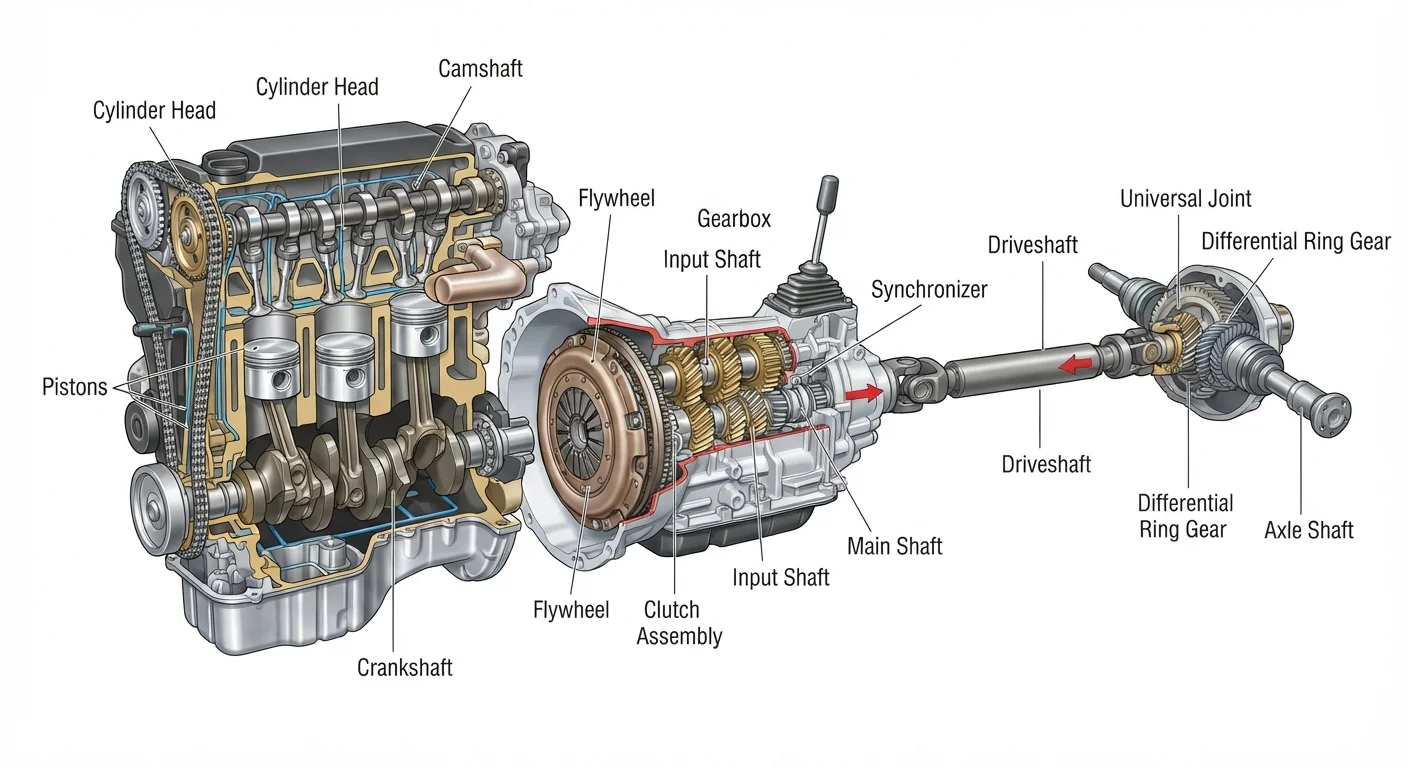
A vehicle's powertrain refers to all the components that generate power and deliver it to the wheels. This includes the engine (or electric motor), transmission, driveshaft, axles, and differentials. In short, it's everything involved in making the car move — from where energy is produced to where it meets the road.
In hybrid and electric vehicles, the powertrain definition expands to include the high-voltage battery pack, power electronics, and electric drive units, which are typically covered under separate, longer warranty terms than the conventional powertrain.
What the Powertrain Actually Includes
Most drivers hear the word "powertrain" and picture the engine. That's understandable — the engine is the most visible and frequently discussed mechanical component in any vehicle. But the powertrain is a broader system, and understanding its full scope matters whenever you're reading warranty documents or evaluating long-term ownership costs.
Here's what the powertrain generally includes:
- Engine (or electric motor): The source of power — whether combustion or electric.
- Transmission: Converts engine output into usable torque at the wheels; can be automatic, manual, or continuously variable (CVT).
- Driveshaft: Transfers rotational force from the transmission to the axles.
- Axles and half-shafts: Carry torque from the driveshaft to each driven wheel.
- Differentials: Allow wheels on the same axle to spin at different speeds during turns.
- Transfer case (on 4WD/AWD vehicles): Splits power between front and rear axles.
Together, these components form a chain: energy is produced, converted, directed, and finally delivered to the road surface. A failure anywhere in that chain means the vehicle can't move — which is why manufacturers treat the powertrain as a distinct, warranty-covered category.
$4,000–$8,000+
Typical transmission replacement cost range
Automotive repair cost data consistently places transmission replacement among the most expensive powertrain repairs a driver can face.
8 years / 100,000 mi
Federal minimum EV battery warranty
U.S. federal regulations require automakers to warranty electric vehicle battery packs and electric drive components for at least this duration.
5–10 years
Typical powertrain warranty duration range
Powertrain warranties commonly outlast bumper-to-bumper coverage by several years, reflecting the higher cost and critical nature of drivetrain repairs.
Why Warranty Language Focuses on the Powertrain
Vehicle warranties are structured around two main tiers. The bumper-to-bumper warranty (also called a comprehensive or limited warranty) covers most vehicle systems — electrical, interior, exterior, and more — but typically for a shorter duration. The powertrain warranty covers a narrower set of components but extends much longer, often doubling or tripling the bumper-to-bumper term.
The logic is straightforward: powertrain repairs are among the most expensive a driver can face. Engine replacements, transmission rebuilds, and differential failures can run into thousands of dollars. Manufacturers use longer powertrain coverage to signal confidence in these critical systems and to reduce buyer hesitation.
Because the stakes are high, warranty documents are precise about what's in and what's out. Common exclusions from powertrain coverage include:
- Wear items: clutches, belts, hoses, spark plugs
- Seals and gaskets (in some plans)
- Damage from improper maintenance or non-approved fluids
- Abuse, racing, or commercial use beyond stated terms
Keep Your Maintenance Records
Many powertrain warranty claims require proof that the vehicle was serviced according to manufacturer intervals. Keeping receipts or a service log — even for oil changes done at home — strengthens your position if you ever need to file a claim. Store records digitally as a backup.
Understanding these distinctions is directly relevant when you're estimating total vehicle ownership costs — because what's not covered becomes your financial responsibility the moment the bumper-to-bumper term expires.
How Powertrain Definitions Change for Hybrids and EVs
The rise of hybrid and electric vehicles has complicated the traditional powertrain definition. In a gasoline vehicle, the powertrain is mechanical and relatively straightforward. In an EV or plug-in hybrid, you add high-voltage battery packs, inverters, power control modules, and electric drive units — all of which are essential to propulsion.
Federal regulations in the United States require automakers to warranty EV battery packs and electric drive components for at least 8 years or 100,000 miles. Some manufacturers go further. But this coverage is typically separate from the conventional powertrain warranty and has its own terms, capacity thresholds, and exclusions.
Hybrid and EV Warranty Terms Vary Widely
While federal law sets a floor for EV battery warranty coverage, individual manufacturers may exceed that minimum — or apply specific conditions around battery capacity thresholds. Always request and read the EV-specific warranty addendum separately from the standard powertrain warranty document.
If you're evaluating a hybrid or electric vehicle, it's worth understanding how different powertrains compare in costs and infrastructure requirements before factoring in warranty terms. A powertrain warranty that looks generous on paper may not tell the whole story once you account for what's covered separately — or not at all.
For used-car shoppers, the powertrain section of a vehicle history report can reveal whether major powertrain components were previously replaced or involved in reported damage — information that shapes how much remaining warranty value you might actually be getting.
Reading Powertrain Language Without Getting Tripped Up
Warranty documents are legal contracts, and the powertrain section is rarely as simple as "engine and transmission covered." A few practices help you interpret coverage accurately:
- Look for the defined components list. Reputable warranties enumerate exactly which parts are covered, not just the system name. If a document says "powertrain" without a parts list, ask for clarification in writing.
- Note what triggers a claim. Most powertrain warranties require the failure to result from a defect in materials or workmanship — not from wear, neglect, or external damage.
- Understand maintenance obligations. Many warranties require proof of regular service intervals. Skipping oil changes or using non-specified fluids can give a manufacturer grounds to deny a claim.
- Check transferability. On used vehicles, powertrain warranties may or may not transfer to a new owner — and often with reduced terms. This affects resale value and how specific drivetrain features are priced into the market.
The powertrain sits at the intersection of your vehicle's most critical mechanics and its most significant repair costs. Knowing precisely what it encompasses — and what your warranty does and doesn't protect — puts you in a far stronger position as a vehicle owner.