

| Primary data source | State DMV records, insurer claims, auto auctions, salvage yards |
| Key identifier used | 17-character Vehicle Identification Number (VIN) |
| Title brands to watch | Salvage, Flood, Rebuilt, Lemon Law Buyback, Odometer Discrepancy |
| What reports typically miss | Unreported accidents, private repairs, mechanical wear |
| Best used alongside | Independent mechanical inspection and direct seller questions |
What a Vehicle History Report Is
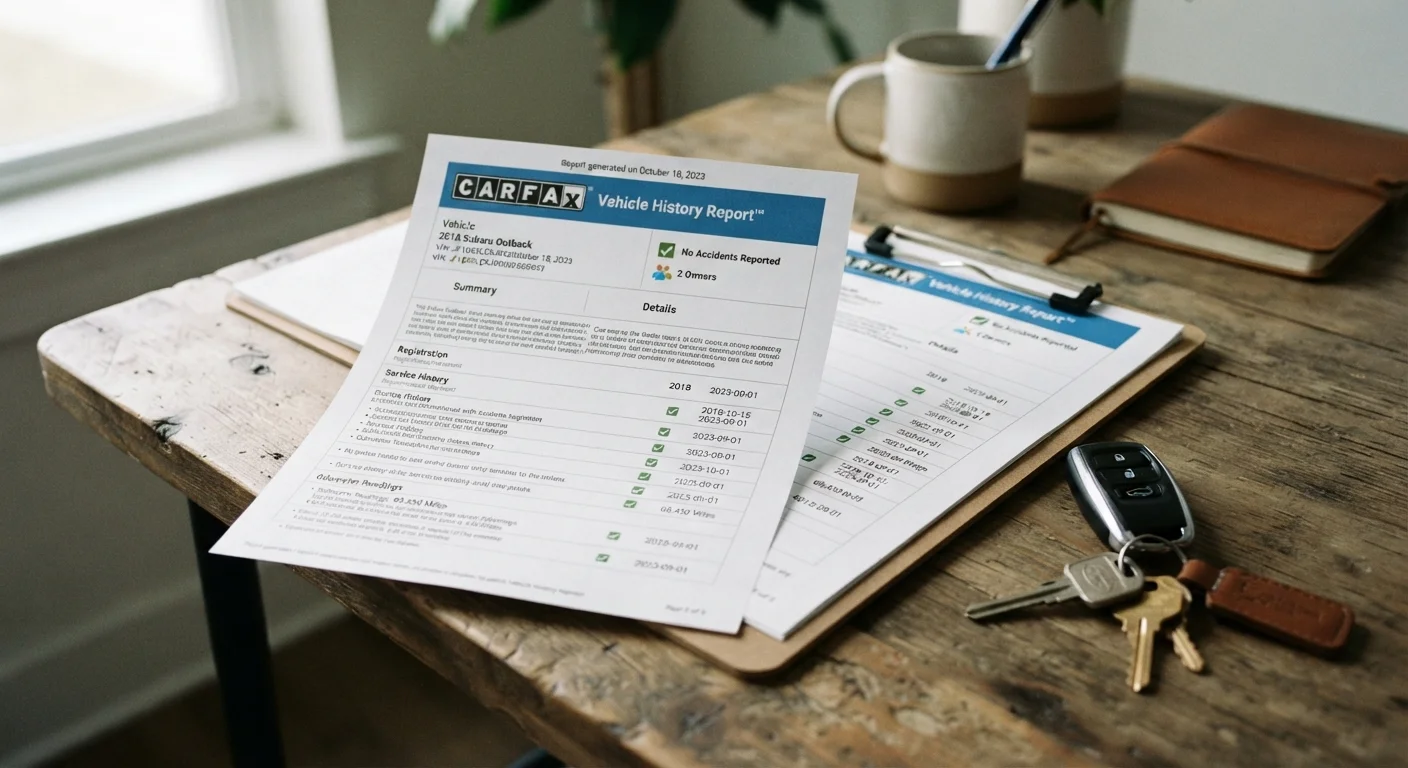
A vehicle history report is a compiled record of documented events tied to a specific vehicle's VIN — the unique 17-character code assigned to every motor vehicle at the factory. These reports pull data from state DMVs, insurance companies, auto auctions, salvage yards, fleet records, and repair databases to assemble a timeline of what a car has experienced before it reaches a dealership lot or private sale.
The report is not a substitute for a hands-on inspection, but it gives buyers meaningful context — particularly when evaluating a vehicle they've never seen in person. For a fuller picture of the evaluation process, see our guide to evaluating a used car before you commit.
| Primary data source | State DMV records, insurer claims, auto auctions, salvage yards |
| Key identifier used | 17-character Vehicle Identification Number (VIN) |
| Title brands to watch | Salvage, Flood, Rebuilt, Lemon Law Buyback, Odometer Discrepancy |
| What reports typically miss | Unreported accidents, private repairs, mechanical wear |
| Best used alongside | Independent mechanical inspection and direct seller questions |
Key Sections Explained
Most vehicle history reports are organized into several core categories. Understanding what each one contains helps you read the report strategically rather than just scanning for red flags.
VIN
A Vehicle Identification Number is a unique 17-character code assigned to every motor vehicle at manufacture. It encodes the make, model, year, plant of assembly, and a unique serial number.
Salvage Title
A title brand assigned when an insurance company declares a vehicle a total loss — typically because repair costs exceeded a set percentage of the car's value. Salvage-titled vehicles may be rebuilt and returned to road use but carry lasting implications for value and insurability.
Title Brand
An official designation recorded on a vehicle's title that flags significant events in its history, such as flood damage, fire, lemon law buyback, or odometer discrepancy. Title brands follow the vehicle across state lines.
Odometer Rollback
Illegal manipulation of an odometer to display a lower mileage than the vehicle has actually traveled. Chronological odometer discrepancies in a history report are a common indicator.
Flood Title
A title brand indicating the vehicle was damaged by flooding to a degree that triggered an insurance total-loss determination. Flood-damaged vehicles can suffer long-term electrical and corrosion problems even after restoration.
Title and ownership records show how many owners the vehicle has had and in which states it was registered. A car with many ownership changes in a short span can warrant additional scrutiny.
Accident and damage history lists reported collisions, the severity noted by the reporting source (often an insurer), and whether airbags deployed. Note that unreported accidents — private repairs that bypassed insurance — will not appear here.
Title brands are among the most consequential entries. Designations like salvage, flood, lemon law buyback, or rebuilt directly affect the vehicle's value, insurability, and safety. A salvage title means an insurer declared the car a total loss at some point.
Odometer readings logged at inspections or auctions create a chronological trail. Large, unexplained drops in mileage between readings are a potential indicator of odometer tampering.
Service and maintenance records may appear if work was performed at a participating shop or dealership. These entries are voluntary and inconsistent — their absence doesn't mean the car was neglected.
What a Report Cannot Tell You
Vehicle history reports reflect only what was formally documented and shared with data providers. That's an important limitation. A report can show a clean history even when a car has sustained significant unrecorded damage.
Reports Reflect Reported Events Only
A clean vehicle history report does not guarantee a clean vehicle. Data providers only receive information when an event — collision, title change, auction sale — is formally recorded and shared. Many private repairs and unreported incidents never enter the system. Treat a clean report as one positive signal, not a final verdict.
Mechanical wear, deferred maintenance, and cosmetic repairs done without an insurance claim are invisible to these reports. That's why a pre-purchase inspection by a qualified, independent mechanic remains essential — no report replaces eyes and hands on the vehicle. Our questions to ask a dealer before agreeing to anything can help you probe areas a report won't surface.
For older or collector vehicles, the limitations are even more pronounced. Classic cars often predate digital record-keeping entirely. Our classic car pre-purchase checklist and the guide to decoding a classic car's VIN address how to verify provenance when data trails are thin.
How to Use the Report When Shopping
Start by running a report before you visit a seller or test-drive a vehicle. It helps you decide whether the trip is worth making. When you receive the report, work through it systematically:
- Check the title brand first — a salvage, flood, or rebuilt designation changes the calculus entirely.
- Compare odometer readings chronologically to confirm the mileage is consistent.
- Note the number of previous owners and registration states.
- Look at accident entries, paying attention to severity and whether structural damage was noted.
- Cross-reference service records against the seller's claims about maintenance history.
If you're weighing a certified pre-owned vehicle versus a standard used car, the report remains relevant — CPO inspections are thorough, but reviewing the underlying history independently is still worthwhile. And keep in mind that purchasing a used vehicle has budget implications worth working through; general frameworks for that are covered in our budgeting basics resources.
This article is for informational purposes only. Vehicle history reports vary by provider and data source; always verify key findings through additional inspection methods before making a purchase decision.