

Key Takeaways
Chronic Stress
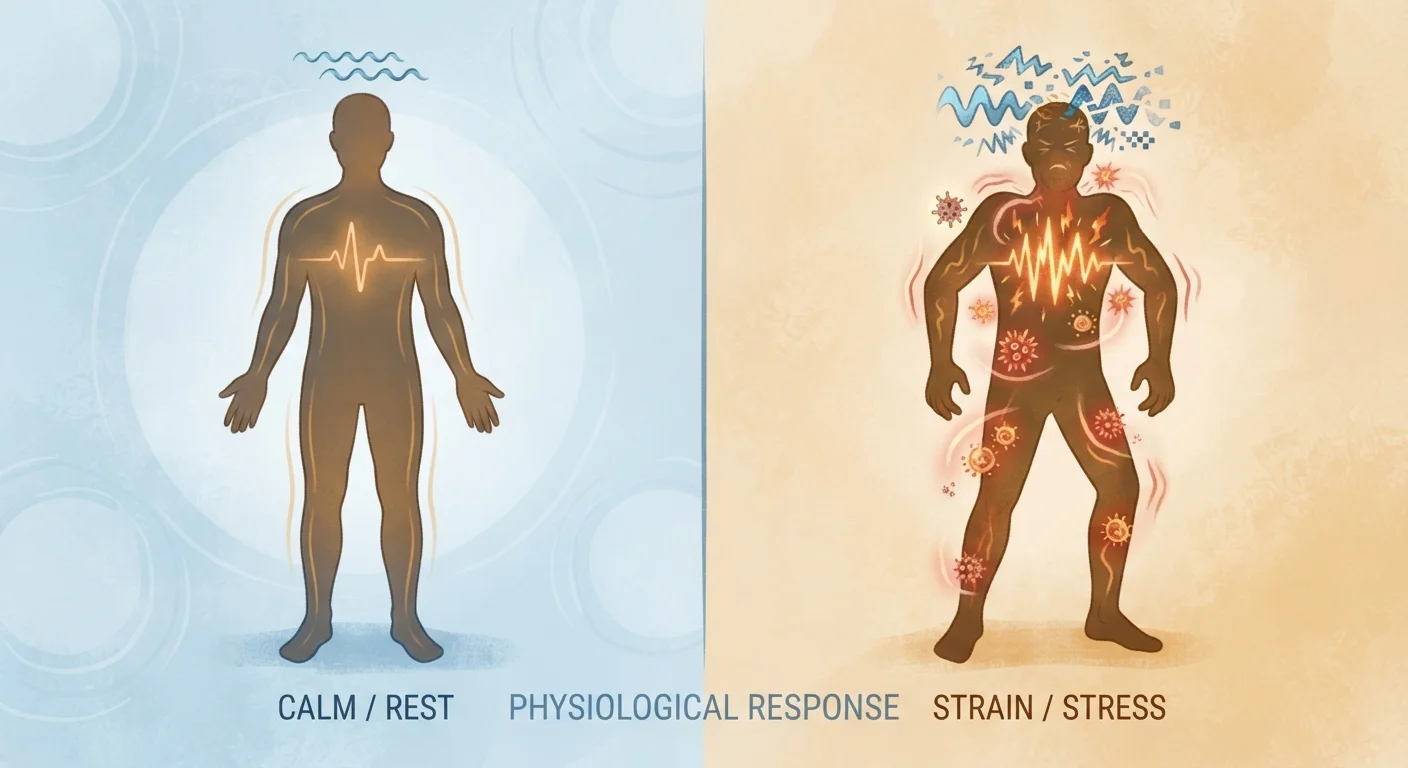
Chronic stress is a state of prolonged psychological and physiological tension that persists over weeks, months, or years. Unlike acute stress — which is short-lived and often helpful — chronic stress keeps the body's alarm system activated long after the immediate threat has passed. Over time, this sustained activation causes wear and tear on nearly every organ system in the body.
Physiologically, chronic stress is characterized by persistently elevated cortisol and catecholamine levels, which disrupt homeostasis across the hypothalamic-pituitary-adrenal (HPA) axis and the autonomic nervous system.
Why Chronic Stress Is Different From Normal Stress
A tight deadline or a near-miss on the highway triggers an immediate, purposeful stress response. Adrenaline spikes, focus narrows, and the body mobilizes energy — then, once the threat passes, the system stands down. That's stress working as it should.
Chronic stress breaks this cycle. Whether driven by financial pressure, relationship strain, caregiving demands, or ongoing workplace tension, the body never fully gets the signal to stand down. The result is a low-grade but continuous activation of the same emergency systems built for short-term survival — and they exact a significant cost over time.
Understanding this distinction matters because it reframes stress from a personal failing into a physiological reality. Stress is not just "being anxious" — it's a measurable biological state with documented downstream effects. Recognizing that is not alarmist; it's clarifying. If you're noticing patterns in people close to you, stress shows up differently across age groups and is often missed entirely.
Stress Is Not a Character Flaw
Cultural narratives often frame chronic stress as a productivity badge or a sign of weakness — both framings are inaccurate and unhelpful. Chronic stress is a physiological response to environment and circumstance. Addressing it is not about toughening up or slowing down; it's about recognizing when the body's alarm system needs support.
What Happens Inside the Body
The core driver of chronic stress's physical toll is cortisol — the primary stress hormone released by the adrenal glands. In short bursts, cortisol is beneficial. Sustained at high levels, it disrupts nearly every system it touches.
77%
Adults reporting physical symptoms from stress
According to the American Psychological Association's Stress in America surveys, a large majority of adults report experiencing physical symptoms they attribute to stress.
2–3×
Increased cardiovascular risk under chronic stress
Studies in cardiovascular epidemiology suggest chronically stressed individuals face meaningfully elevated risk of heart disease compared with low-stress peers, though individual variation is significant.
~40%
Reduction in immune response efficiency
Research published in journals including Psychosomatic Medicine has documented significant immune suppression in chronically stressed individuals, including reduced antibody responses.
Heart and Blood Vessels
Chronically elevated cortisol keeps blood pressure higher than normal and promotes inflammation in arterial walls. Over time, this contributes to arterial stiffness and raises the risk of heart disease and stroke — both well-documented associations in cardiovascular research.
Immune System
Stress initially boosts immune activity, but prolonged stress suppresses it. People under sustained stress tend to get sick more often, recover more slowly, and show reduced effectiveness from vaccines in some studies. The immune system, designed to protect, becomes less reliable precisely when overall health is already compromised.
Digestion
The gut and brain communicate through what researchers call the gut-brain axis. Chronic stress alters gut motility, disrupts the balance of intestinal bacteria, and can worsen conditions like irritable bowel syndrome. Symptoms like nausea, bloating, and irregular digestion are common — and frequently underattributed to stress.
Sleep
Elevated evening cortisol makes it harder to fall asleep and suppresses the deep, restorative sleep stages the brain needs for recovery. The relationship runs both ways: poor sleep heightens the stress response the following day. This bidirectional cycle is explored in depth in the sleep-mood connection research.
Build Habits That Hold Under Pressure
Stress management routines tend to collapse precisely when they're most needed. Prioritizing small, consistent practices — rather than intensive but unsustainable efforts — is more effective for long-term resilience. Evidence-informed mental habits designed for busy lives offer a practical starting point.
Recognizing When Stress Has Crossed a Line
Many people normalize chronic stress symptoms because they develop gradually. Persistent headaches, muscle tension, fatigue that sleep doesn't fix, frequent illness, and irritability that feels baseline — these are often stress-related, but are rarely labeled as such.
Physical and emotional signals that persist or intensify deserve attention rather than tolerance. A useful self-check: are these symptoms new or worsening, and do they track with periods of elevated pressure? A structured checklist of stress signals can help identify when professional input is warranted.
Social context also plays a meaningful role. Isolation amplifies physiological stress responses, while connection buffers them — a relationship that research on social connection and health has examined carefully.
This article is for general informational and educational purposes only and is not medical advice. If you are experiencing persistent physical or emotional symptoms, please consult a qualified healthcare provider.