

Key Takeaways
Nutrition Facts Label
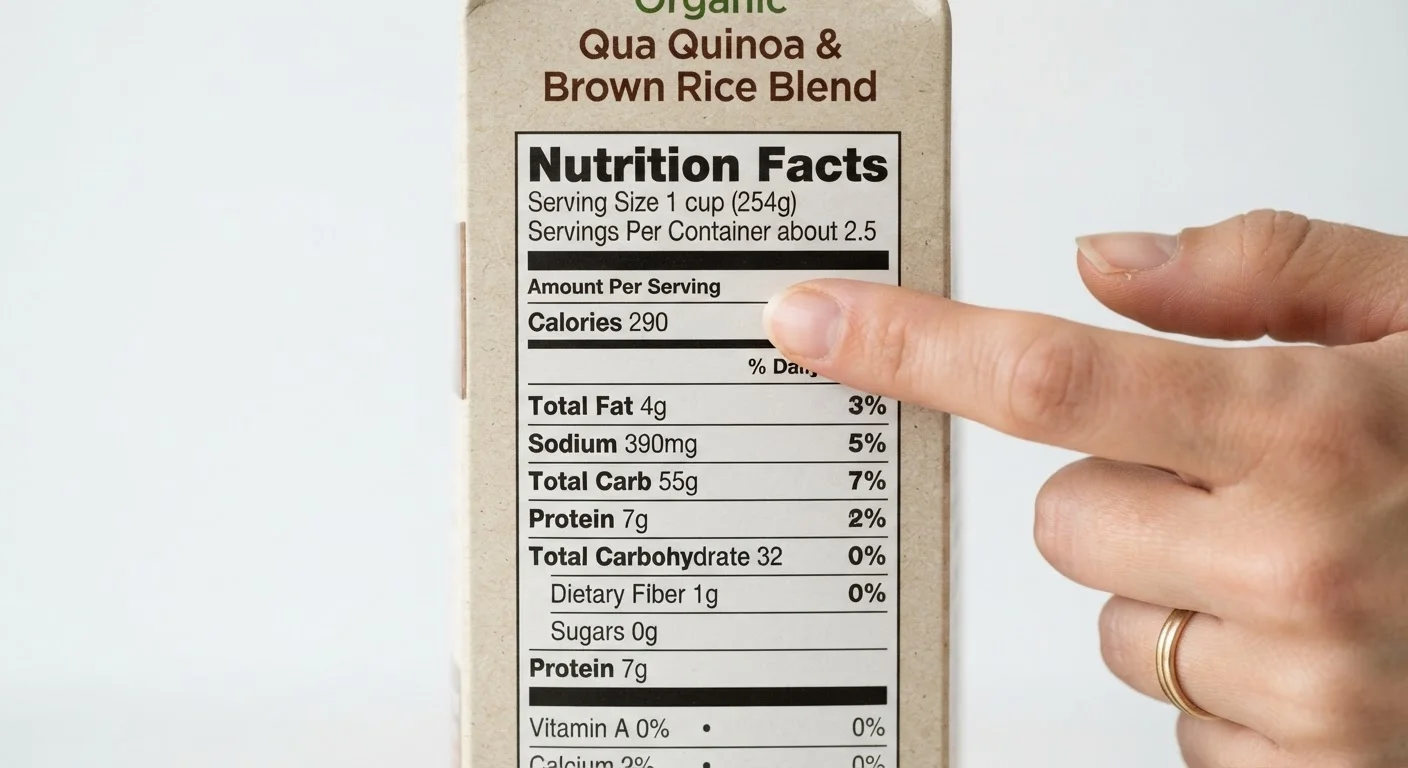
The Nutrition Facts label is a standardized panel required by the FDA on most packaged foods sold in the United States. It discloses key nutritional information — including calories, macronutrients, vitamins, and minerals — per a defined serving size. The label is designed to help consumers understand what they're eating and how it fits into an overall daily diet.
The current label format was updated by the FDA in 2016 (with full compliance by 2020), reflecting updated scientific understanding of nutrition and changes in typical American eating patterns, including a redesigned calorie display and mandatory added sugars disclosure.
Start at the Top: Serving Size and Servings Per Container
The first thing to read — and the number that changes everything else on the label — is the serving size. This figure, expressed in everyday units like cups or pieces and grams, represents how much people typically consume at one sitting, according to FDA consumption data. It is not a dietary recommendation.
Directly below it is servings per container. If a bag of chips lists a serving size of 1 oz (about 28g) and contains 3.5 servings, every calorie and nutrient figure on the label must be multiplied by 3.5 if you eat the whole bag. This single calculation trips up more label readers than any other. The FDA updated the 2020 label format to make both figures more visually prominent for exactly this reason.
Check Serving Size Before Anything Else
Before you look at any other number on the label, confirm how large one serving is and how many servings the package contains. If you typically eat the whole container in one sitting, multiply every value by the number of servings listed. This single habit prevents the most common misreading of nutrition labels.
Calories: Energy In Context
Calories measure the amount of energy a food provides per serving. The redesigned label displays this number in a larger font than before. Caloric needs vary widely by individual based on age, body size, activity level, and health goals — the 2,000-calorie daily reference used on labels is an FDA-established average for general guidance, not a universal target.
Calories come from three macronutrients: carbohydrates (4 calories per gram), protein (4 calories per gram), and fat (9 calories per gram). Alcohol adds 7 calories per gram when present. Understanding calorie density — how many calories a food delivers relative to its volume or weight — can be a useful lens, though it's only one part of a broader nutritional picture. For a deeper look at common misconceptions, see our article on nutrition myths most Americans still believe.
77%
Americans who read nutrition labels
According to the International Food Information Council, roughly 77% of Americans report using the Nutrition Facts label when deciding whether to buy a food product.
3,400 mg
Average daily sodium intake for U.S. adults
The CDC estimates the average American adult consumes approximately 3,400 mg of sodium per day — nearly 50% more than the FDA's 2,300 mg daily reference value shown on food labels.
17 tsp
Average daily added sugar consumption
The CDC reports that Americans consume on average about 17 teaspoons of added sugars daily, well above the Dietary Guidelines' recommendation of no more than 12 teaspoons for a 2,000-calorie diet.
Nutrients: What to Limit and What to Get Enough Of
The label divides nutrients into two informal groups based on public health priorities.
Nutrients to limit include:
- Saturated fat — linked to elevated LDL cholesterol in many individuals; current Dietary Guidelines suggest keeping it below 10% of daily calories.
- Sodium — excess intake is associated with elevated blood pressure in some people; the FDA reference is 2,300 mg per day for adults.
- Added sugars — now listed separately from total sugars, this line reveals sweeteners added during processing. The Dietary Guidelines recommend limiting added sugars to less than 10% of total daily calories.
Nutrients to get enough of include dietary fiber, vitamin D, calcium, iron, and potassium — nutrients many Americans consume in insufficient amounts. The label highlights these because adequate intake is associated with reduced risk of certain chronic conditions.
For context on what ingredient lists reveal beyond these numbers, see reading an ingredient list.
Trans Fat: Still on the Label
The Nutrition Facts label still includes a line for trans fat, even though the FDA effectively banned artificial trans fats (partially hydrogenated oils) from the U.S. food supply. Products manufactured before the compliance deadline may still contain small amounts, and natural trans fats occur in some animal-based foods. A label showing 0g trans fat may still contain up to 0.5g per serving under FDA rounding rules.
Understanding % Daily Value
The % Daily Value (% DV) column on the right side of the label is one of its most practical tools — and one of the most misunderstood. Each percentage tells you how much of that nutrient one serving contributes toward a reference daily intake, based on a 2,000-calorie diet.
A simple rule of thumb established by the FDA: 5% DV or less is low; 20% DV or more is high. This makes it easy to compare two similar products side by side or quickly gauge whether a food is a significant source of a particular nutrient. If a cereal provides 35% DV of sodium per serving, that's a meaningful proportion of the daily reference amount in a single bowl.
Keep in mind that % DV is a population-level reference. Your individual needs may differ based on age, sex, activity level, and any health conditions you have. A registered dietitian can help translate these figures into guidance specific to your circumstances.
“The Nutrition Facts label is one of the most powerful tools consumers have — but only if they understand what they're looking at. The % Daily Value column in particular allows people to make meaningful comparisons between foods without needing a nutrition degree.”
— Frank Sacks, Professor of Cardiovascular Disease Prevention, Harvard T.H. Chan School of Public Health
Putting the Label to Practical Use
Reading labels effectively is less about scrutinizing every number and more about developing a consistent habit of checking a few key figures. A practical approach: always note the serving size first, scan the calories per serving, then focus on the nutrients most relevant to your health priorities — whether that's sodium for blood pressure awareness, fiber for digestive health, or added sugars for overall diet quality.
Front-of-package claims like "low fat," "multigrain," or "natural" are marketing language governed by separate FDA definitions and do not substitute for reading the panel itself. The Nutrition Facts label, by contrast, follows a standardized format, making it a more reliable source of information than package fronts. For a parallel on how numbers in other contexts can mislead, the concept applies across many consumer decisions — much like reading product specifications without getting lost in the numbers.
This article provides general nutrition information and education. It is not intended as personalized dietary or medical advice. Consult a registered dietitian or qualified healthcare professional for guidance tailored to your individual health needs.