

Key Takeaways
Why Water Damage Starts Outside
Water damage is consistently ranked among the most common and costly claims homeowners face. Yet in most cases, the damage doesn't begin with a burst pipe or a catastrophic storm — it starts with small, fixable failures on the exterior of the home that go unnoticed for months or years.
The good news: the primary entry points for moisture are predictable. Gutters, soil grading, and gaps in the building envelope account for a significant share of residential water intrusion. Understanding where these problems begin — and the mistakes that let them develop — puts you in a much stronger position to prevent them.
This is especially relevant for newer homeowners still building their maintenance routines. Our guide on first-year homeowner maintenance covers the broader upkeep picture, but water management deserves its own focused attention.
Allowing gutters to go uncleaned through fall and into the rainy or winter season.
Why it happens: Gutter cleaning is easy to postpone — it's physically demanding, requires a ladder, and the consequences aren't immediately visible. Many homeowners simply forget until a problem surfaces.
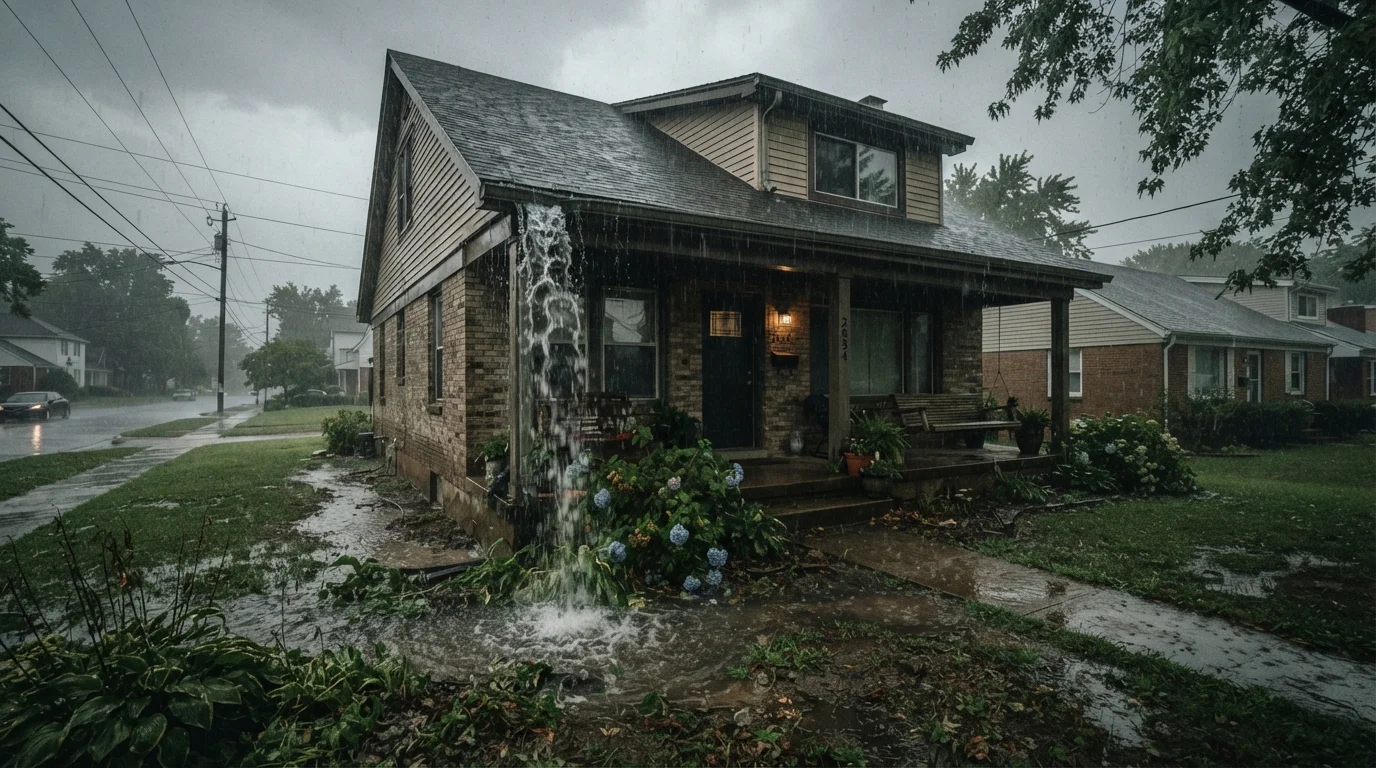
Letting downspouts discharge water too close to the foundation.
Why it happens: Many homes have downspouts that terminate at ground level right next to the house, which is how they were originally installed. Homeowners assume this is correct because it's the default setup.
Ignoring negative grading — soil or mulch that slopes toward the house instead of away from it.
Why it happens: Soil settles over time, and mulch beds get topped up without adjusting slope. Homeowners rarely check whether the grade around the foundation is still directing water outward.
Overlooking gaps and cracks around windows, doors, and utility penetrations.
Why it happens: Caulk and weatherstripping degrade gradually and invisibly. Homeowners often don't inspect these areas unless they notice a draft, and even then, the moisture risk isn't the first thing they think of.
Neglecting the roof and flashing while focusing only on gutters.
Why it happens: Gutters are visible from the ground. Flashing — the metal strips that seal roof joints around chimneys, skylights, and vents — requires a closer look and is often forgotten entirely.
The Real Cost of Ignoring These Vulnerabilities
Water problems compound quickly. A clogged downspout that causes overflow during a heavy rain may seem minor — until that overflow consistently soaks the soil against your foundation wall over several seasons. Once moisture begins infiltrating foundation concrete or block, you may be looking at efflorescence (white mineral deposits), cracking, mold growth in the crawl space or basement, and eventually structural concerns.
~29%
Share of homeowner insurance losses attributed to water damage
According to the Insurance Information Institute, water damage and freezing consistently account for a large portion of homeowner property loss claims in the U.S.
$11,000+
Average water damage repair cost
Industry estimates for water damage restoration vary widely, but significant intrusion events — particularly those involving mold remediation — routinely run into the thousands or tens of thousands of dollars.
The pattern is the same with gaps and grading issues: a small failure, left unaddressed, creates conditions that get progressively more expensive to reverse. As we discuss in our piece on deferred maintenance costs, skipping routine upkeep rarely saves money — it just shifts the cost to a future version of you facing a larger repair bill.
Mold Can Develop Faster Than You Expect
Under the right conditions — warmth, organic material, and persistent moisture — mold can begin growing within 24 to 48 hours of water intrusion. Once established in wall cavities, insulation, or subfloor materials, remediation becomes significantly more complex and expensive. Addressing the exterior source of moisture is the most effective prevention. If you suspect existing mold growth, a professional assessment is advisable before attempting cleanup.
Addressing exterior water management also connects to your home's long-term structural health. Tasks like checking siding, sealing penetrations, and clearing drainage pathways are covered more broadly in our overview of exterior maintenance for structural integrity.
This article provides general home maintenance information for educational purposes. Costs, materials, and local building requirements vary. For significant structural, drainage, or foundation concerns, consult a licensed contractor or structural engineer in your area.