

Key Takeaways
Why Keeping a Log Is Worth the Effort
Most homeowners handle repairs reactively — something breaks, they fix it, and the details fade. A maintenance log flips that pattern. By writing down what was done, when, and by whom, you build a living history of your home that pays dividends in three concrete ways: it helps you budget realistically, it prevents the same problem from going undiagnosed twice, and it reassures buyers when you eventually sell.
Think of it the way you might think of a vehicle's service history. A documented record signals that the property has been cared for responsibly. Buyers and their inspectors notice that — and it can simplify negotiations. For a deeper look at how recordkeeping parallels across asset types, see our article on vehicle maintenance records.
1–4%
Of home value spent on maintenance annually
A commonly cited rule of thumb among housing advisers suggests budgeting one to four percent of a home's value each year for upkeep, though actual costs vary widely by age and condition.
~35%
Of home sales complicated by undisclosed repair history
Industry observers note that a significant share of real estate transactions encounter delays or renegotiations tied to unanticipated repair findings during inspections, often due to missing maintenance records.
What to Record for Every Maintenance Task
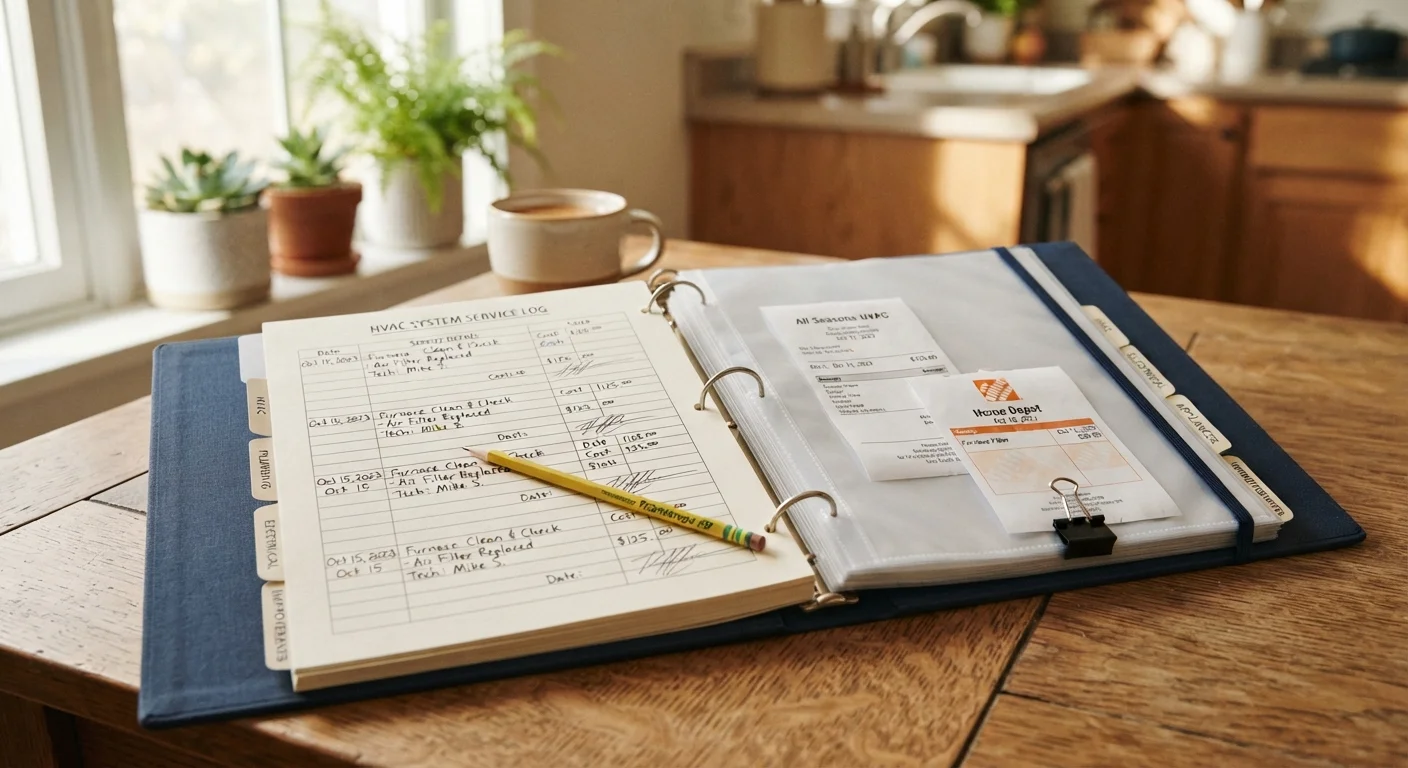
The most useful log entries share a handful of core fields. Whether you use a notebook, a spreadsheet, or a dedicated app, capture the following for each task:
Record the date and a brief description of every task completed.
Without dates, you can't reliably know when recurring tasks are due — or prove to a buyer that the roof was serviced two years ago rather than ten. Brief descriptions also prevent confusion between similar jobs done at different times.
Log the full cost of every repair and service call, including parts and labor.
Cost records help you benchmark future quotes, spot overcharging, and build an accurate picture of what your home actually costs to maintain each year. They also support annual budget planning.
Note the name, company, and license number of every contractor who performed work.
If a repair fails or a dispute arises, you need to know exactly who did the work and whether they were licensed. This information is difficult to reconstruct after the fact.
Document follow-up items or conditions the contractor flagged during the visit.
Technicians routinely note emerging issues — a water heater showing early corrosion, a roof section that will need attention in two years. Recording these observations turns them into actionable reminders rather than forgotten warnings.
Attach or reference photos of the work area before and after significant repairs.
Photos provide unambiguous evidence of a repair's scope and the condition of surrounding areas. This protects you if a future claim arises about pre-existing damage or the quality of completed work.
If you're just getting started with homeownership and aren't sure which tasks to be tracking, our guide on what maintenance actually looks like in your first year walks through the full cycle of upkeep to expect.
Special Categories Worth Tracking Separately
Beyond routine entries, certain records deserve their own section in your log because they carry legal or financial weight.
Permits and Inspections
Any work that required a building permit — additions, electrical panel upgrades, HVAC replacements — should be logged with the permit number, issuing municipality, and sign-off date. Missing permit records can stall a home sale or raise questions about whether work was done to code.
Warranties
Appliances, roofing materials, windows, and HVAC systems often carry multi-year warranties. Log the purchase date, the warranty term, and where the documentation is filed. When something fails, you won't have to search for paperwork.
Contractor Contact Information
A plumber who already knows your home's quirks is worth their weight in gold. Keeping contractor names, license numbers (where applicable), and phone numbers in your log means you're not starting from scratch every time.
Store Your Log in Two Places
Whether you use a physical binder or a digital file, keep a backup copy somewhere separate — a cloud folder, an email to yourself, or a copy at a trusted location. Maintenance records stored only on a single device or in one physical location can be lost to fire, flood, or hardware failure — exactly the events that make them most important.
For seasonal upkeep tasks that should be generating regular log entries, our seasonal home maintenance checklist provides a practical framework to follow year-round.
Getting Started and Staying Consistent
The best log is one you'll actually use. Start simple: a shared Google Sheet or a notes app folder works fine. Label columns for date, task, cost, contractor, and any follow-up needed. Spend five minutes after each maintenance task updating it while the details are fresh.
Because maintenance costs vary significantly by home age and size, pairing your log with a realistic annual budget helps you plan rather than react. See our guide on building a home maintenance budget for common frameworks homeowners use to estimate yearly spending.
This article is for general informational purposes only. Consult a licensed contractor or real estate professional for guidance specific to your home's condition and local regulations.