

Key Takeaways
Why Maintenance Records Are More Than Just Paperwork
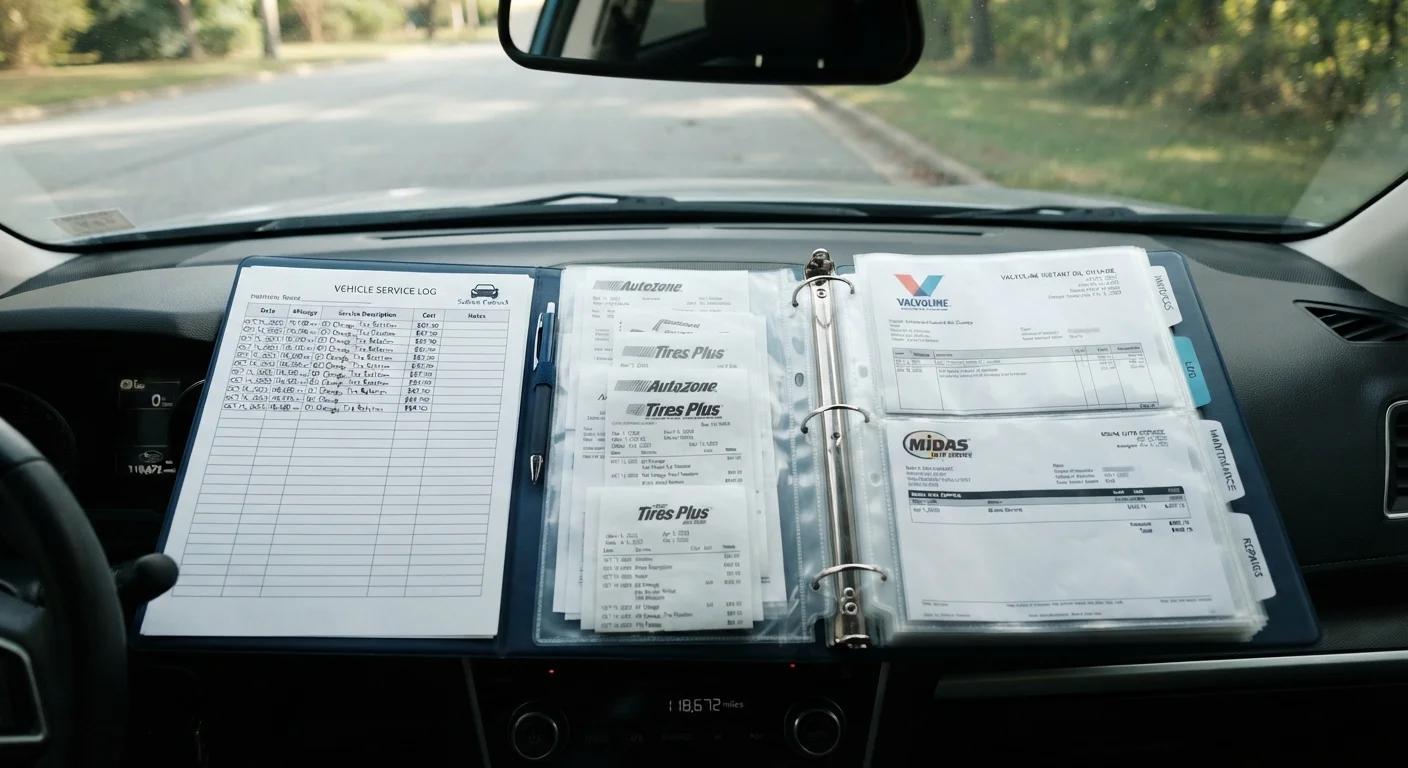
Most drivers toss their service receipts without a second thought. That habit can cost real money down the road. A documented service history does three things simultaneously: it proves the vehicle has been cared for, it provides mechanics with a diagnostic baseline, and it protects you in warranty or dispute situations.
When selling a used vehicle, buyers and dealers routinely factor in service history. A car with a verifiable paper trail signals responsible ownership and reduces the buyer's perceived risk — which can translate to a stronger asking price. For context on what buyers can see independently, see our guide on understanding a vehicle history report.
Records also help your shop. A mechanic who can see that brake fluid was last flushed 40,000 miles ago, or that a timing belt was replaced recently, can avoid unnecessary repeat work and prioritize the right services. That efficiency saves you time and money.
What Documents to Save
Not every piece of paper related to your car needs to be kept forever, but certain documents are worth holding onto for the life of the vehicle — or at least its time in your ownership.
For a detailed breakdown of which services occur at which mileage intervals, our complete overview of scheduled vehicle maintenance explains what each service involves and why it exists.
How to Organize and Store Your Records
Consistency matters more than complexity. A simple system you actually use will outperform an elaborate one you abandon after three months.
When Records Become Critical
Certain situations turn maintenance records from a nice-to-have into a genuine necessity.
Warranty claims: Both factory and extended warranties may contain maintenance requirements. If a powertrain component fails and you can't show the engine received regular oil changes, a warranty administrator may have grounds to deny the claim. Keep records at least as long as any active warranty period.
Insurance and legal disputes: If your vehicle is involved in an accident and a prior mechanical issue becomes relevant, documentation of your maintenance history can support your position. While no record system guarantees outcomes, a clean history is always harder to dispute than a blank one.
Pre-purchase inspections: If you're buying a used vehicle, request the seller's records. If they don't exist, that absence is itself useful information — and a strong argument for a thorough independent inspection before purchase.
The same principle applies to other assets you own. Homeowners keeping records of property upkeep benefit in similar ways — the value of a home maintenance log follows the same logic: documentation protects and informs.