

Key Takeaways
Our Verdict
Budgeting by hand and budgeting with an app each solve different problems. Manual methods excel at building deliberate spending habits and need no technology, while apps reduce friction for people juggling multiple accounts or irregular spending. Neither guarantees financial success on its own — the method that gets used regularly is always the better one.
| Best for | Recommended |
|---|---|
| Those who want to build a stronger emotional connection with their spending | Budgeting by hand |
| People managing multiple accounts or complex household cash flows | Budgeting with an app |
| Beginners learning the fundamentals of budgeting for the first time | Budgeting by hand |
| Those who frequently forget to log expenses or want automated categorization | Budgeting with an app |
What Each Approach Actually Involves
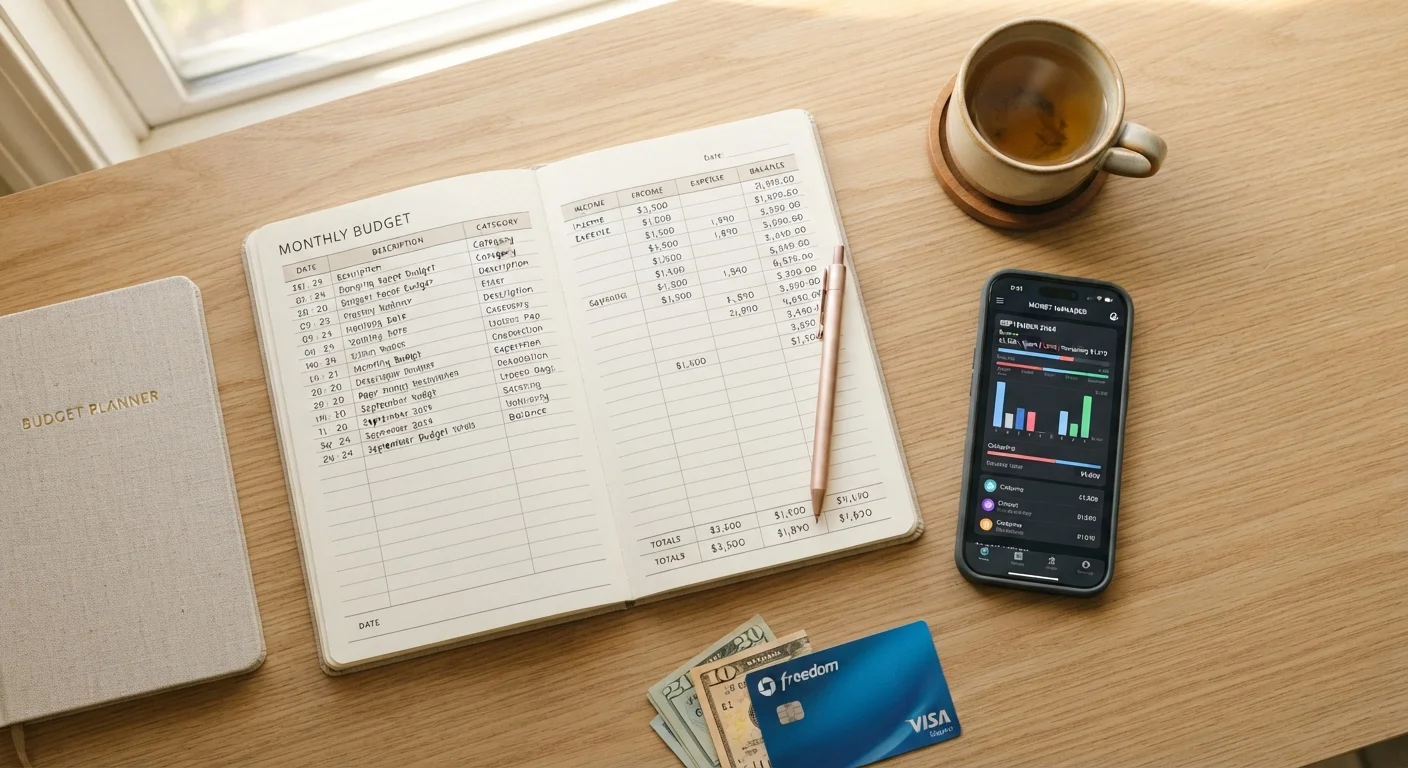
Budgeting by hand means recording income and expenses in a physical notebook, a printed worksheet, or a spreadsheet you build and update yourself. You write numbers, do the math, and review your categories on your own schedule. Budgeting with an app means using software — on your phone or computer — that typically links to your bank accounts, imports transactions automatically, and organizes spending into categories for you.
Both get you to the same destination: a picture of where your money goes. They just take different roads. For context on the underlying frameworks you might apply with either tool, see budget methods worth knowing to explore structures like pay-yourself-first or zero-based approaches.
| Budgeting by Hand | Budgeting with an App | |
|---|---|---|
| Setup time | Moderate — design your own layout | Low — guided onboarding, account linking |
| Daily effort | High — manual entry required | Low — transactions auto-imported |
| Spending awareness | High — writing reinforces mindfulness | Moderate — easy to ignore notifications |
| Privacy | Strong — no account access needed | Variable — depends on app data policies |
| Cost | Free or minimal (paper, spreadsheet) | Free tiers exist; premium plans vary |
| Best for complex finances | Limited — harder to aggregate data | Strong — handles multiple accounts well |
| Risk of falling off | Higher if routine breaks down | Lower due to automation, but not zero |
The Case for Budgeting by Hand
Writing things down forces you to confront numbers directly. Research in behavioral finance consistently suggests that people who manually record spending develop a sharper awareness of their habits compared to those who rely solely on automated tracking. There's a reason financial counselors often start clients with pen and paper before introducing any software.
Manual budgeting also requires no account linking, no subscription, and no data sharing with a third party. For people concerned about financial privacy or those with complicated account structures that don't sync cleanly, this is a genuine advantage. Spreadsheets offer a middle ground — the precision of a digital tool without the account-access requirements of an app.
The obvious limitation is time. Logging every coffee purchase and utility bill takes discipline. If life gets hectic and you skip a few weeks, your manual record becomes unreliable quickly.
Start Simple, Then Refine
If you're new to budgeting, starting with a single notebook page listing income, fixed bills, and a target for discretionary spending is enough. Complexity can come later once the habit is established. See how to set up a monthly budget you'll stick to for a practical step-by-step walkthrough.
The Case for Budgeting with an App
Apps reduce the friction of daily tracking significantly. Once connected to your accounts, most will categorize transactions automatically and show you real-time snapshots of where you stand against your budget. For households with multiple income streams, several credit cards, or irregular expenses, this automation can make the difference between actually tracking spending and giving up entirely.
Many apps also offer features like bill reminders, goal tracking, and spending trend analysis that would take considerable effort to replicate manually. However, automatic categorization isn't perfect — miscategorized transactions are common and require periodic review to keep your data meaningful. If you use autopay alongside a budgeting app, review how autopay can affect your budget to avoid reconciliation blind spots.
Don't Confuse Tracking with Planning
An app that shows you where money went is a tracking tool — not a budget by itself. Without deliberate spending targets set in advance, you may track your overspending accurately while doing little to change it. Make sure you're using any tool to plan ahead, not just review the past.
Choosing What Fits Your Life
The honest answer is that the best budgeting method is the one you'll maintain. Consider a few practical questions:
- How consistent are you with manual tasks? If you already journal, track workouts, or keep lists by hand, a paper budget may feel natural. If those habits tend to lapse, an app's automation is a real asset.
- How comfortable are you sharing financial data? Apps that link to bank accounts involve data agreements you should read carefully. Manual methods keep your numbers entirely offline.
- How complex is your financial picture? A single checking account and a stable monthly income is straightforward to track by hand. Multiple accounts, variable income, or shared household finances may benefit from a tool that aggregates automatically. Freelancers and gig workers in particular may want to read about budgeting on an irregular income.
A hybrid model — using an app to capture daily transactions and a notebook or spreadsheet for monthly planning and reflection — combines the speed of automation with the intentionality of writing things down. Many people find this the most sustainable long-term approach.
For a structured way to bring any of these tools together into an actionable plan, the personal budgeting complete framework covers every stage from setup through long-term habit-building.
This article provides general financial information for educational purposes only and does not constitute personalized financial advice. Consult a qualified financial professional for guidance specific to your situation.