

Key Takeaways
Option A
Checking Account
The everyday transaction hub for your spending money.
Best for: Day-to-day purchases, bill payments, paycheck deposits, and any money you need quick access to.
Option B
Savings Account
The dedicated holding space for money you're building over time.
Best for: Emergency funds, short-term goals, and any cash you want to earn interest on while keeping it accessible.
If you need to pay bills, swipe a debit card, and manage daily cash flow
Checking Account
Checking accounts are built for unlimited transactions with no friction. Your debit card, direct deposit, and autopay all run through here.
If you're building an emergency fund or saving toward a specific goal
Savings Account
Keeping goal money in a separate savings account earns interest and creates a psychological barrier that reduces accidental spending.
If you want your idle cash to work harder while staying accessible
Savings Account
Savings accounts pay interest that checking accounts generally don't. For a deeper look, consider comparing standard and high-yield options.
If you're setting up your first bank account and aren't sure where to start
Checking Account
A checking account handles the mechanics of modern financial life — paychecks in, bills out. Add a savings account once your cash flow is stable.
The Core Difference in One Sentence
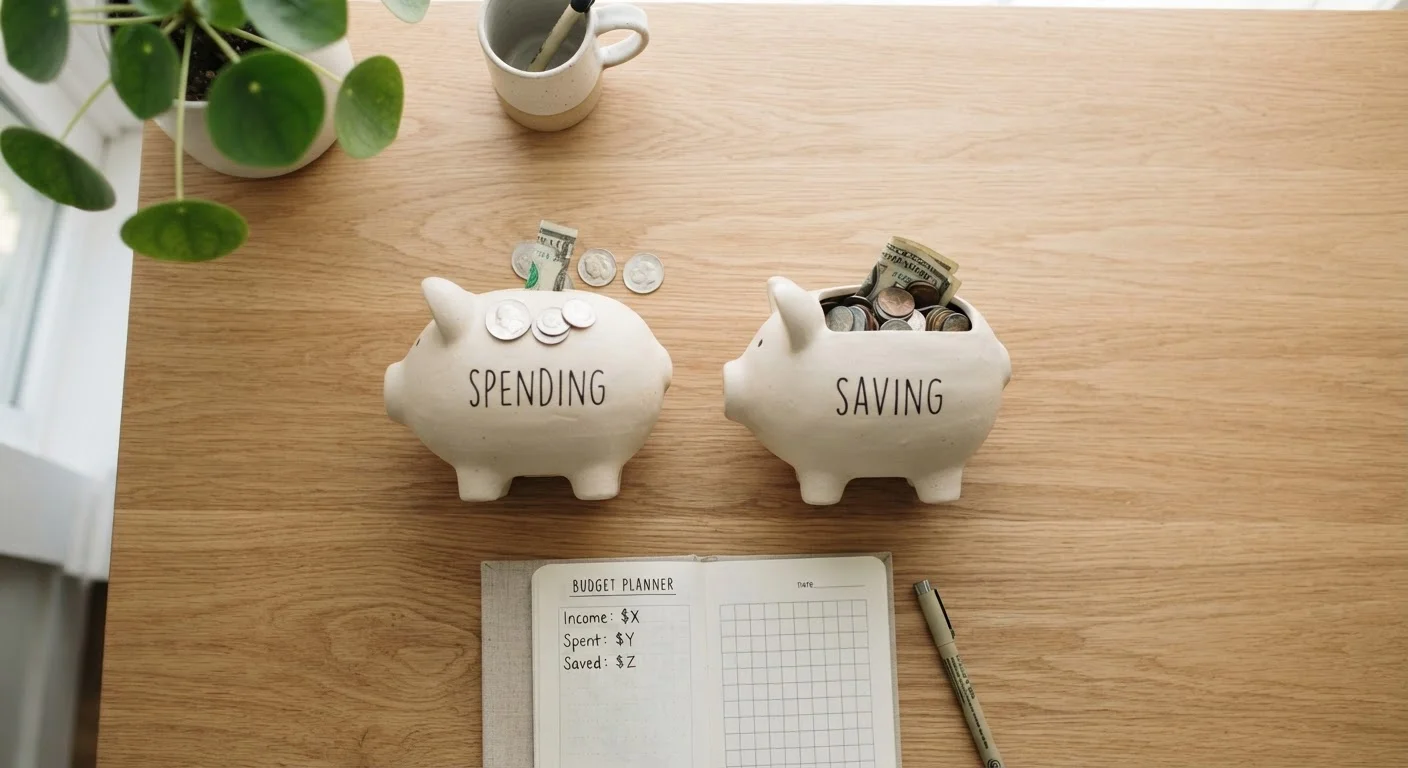
A checking account is where money flows in and out constantly. A savings account is where money sits, earns interest, and waits for a purpose. That distinction sounds simple, but ignoring it leads to two very common mistakes: spending money meant for savings, or earning zero interest on cash that's just parked in checking.
Both account types are deposit accounts insured by the FDIC (Federal Deposit Insurance Corporation) up to $250,000 per depositor, per institution. That makes them among the safest places to keep liquid funds — though neither is designed to replace long-term investing.
| Criterion | Checking Account | Savings Account |
|---|---|---|
| Primary purpose | Daily spending & transactions | Storing & growing money |
| Transaction limits | Unlimited | Often limited (varies by bank) |
| Earns interest | Rarely, and minimally | Yes, at varying APY rates |
| Debit card access | Standard feature | Usually not available |
| Best use case | Bills, payroll, everyday purchases | Emergency fund, savings goals |
| FDIC insured | Yes, up to $250,000 | Yes, up to $250,000 |
How Checking Accounts Actually Work
Checking accounts are optimized for volume and speed. There's no practical limit on how many times you can deposit, withdraw, transfer, or spend in a given month. Your direct deposit lands here. Your rent autopay pulls from here. Your debit card links here. This is the operational center of your financial life.
Most checking accounts charge monthly maintenance fees, though many waive them when you meet minimum balance requirements or set up direct deposit. Some online banks offer fee-free checking entirely. Interest on checking balances is rare and, when it exists, typically minimal.
One feature worth knowing: overdraft protection. If you spend more than your balance, the bank may cover the difference — but often charges a fee. Understanding your bank's overdraft policy prevents costly surprises. Managing that cash flow well connects directly to the kind of budgeting discipline covered in the Budgeting Basics hub.
How Savings Accounts Actually Work
Savings accounts pay interest — expressed as an APY (Annual Percentage Yield) — on your balance. Traditional savings accounts at brick-and-mortar banks have historically paid very low APYs, sometimes a fraction of a percent. High-yield savings accounts, often offered by online banks, have paid significantly more, though rates fluctuate with broader economic conditions.
Historically, Federal Reserve Regulation D limited savings account withdrawals to six per statement cycle. The Fed suspended that limit in 2020, but many banks still enforce it or charge excess withdrawal fees — so savings accounts remain better suited for infrequent access than checking accounts.
The practical value of a savings account isn't just the interest. It's the separation. Money in a savings account is slightly harder to spend impulsively, which is why financial planners often recommend keeping your emergency fund in a dedicated savings account rather than letting it sit in checking. For more on how different savings account types compare structurally, see high-yield vs. traditional savings accounts.
~43%
Americans with no dedicated emergency savings account
Bankrate's annual Emergency Savings Report has consistently found that a large share of U.S. adults lack a dedicated emergency fund separate from their everyday spending account.
$250,000
FDIC insurance limit per depositor, per institution
Both checking and savings accounts at FDIC-member banks are insured up to this amount, making them among the safest places to hold liquid funds.
Using Both Accounts Together Strategically
The most effective approach for most households isn't choosing one account over the other — it's using them in tandem with clear rules for each.
- Checking: Receives income, handles all regular expenses and bills, funds your debit card. Keep a comfortable buffer here — enough to cover 2–4 weeks of expenses — but not much more.
- Savings: Holds your emergency fund (typically 3–6 months of essential expenses), short-term savings goals, and any cash you don't need immediately.
Automating a transfer from checking to savings on payday is one of the most effective ways to build savings without relying on willpower. The savings strategies that tend to stick often start with this single habit.
As your financial picture grows more complex — balancing debt payoff, sinking funds, and saving simultaneously — you may find it useful to review the annual savings health check to make sure your account structure still fits your goals. For households navigating both savings and debt, managing savings and debt at the same time offers a practical framework.
This article is for general informational and educational purposes only and does not constitute personalized financial advice. Consult a qualified financial professional for guidance specific to your circumstances.