

Key Takeaways
Why Small Expenses Deserve a Closer Look
It's rarely one large expense that quietly destabilizes a budget. More often, it's an accumulation of small, recurring, forgettable charges — each individually reasonable, collectively significant. The challenge is that the human brain isn't naturally wired to aggregate small numbers into their annual equivalents. A $3 charge feels like a $3 decision. It rarely feels like a $1,095 annual decision.
This isn't about moralizing over daily spending or suggesting that every small purchase needs to be eliminated. It's about giving these expenses the same visibility that rent or car payments receive. Understanding fixed versus variable expenses is a useful starting framework, but small daily costs often blur the lines — they're variable in theory but nearly fixed in practice because they're so habitual.
Try the Annual Multiplier Exercise
Take any regular small expense and multiply its per-occurrence cost by how often you incur it in a year. Seeing a $4 purchase become $1,040 annually changes the mental frame immediately. This single habit — done in under a minute — is often enough to prompt a more deliberate spending decision.
The six areas below represent the most common ways small expenses accumulate financial weight over time — and how to evaluate each with clear eyes.
The math of daily spending compounds quickly
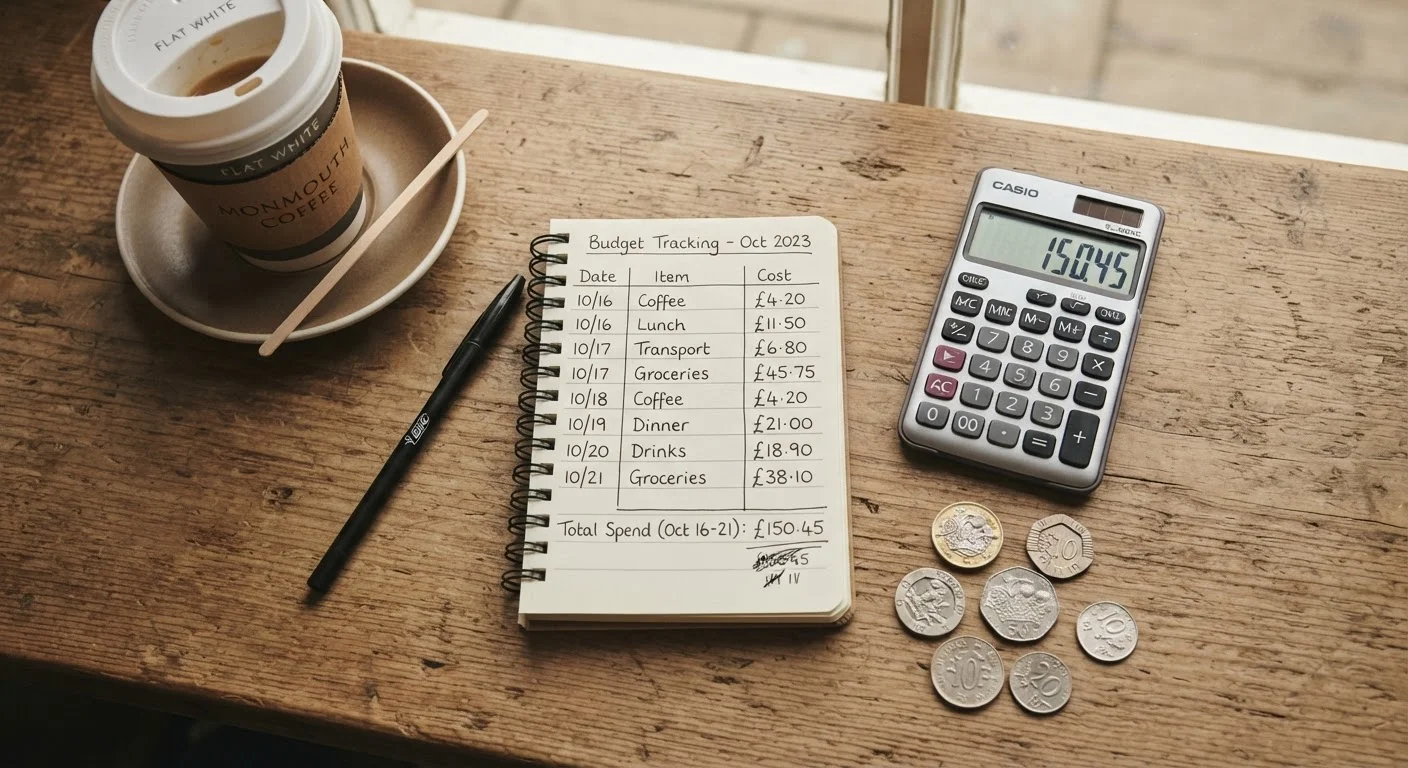
Most people dramatically underestimate what a routine small purchase costs annually. A $4 coffee five days a week totals roughly $1,040 per year. A $12 weekday lunch habit runs close to $3,000. These aren't judgments about whether those choices are worth it — they're simply the arithmetic most people never sit down to do.
The point isn't frugality for its own sake. It's that most small daily expenses never get assigned a yearly number. Once you see a $6 purchase as a $1,500 annual commitment, you make the choice with better information. Some habits will still be worth it. Others won't survive the math.
A $6 daily habit is a $1,500 annual commitment — most people never see it that way.
Subscription creep is the quietest budget leak
Streaming services, app upgrades, digital tools, gym memberships, meal kits — each costs somewhere between $5 and $20 per month and each gets authorized once, then largely forgotten. The problem is that these charges rarely show up in a person's mental accounting. They're automated, they're small, and they hit at random dates across the month.
According to various consumer surveys, Americans consistently underestimate how much they spend on subscriptions — often by a factor of two or more. Auditing your active subscriptions periodically and asking whether each one is still actively used is one of the simplest, highest-return budget exercises available.
Subscriptions are forgotten almost as soon as they're authorized — that's what makes them a persistent budget leak.
Bank and payment fees erode balances silently
Overdraft fees, out-of-network ATM charges, monthly maintenance fees, foreign transaction fees — none of these are dramatic individually. A $3 ATM fee here, a $35 overdraft charge there. But for households that encounter these regularly, the annual total can easily reach several hundred dollars.
These fees are particularly frustrating because they don't deliver any product or experience — they're pure friction costs. Reviewing your account statements for recurring fees and understanding what triggers them is a straightforward step that can stop money from leaving your account for no useful return. This connects directly to how autopay setups can sometimes backfire when account timing isn't carefully managed.
Bank fees deliver nothing in return — they're pure friction costs that compound over months and years.
Convenience spending carries a hidden premium
Convenience is real and has genuine value — but it's priced at a premium that's easy to absorb without noticing. Delivery app fees and markups, airport food prices, gas station snacks, and pre-cut grocery items all cost meaningfully more than their base alternatives. Each transaction feels like a reasonable trade-off in the moment.
The cumulative question is worth asking periodically: across an average week, how much of your spending reflects a convenience premium? That number isn't necessarily too high — but it should be a known number, not an invisible one. Grouping expenses into categories often reveals convenience spending as its own quiet line item.
Convenience spending is real value, but its premium deserves to be a known number, not an invisible one.
Opportunity cost is the frame that matters most
The true weight of small daily expenses isn't just the dollar amount — it's what those dollars could do instead. Even modest recurring savings, redirected consistently toward debt reduction or a savings account, can make a meaningful difference over time. This isn't about dramatic sacrifice; it's about intentional allocation.
Consider the difference between $50 a month drifting out in small unexamined charges versus $50 a month directed toward an emergency fund or paying down a balance. Over a year, that's $600 working for you rather than disappearing. Building a consistent savings habit often starts exactly here — not with a windfall, but with recaptured small amounts.
Fifty dollars a month recaptured from unexamined spending is $600 a year working for you instead of disappearing.
Awareness, not restriction, is the actual goal
The point of examining small daily expenses isn't to cut everything enjoyable or to optimize every dollar into austerity. It's to replace unconscious spending with deliberate spending. A purchase you've consciously decided is worth its cost is a completely different thing from a purchase you make on autopilot and never really evaluate.
A useful habit is doing a brief monthly review — five minutes looking at the last 30 days of transactions, noting what was automatic versus what was chosen. A monthly budget built around real spending patterns makes this review easier and more actionable over time. The goal is clarity, not restriction.
A purchase you've consciously chosen is entirely different from one you make on autopilot and never evaluate.
How to Put This Into Practice
Evaluating small daily expenses doesn't require a spreadsheet overhaul or a strict spending freeze. It requires a periodic, honest look at where money is actually going — as opposed to where you think it's going. Most people find a meaningful gap between the two.
This Is General Financial Information
The figures and examples in this article are illustrative. Everyone's financial situation is different, and what counts as a worthwhile or wasteful expense depends entirely on individual income, goals, and circumstances. For guidance tailored to your specific situation, consider consulting a licensed financial adviser or counselor.
Start by pulling one month of bank and credit card statements and categorizing transactions into rough buckets. Look specifically for recurring charges, convenience premiums, and fees. Then ask a simple question for each: Is this worth its annual cost? Some will clearly be yes. Others will surprise you. For a deeper framework, understanding your full spending category picture can help structure that analysis. And for anyone looking to redirect recaptured dollars into savings, savings strategies with a track record for sticking offers practical next steps.
This article provides general financial information for educational purposes only and does not constitute personalized financial advice. Consult a qualified financial professional for guidance specific to your situation.