

Key Takeaways
Option A
Fixed Expenses
The predictable, non-negotiable costs that anchor your budget.
Best for: Calculating your minimum monthly financial obligations and establishing a reliable spending baseline.
Option B
Variable Expenses
The flexible costs that shift month to month and offer the most room to adjust.
Best for: Finding opportunities to cut spending, manage cash flow, and adapt your budget when income changes.
If you want to know your bare-minimum monthly survival number
Fixed Expenses
Adding up only your fixed costs gives you the floor — the amount you must earn just to keep the lights on and your lease intact.
If you're looking for places to cut spending right now
Variable Expenses
Variable costs fluctuate by definition, which means they respond to your decisions. Groceries, dining, and subscriptions are all adjustable without uprooting your life.
If you earn a paycheck that changes month to month
Variable Expenses
When income is unpredictable, variable expenses become your primary lever — pulling back on them during lean months protects your fixed commitments.
If you're planning a long-term budget or financial goal
Fixed Expenses
Restructuring large fixed costs — like refinancing a loan or moving to a less expensive home — can free up significant money every month for years.
What Fixed and Variable Expenses Actually Mean
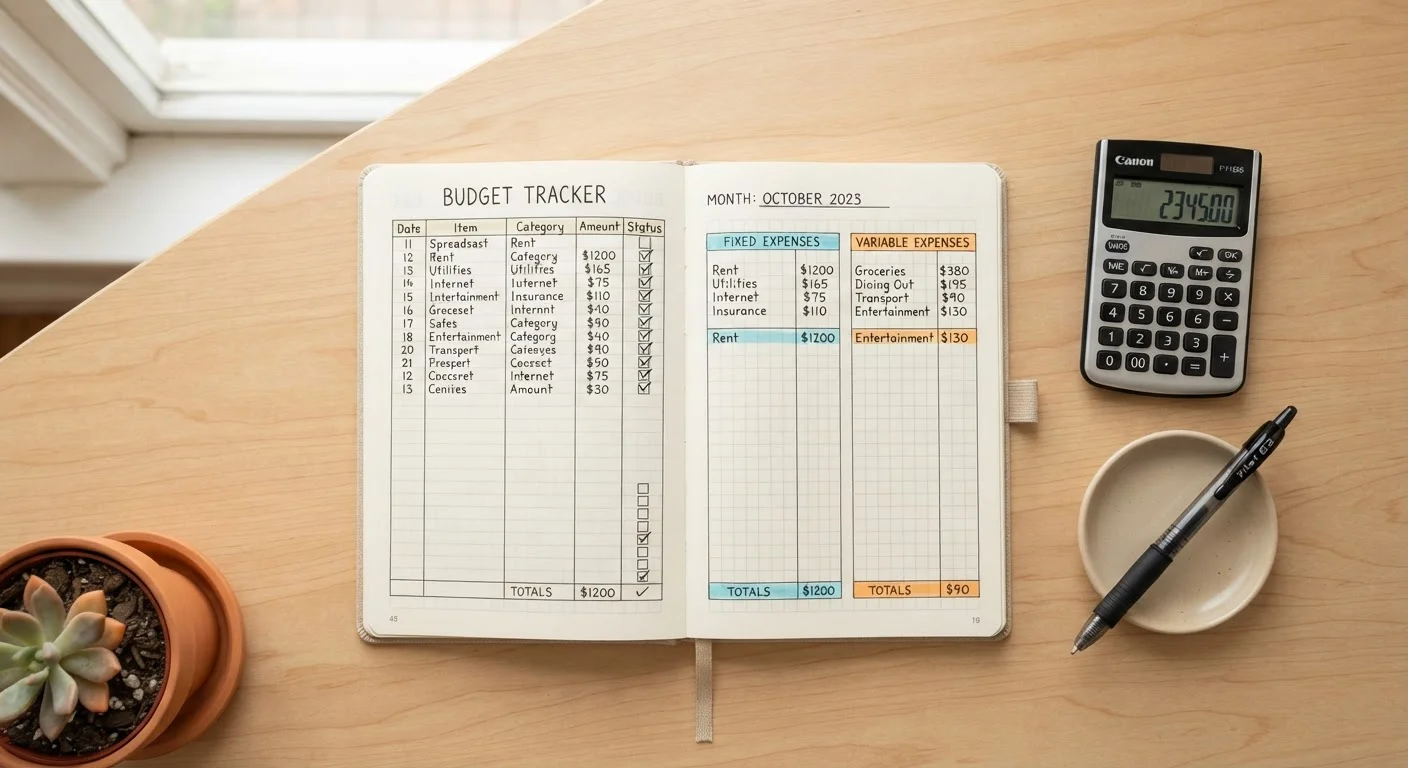
Every dollar you spend each month falls into one of two buckets: fixed or variable. Fixed expenses are costs that stay the same regardless of how much you use a service or how your month unfolds — think rent or mortgage, car payments, insurance premiums, and loan installments. The amount due doesn't move. Variable expenses, by contrast, shift based on your behavior, consumption, and circumstances — groceries, gas, utilities, dining out, and entertainment all fall here.
This isn't just an accounting technicality. The split tells you something critical: how much of your income is already spoken for before you make a single discretionary decision. Understanding which costs are truly locked in — and which ones respond to your choices — is the starting point for any honest budget. To go deeper into how these categories fit together, see how spending categories reveal your real money patterns.
| Criterion | Fixed Expenses | Variable Expenses |
|---|---|---|
| Amount each month | Stays the same | Fluctuates with use or choices |
| Examples | Rent, car loan, insurance | Groceries, gas, dining, utilities |
| Control you have | Limited in the short term | High — adjustable month to month |
| Budget role | Sets your financial floor | Primary lever for spending adjustments |
| How to reduce | Refinance, renegotiate, or restructure | Spend less, cut back, or eliminate |
| Risk if income drops | High — obligations don't shrink | Lower — can be cut immediately |
Why the Distinction Shapes Every Budget Decision
Your fixed expenses define your financial floor. If rent is $1,400 and your car payment is $350, those dollars are gone before you buy a single meal. That floor number is essential to know — it tells you the minimum income you need each month to avoid falling behind on hard commitments.
Variable expenses, however, are where your budget actually breathes. When money is tight, you can reduce grocery spending, pause a streaming subscription, or drive less. None of those changes require a long-term commitment or a difficult conversation with a landlord. This flexibility makes variable costs your primary adjustment tool during financially stressful periods.
~33%
Average share of income spent on housing
The U.S. Bureau of Labor Statistics Consumer Expenditure Survey consistently finds housing is the single largest expense category for American households.
~15%
Average share spent on food (home and away)
Food spending — split between groceries and dining out — represents one of the most controllable variable expense categories for most households, per BLS data.
That said, variable expenses can quietly grow out of control. Small recurring purchases — a daily coffee, a handful of app charges, frequent convenience stops — compound in ways most people underestimate. How small daily expenses add up over time is worth examining carefully once you've categorized your spending.
How to Use Both Categories When Building Your Budget
A practical approach: list every fixed expense first and total them. That sum is your non-negotiable monthly commitment. Then list variable expenses based on recent bank and credit card statements — be honest, not optimistic. Together, these two totals should be compared against your monthly take-home income.
If your fixed costs alone consume 70% or more of your income, you likely have limited room to maneuver. In that situation, addressing fixed expenses — negotiating a lower insurance rate, refinancing debt, or moving to more affordable housing — may deliver more relief than pinching variable spending. For those carrying a mortgage, understanding fixed-rate vs. adjustable-rate mortgages illustrates how even a large fixed cost can have structural flexibility built in.
If your income varies month to month — as it does for freelancers and gig workers — this framework becomes even more critical. The goal is to keep fixed costs low enough that even a weak income month covers them. Budgeting strategies for irregular income offers specific approaches for managing this challenge. Once you've categorized your expenses clearly, the next step is putting a full budget together: setting up a monthly budget you'll actually stick to walks through that process step by step.
Some Expenses Blur the Line
Not every cost fits neatly into one category. Utilities like electricity and water are partly fixed (a baseline service charge) and partly variable (usage-based charges). Cell phone plans with overage fees or tiered data work similarly. When categorizing these, it's practical to record the average amount over the past three months as a working estimate, and revisit it seasonally.
This article is for general informational and educational purposes only and does not constitute personalized financial advice. Consult a qualified financial professional for guidance specific to your situation.