

Key Takeaways
Pet Body Condition Score
A body condition score (BCS) is a standardized way veterinarians — and pet owners — assess whether an animal is underweight, at a healthy weight, or overweight. It's based on a hands-on and visual evaluation of fat coverage over key areas like the ribs, spine, and waist. Most vets use a 5-point or 9-point scale, with the middle values representing ideal condition.
The BCS system was developed to provide a consistent, breed-neutral tool for evaluating body fat, since weight in pounds alone doesn't account for differences in frame size or muscle mass.
Why Pet Weight Matters More Than You Might Think
Many pet owners notice their companion has filled out a little but don't realize how quickly excess weight can become a serious health issue. Research suggests that a majority of pets seen in veterinary practices in the United States are overweight or obese, yet many owners rate their pet's weight as normal. This gap between perception and reality is one of the most common barriers to early intervention.
The consequences of carrying extra weight go well beyond appearance. Excess body fat is metabolically active — it produces inflammatory compounds that can accelerate joint breakdown, impair insulin sensitivity, and stress the cardiovascular system. For pets, even a modest amount of extra weight can reduce lifespan and diminish daily quality of life. Understanding the signs early gives you and your vet the best chance to act.
59%
U.S. dogs classified as overweight or obese
According to the Association for Pet Obesity Prevention's annual survey, more than half of dogs seen in veterinary practices are above a healthy body condition score.
61%
U.S. cats classified as overweight or obese
The same Association for Pet Obesity Prevention survey found cats exceed even dogs in obesity prevalence in the United States.
2+ years
Potential reduction in lifespan from obesity
Veterinary studies suggest that chronically overweight pets may live meaningfully shorter lives than their healthy-weight counterparts, with some estimates exceeding two years of reduced lifespan.
How to Check Your Pet's Body Condition at Home
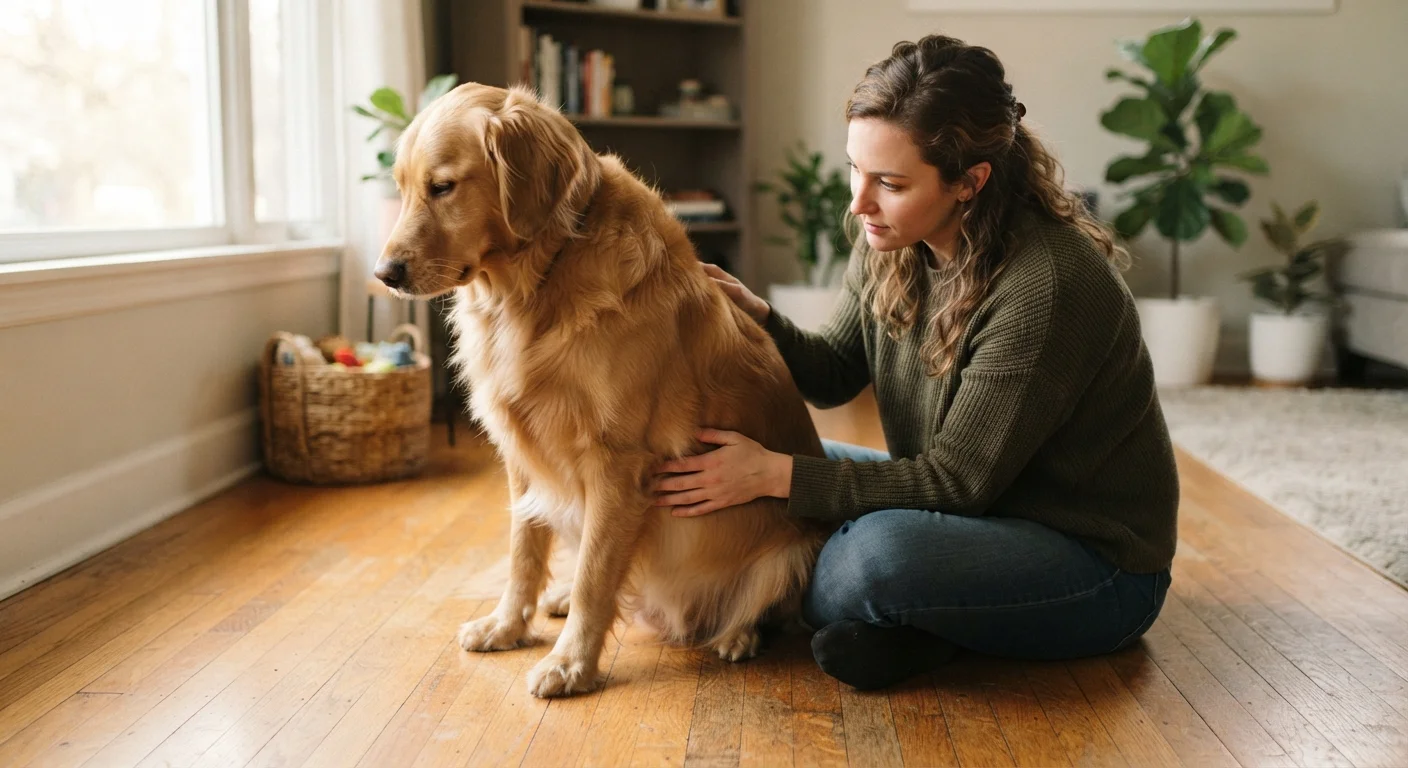
Body weight alone doesn't tell the full story — a muscular 80-pound Labrador and an obese 80-pound Labrador look and feel very different. The body condition score (BCS) approach gives you a more meaningful picture. Here's how to do a simple at-home assessment:
- Rib check: Place both hands on your pet's rib cage and gently press. You should be able to feel individual ribs easily without pressing hard. If you have to dig in to find them, there's likely too much fat covering them.
- Waist check: Look at your pet from directly above. There should be a visible narrowing behind the ribs — a recognizable waist. A pet with no discernible waist or a barrel-shaped trunk may be overweight.
- Tuck check: View your pet from the side. The abdomen should tuck upward from the chest toward the hind legs. A sagging or rounded belly — especially in cats — is a common sign of excess weight.
If your findings raise concern, bring them to your veterinarian rather than making dietary changes on your own. They can formally assess BCS, rule out underlying conditions like hypothyroidism or Cushing's disease, and guide next steps safely. You might also want to learn more about what goes into your pet's bowl — see our guide to reading pet food labels to better understand calorie density and ingredient quality.
Use Your Hands, Not Just Your Eyes
Body fat in pets — especially cats and thick-coated dogs — can be deceptively hidden under fur. Don't rely on visual assessment alone; always physically feel for ribs and waist definition. Making this a monthly routine takes less than two minutes and helps you catch gradual changes before they become significant health issues.
Behavioral and Physical Signs That Suggest a Problem
Weight-related health changes often show up in how a pet moves and acts before an owner notices a physical change. Watch for these signals:
- Decreased activity or play: A pet that used to chase toys or run in the yard but now tires quickly or refuses to engage may be experiencing joint discomfort worsened by excess weight.
- Heavy or labored breathing: Overweight pets — particularly flat-faced breeds like Bulldogs or Persian cats — may pant or breathe heavily even with minimal exertion.
- Difficulty grooming: Cats that can no longer reach their hindquarters to groom, or dogs that struggle to bend down to scratch, may be limited by abdominal fat or reduced flexibility.
- Reluctance to climb stairs or jump: If a pet that previously jumped onto furniture or climbed stairs now hesitates, joint pain — often worsened by extra weight — may be a factor.
These signs can also indicate conditions unrelated to weight, so it's important not to assume. Our article on how pets show pain covers many of these subtle signals in greater depth and is worth reading alongside this one.
What to Do If You're Concerned
If your at-home assessment or behavioral observations suggest your pet may be overweight, the right first step is a veterinary visit — not a crash diet. Your vet will weigh your pet, assess body condition formally, and check for any underlying health factors that contribute to weight gain. From there, they may recommend a specific caloric target, a therapeutic weight-loss food, or an increased activity plan tailored to your pet's age and mobility.
Gradual, consistent progress is safer and more sustainable than rapid weight loss. For cats especially, losing weight too quickly can cause hepatic lipidosis, a dangerous liver condition. Monthly weigh-ins with your vet help track progress and adjust the plan as needed.
At home, you can support the process by measuring food portions precisely (rather than estimating), reducing or eliminating high-calorie treats, and incorporating gentle daily activity — short walks for dogs, interactive play sessions for cats. Small, steady changes add up significantly over weeks and months.
This article is for general informational purposes only and does not constitute veterinary or medical advice. Always consult a licensed veterinarian for guidance specific to your pet's health, diet, and weight management needs.