

Key Takeaways
Skin Type
Skin type refers to the characteristic way your skin behaves day to day — how much oil it produces, how it retains moisture, and how it reacts to products or environmental changes. The four main categories are oily, dry, combination, and sensitive (or normal). Your skin type is largely determined by genetics, though hormones, climate, and age can shift it over time.
Dermatologists often distinguish between skin type (an inherent trait) and skin condition (a temporary state like dehydration or breakouts), which can overlap and change independently.
Why Skin Type Matters More Than You Think
It's a familiar scenario: your best friend swears by her cleanser, you try it, and two weeks later your face is a red, flaky mess. You didn't do anything wrong — your skin types just don't match. Skincare products are formulated with specific skin behaviors in mind, so understanding yours is the foundation of any routine that actually delivers results.
Copying someone else's regimen without knowing your own skin type is a bit like borrowing someone else's prescription glasses. The lenses might be high quality, but they're not calibrated for you. Once you identify what type of skin you're working with, choosing cleansers, moisturizers, and treatments becomes far less guesswork.
~50%
Adults who report having combination skin
Dermatology literature frequently identifies combination skin as the most commonly self-reported skin type among adults.
60–70%
People who self-report skin sensitivity
Multiple consumer surveys across the U.S. and Europe have found that a majority of adults describe their skin as sensitive or reactive to at least some products.
The Four Main Skin Types — and What They Really Mean
Oily Skin
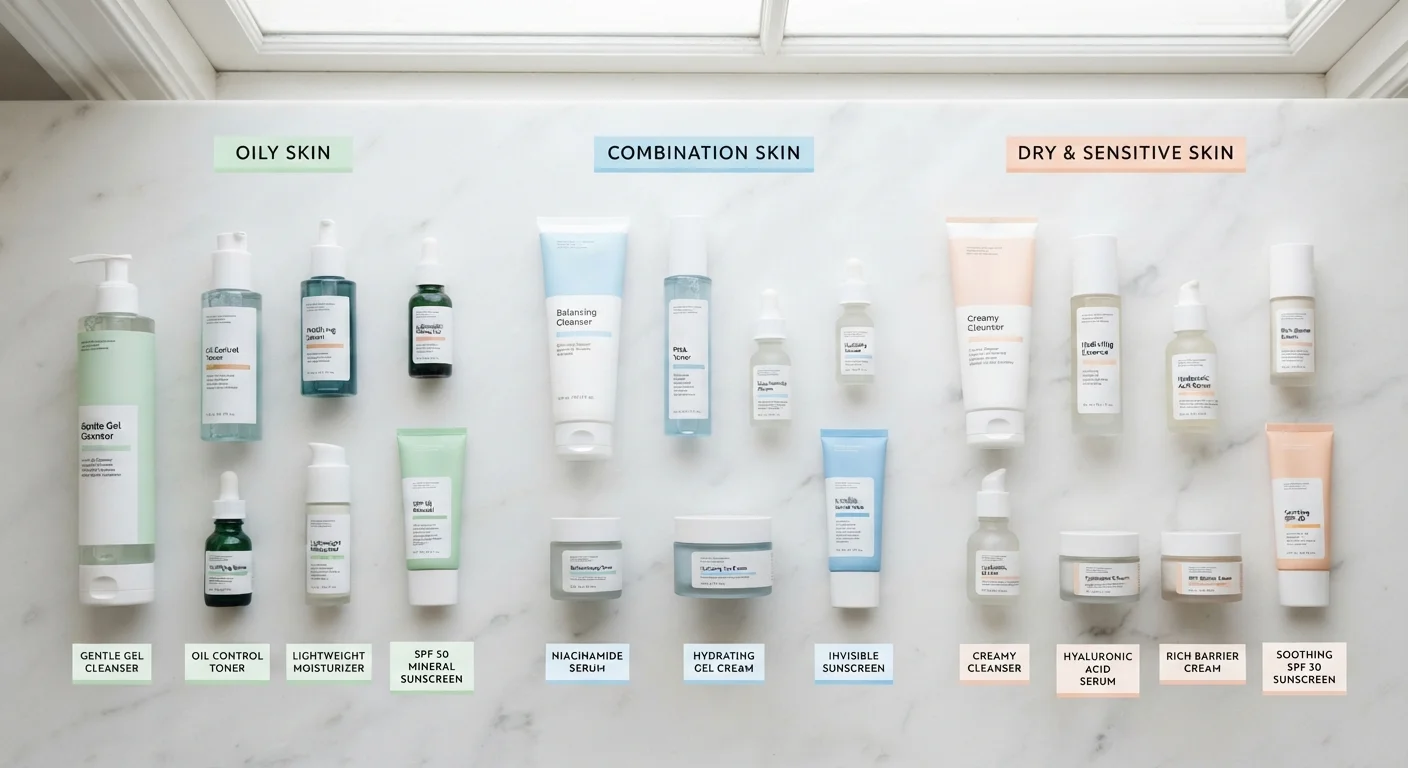
Oily skin produces excess sebum (your skin's natural oil), resulting in a shiny appearance, enlarged pores, and a higher tendency toward breakouts. The culprit is overactive sebaceous glands, which can be driven by genetics, hormones, or humidity. Counterintuitively, harsh, drying cleansers can make oiliness worse: strip the skin too much, and it compensates by producing even more oil.
Dry Skin
Dry skin doesn't produce enough oil to maintain the skin's natural moisture barrier, leaving it feeling tight, rough, or flaky — especially after cleansing. It's different from dehydrated skin, which lacks water rather than oil and can affect any skin type. Rich, lipid-based moisturizers and gentle, non-stripping cleansers are generally a better fit for dry skin.
Combination Skin
Combination skin features an oily T-zone (forehead, nose, and chin) alongside normal or dry cheeks. It's the most common skin type and one of the most nuanced to address, since the needs of different zones on your face may genuinely conflict. Using one product across your entire face can mean over-moisturizing oily areas or under-moisturizing dry patches.
Normal Skin
Normal skin is balanced — neither excessively oily nor dry, with small pores, few blemishes, and generally calm behavior. It's relatively resilient and compatible with a wide range of product formulations, though that doesn't mean it needs no care at all.
Don't Over-Diagnose After One Bad Day
Skin can behave differently due to stress, diet, weather, or hormonal fluctuations — a single dry or oily day doesn't necessarily define your skin type. Observe your skin over several days under consistent conditions (same climate, similar diet, no new products) before drawing conclusions. The bare-face test is most reliable when your skin is in a stable, baseline state.
How to Identify Your Skin Type at Home
The bare-face test is the most straightforward self-assessment. Cleanse your face with a gentle, unfragranced cleanser, pat dry, and leave your skin completely product-free for 30 to 60 minutes. Then observe:
- Tight, flaky, or uncomfortable? Likely dry.
- Shiny all over? Likely oily.
- Shiny only through the T-zone? Likely combination.
- Comfortable, neither oily nor tight? Likely normal.
If any step causes noticeable redness, stinging, or irritation, sensitivity is likely a factor regardless of your oil-production type. Keep that in mind when evaluating active ingredients and fragranced products.
Once you have a clearer picture of your skin type, you're in a much better position to build a routine that works for you. Our guide on building a morning skincare routine from scratch walks through exactly how to layer products in the right order for your specific needs.
Skin Type vs. Skin Condition
Dehydration, breakouts, and redness are often conditions rather than indicators of skin type. For example, oily skin can also be dehydrated — it produces excess oil but still lacks sufficient water content. Addressing both the underlying type and any temporary conditions gives you a more accurate picture of what your skin needs.
Adjusting Your Routine as Your Skin Changes
Skin type isn't a fixed label you carry forever. Hormonal shifts, aging, climate changes, and even stress can alter how your skin behaves over months or years. If your current routine suddenly stops working — you're breaking out more than usual, or your skin feels drier than it used to — it's worth revisiting your skin type assessment before reaching for new products.
Understanding how exfoliation fits into your routine is also type-dependent. Our breakdown of chemical exfoliants vs. physical scrubs explains why certain exfoliant types suit oily or dry skin differently — and what to avoid if your skin is on the sensitive side.
When you're ready to go beyond the basics, layering skincare products in the right order can help you maximize what each product actually does. And if you want to extend your skin's benefits into the evening, the evening grooming routine covers which nighttime steps genuinely make a difference.