

Key Takeaways
Summary
24 items · 30–60 minutes
Why Planning Beats Patching
Mounting a TV looks straightforward until you discover the stud is exactly two inches from where you need it, the nearest outlet is behind a load-bearing wall, or the viewing angle from the couch is sharper than a movie theater's back row. These aren't rare edge cases — they're the most common reasons people end up with unnecessary holes, extension cords running across baseboards, or a remount job that costs more than the original install.
This checklist is built to catch those issues before you pick up a drill. It's organized room by room because the considerations for a bedroom differ meaningfully from a living room or a kitchen. Work through each relevant section, mark what you've confirmed, and you'll go into installation day with a clear picture rather than a list of surprises.
If you're also planning other connected devices around your home, see our guide to first smart home setup order — it covers how to sequence installs so devices actually work together. And before you power anything on, run through the pre-setup checklist for new electronics to cover firmware, accounts, and connectivity basics.
Never Mount Into a Wall Blind
Drilling without scanning for electrical wires, plumbing, or gas lines is a serious safety hazard — not just a property damage risk. This applies even in walls you've worked on before, since remodels and previous owners may have re-routed services. Always scan the full planned drill area with a multi-detector before making any hole larger than a pilot hole.
Tools You'll Need Before You Start
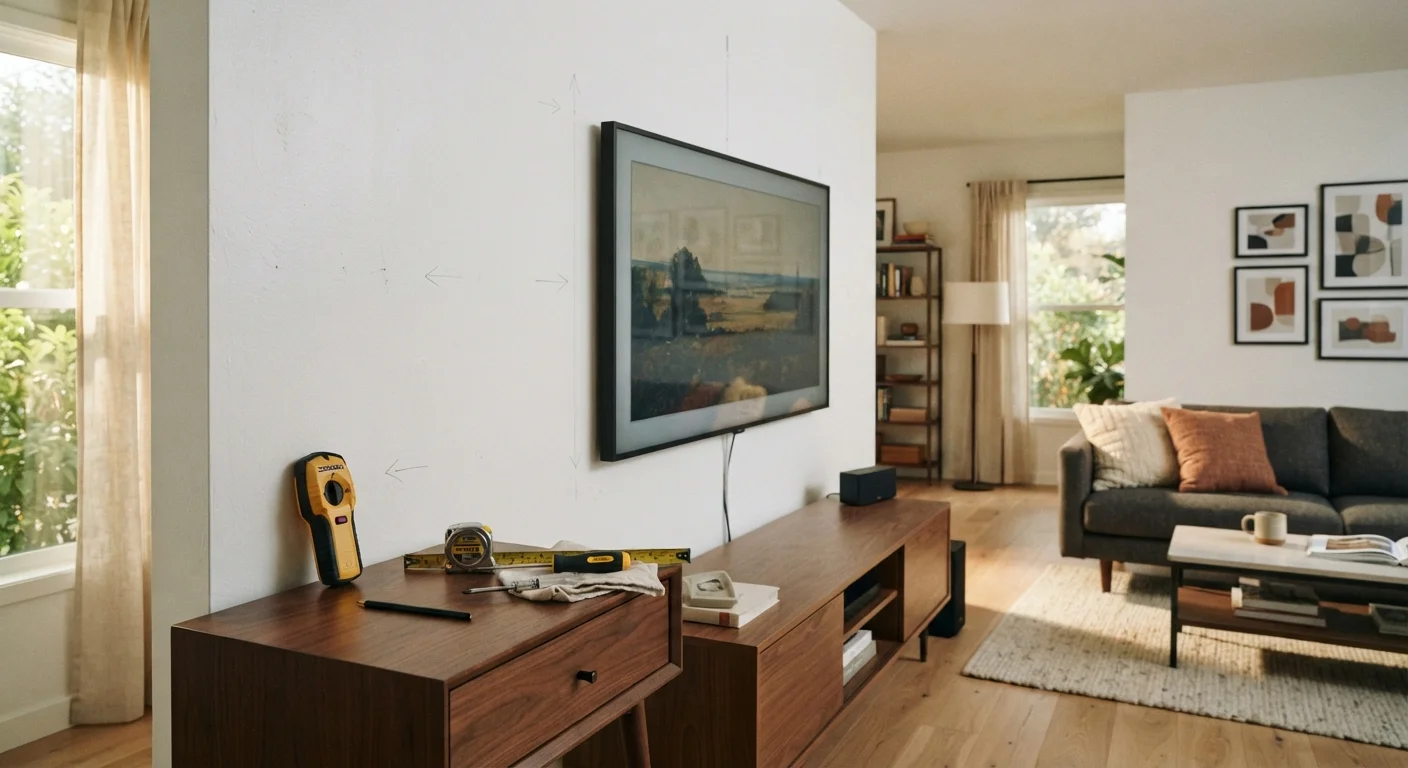
Gather these before your planning walkthrough. You don't need all of them for every room, but having them on hand lets you verify conditions accurately rather than guessing.
Stud Finder
Locates wall studs accurately so mount screws anchor into solid wood rather than hollow drywall.
Multi-Scanner (AC wire, metal, stud)
Detects electrical wiring and metal pipes behind walls before you drill into them.
Tape Measure
Used to verify viewing distance, outlet reach, and centered mount placement.
Torpedo or Spirit Level
Ensures the mount bracket is perfectly horizontal before any screws are tightened.
Painter's Tape
Marks stud locations, planned mount height, and cable routing paths without damaging walls.
Wifi Analyzer App
Measures signal strength and frequency band availability at the TV's planned location.
The Room-by-Room Checklist
Work through each group that applies to your space. Items marked must are non-negotiable for a safe, functional install. Should items prevent the most common regrets. Nice-to-have items improve the finished result but can be addressed later.
Wall & Structural Verification
Power & Cable Access
Living Room Specifics
Bedroom Specifics
Kitchen & Secondary Spaces
Network & Streaming Readiness
In-Wall Cable Work Has Electrical Code Implications
Running cables inside a finished wall typically requires cables rated for in-wall use (CL2 or CL3 for video, CMR or CMP for data). Using standard extension cords or unrated cables inside wall cavities is a fire risk and may violate local electrical codes. If you are unsure whether your planned cable route requires a permit or a licensed electrician, check with your local building department before proceeding.
After the Checklist: What Comes Next
Once you've confirmed every applicable item, you're ready to schedule installation with real confidence. If anything in the checklist raised a red flag — a hollow wall where you expected studs, no outlet within reach, or a wifi dead zone — address it first. Rushing past a known issue almost always costs more to fix after the mount is in.
For broader home budgeting tied to tech purchases and installation costs, the Budgeting Basics hub has practical frameworks for tracking those expenses. And if you want to go deeper on what specs and features actually matter when choosing a display, the Electronics Basics hub is a good next stop.
A room-by-room approach works well beyond tech too — the same methodical thinking applies whether you're evaluating a home before making an offer or documenting a rental before handing over a deposit. The principle is the same: catch problems while you still have easy options.