

Key Takeaways
Extended Stay Hotel
An extended stay hotel is a lodging property specifically designed for guests who need accommodation for a week or longer. Unlike a standard hotel room, these properties typically include in-room kitchens or kitchenettes, more living space, and amenities that support day-to-day life rather than just overnight stays. Pricing is usually structured around weekly or monthly rates, which can make the per-night cost significantly lower than a comparable traditional hotel.
Extended stay properties are sometimes classified separately from transient hotels in local zoning and hotel industry data, reflecting their hybrid position between short-term lodging and residential housing.
What Sets Extended Stay Hotels Apart
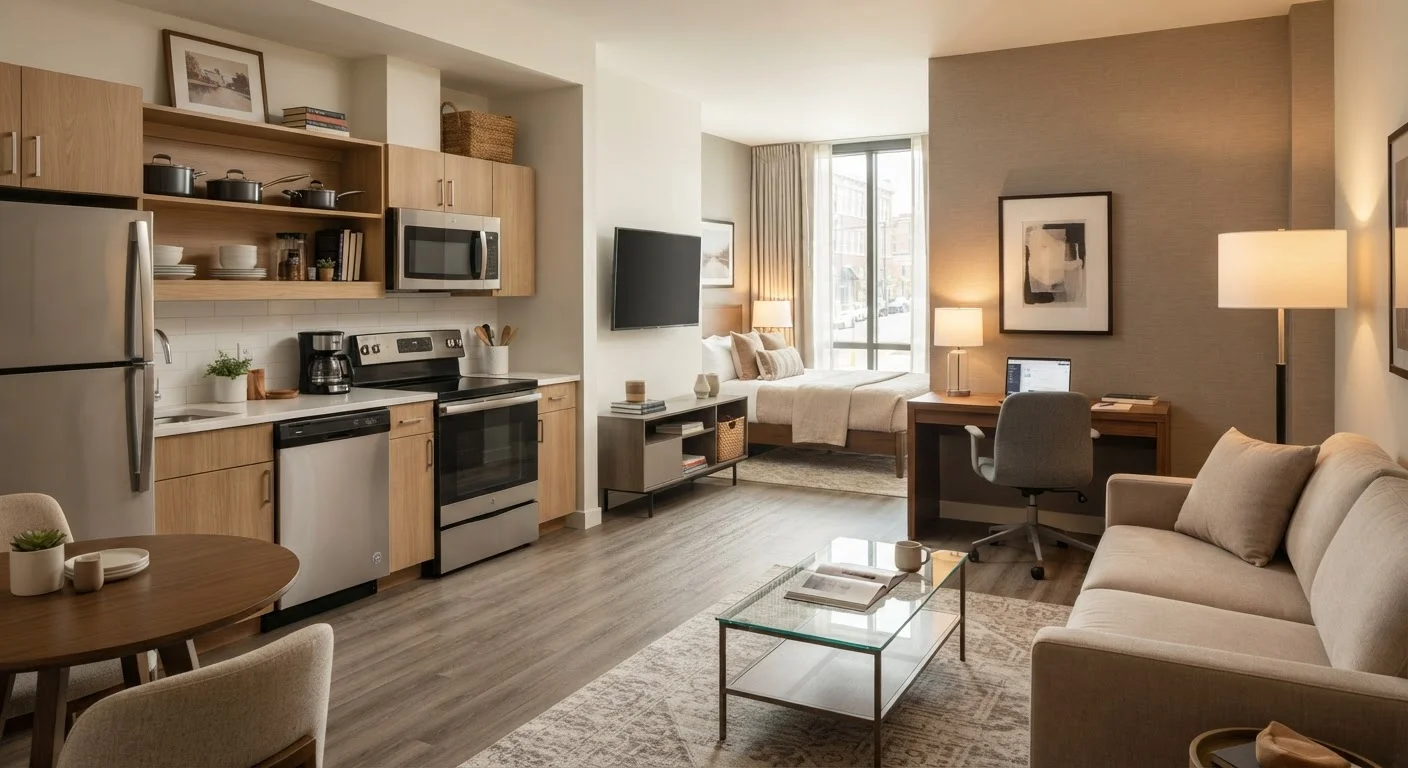
Walk into a standard hotel room and you'll find a bed, a bathroom, and maybe a mini-fridge. Walk into a well-designed extended stay room and you'll find a full or partial kitchen, a separate work area, more closet space, and a layout that actually makes it possible to live rather than just sleep. That distinction is the core of the extended stay model.
The kitchen or kitchenette is the most defining feature. At minimum, you can expect a microwave, a small refrigerator, and a coffee maker. At the higher end of the category, you might find a two-burner stovetop, a full-size refrigerator, a dishwasher, and actual pots and pans. This makes it possible to prepare meals, which matters enormously over a multi-week stay — both for budget and for comfort. Understanding how extended stay properties fit within the broader lodging spectrum helps clarify what you're comparing when choosing accommodation.
Beyond the kitchen, extended stay rooms are generally larger than standard hotel rooms and tend to include in-unit or on-site laundry access, more storage, and a dedicated workspace. The feel is deliberately residential — designed for people who need a functional home base, not a place to drop luggage between sightseeing.
Who Typically Stays at Extended Stay Hotels
The extended stay market is surprisingly diverse. The category wasn't built for leisure tourists (though some do use it), and understanding who it serves helps clarify what to expect.
30%+
Typical discount of weekly vs. nightly rates
Extended stay properties generally offer weekly rates that represent a meaningful discount over multiplying the standard nightly rate, though exact savings vary by brand and market.
~20%
Share of U.S. hotel supply in extended stay segment
The extended stay segment has grown steadily as a share of overall U.S. hotel inventory, reflecting strong demand from both corporate and personal travel, according to hotel industry analysts.
- Corporate travelers and consultants on long-term project assignments often stay for weeks or months at a time. The kitchen and laundry facilities reduce the grind of living out of a suitcase, and the lower weekly rate makes the arrangement cost-effective for employers.
- Families in transition — relocating, waiting for a new home to close, or temporarily displaced — find extended stay properties far more livable than a standard hotel room. The ability to cook meals and spread out is significant when children are involved.
- Remote workers and digital nomads increasingly use extended stay hotels as a base for slow travel itineraries, spending weeks in one city before moving on.
- Insurance-displaced households whose homes are undergoing repairs after fire or water damage are often placed in extended stay hotels by their insurance provider.
Each of these guest types shares one need: a functional, livable space for an extended period. The hotel format delivers that with less friction than sourcing a short-term furnished rental.
How Pricing and Terms Typically Work
Extended stay pricing is one of the category's main draws. Most properties offer a tiered structure: a standard nightly rate, a discounted weekly rate, and a further-reduced monthly rate. The longer you commit, the lower your effective per-night cost. This structure is worth understanding clearly before booking.
Ask About the Rate Breakpoints Before Booking
Before confirming your reservation, ask the property exactly which night triggers the weekly rate and which triggers the monthly rate. Sometimes booking one extra night unlocks a significantly lower per-night cost. It's also worth confirming whether the rate includes taxes and fees or whether those are added on top — the difference can be meaningful over a multi-week stay.
Unlike a furnished apartment, extended stay hotels typically bundle utilities, Wi-Fi, and basic amenities into the rate. There's no security deposit, no lease to sign, and no waiting period to get the keys. That simplicity has real value, particularly for people who need accommodation on short notice or for an unpredictable duration. For a broader look at how accommodation choices interact with travel budgets, the all-inclusive vs. room-only comparison offers useful framing.
That said, the per-night cost is rarely as low as a long-term apartment lease once you move past three months. Anyone treating an extended stay hotel as a permanent housing solution should weigh total costs carefully. For guidance on that kind of financial planning, general resources on budgeting basics can provide a useful framework.
Cancellation policies at extended stay properties also tend to differ from standard hotel bookings. Weekly and monthly rates often come with more restrictive cancellation windows, so review the terms before committing.
Amenities to Look For — and What May Vary
Not all extended stay hotels are built to the same standard, and the amenities gap between a mid-range and a premium property can be significant. Here's what to investigate before booking:
- Kitchen equipment: Confirm what's actually in the room. "Kitchenette" can mean anything from a microwave and mini-fridge to a nearly complete apartment kitchen. Ask specifically what cookware, utensils, and dishes are provided.
- Laundry: Some properties have in-unit washers and dryers; others have shared laundry rooms on-site. Both are vastly more convenient than a laundromat for a multi-week stay.
- Wi-Fi quality: Extended stay guests often work from their rooms. Check whether the property offers tiered internet options or whether the included Wi-Fi is genuinely reliable for video calls.
- Pet policy: Many extended stay properties are pet-friendly, often with a per-stay or per-night pet fee rather than a deposit. Confirm the specifics if you're traveling with an animal.
- Fitness facilities and parking: These vary widely and may carry additional costs at some properties.
For comparison purposes, it's also worth reviewing how different hotel room configurations are typically structured — suite-style layouts at traditional hotels can sometimes overlap with extended stay offerings, though the pricing models differ substantially.