

Key Takeaways
Why These Misconceptions Matter
Ask most Americans to describe travel in Africa and you'll likely hear a single, blurry picture: dusty plains, wildlife, poverty, and vague danger. That picture is not only incomplete — it actively leads travelers to skip extraordinary destinations, over-pack medications they don't need, under-prepare for logistics they didn't anticipate, or plan the wrong kind of trip entirely.
Africa is the world's second-largest continent by both area and population. It contains 54 internationally recognized countries, hundreds of distinct languages, and ecosystems ranging from Mediterranean coastlines to equatorial rainforests to alpine highlands. Planning a trip to Kenya is no more like planning a trip to Morocco than planning a trip to Norway is like planning a trip to Greece — yet travelers routinely treat the entire continent as a single, interchangeable destination.
The myths below aren't trivial misunderstandings. They shape budgets, itineraries, and packing lists in ways that can result in genuine problems — and missed opportunities. Use this as a starting point, then do the deep destination-specific research your trip deserves. Our pre-trip research checklist is a practical place to begin that process.
Myth
Africa is basically one big country — you can plan a single trip that covers 'Africa.'
Fact
Africa is a continent of 54 sovereign nations, each with its own entry requirements, currency, language, and infrastructure.
The geographic scale alone makes this myth difficult to overstate. Africa covers approximately 11.7 million square miles — you could fit the continental United States into it roughly three times. Countries like the Democratic Republic of Congo or Algeria are individually larger than most of the world's nations. A traveler planning a trip to Tanzania is making a completely different logistical, cultural, and climatic calculation than one heading to South Africa, Egypt, or Senegal. Entry visas, currency exchange, recommended vaccinations, transportation options, and cultural norms differ country by country and sometimes region by region within a country.
Myth
All of Africa is dangerous and unsuitable for leisure travel.
Fact
Safety conditions vary dramatically by country and region; many destinations have well-established tourism industries and receive millions of visitors annually.
Entire regions of the continent — including Morocco, Botswana, Rwanda, Namibia, and parts of South Africa — have mature tourism infrastructures and are considered relatively low-risk for international visitors according to various government travel advisories. Like any global destination, risk is contextual: it depends on the specific country, the region within that country, current political conditions, and the traveler's own precautions. Applying a blanket danger label to a continent of 1.4 billion people across 54 nations reflects a failure of geographic and geopolitical literacy more than a reliable risk assessment. Travelers should always consult their government's official travel advisory for each specific destination they intend to visit.
Myth
You'll need malaria medication for any trip to Africa.
Fact
Malaria risk varies significantly by country, altitude, season, and even urban versus rural setting — many areas carry little to no risk.
Malaria is endemic in parts of sub-Saharan Africa, but that does not mean every African destination carries the same level of risk. High-altitude areas such as the Ethiopian Highlands or parts of South Africa's interior plateau have low or negligible malaria transmission. Urban centers in certain countries may pose minimal risk compared to rural areas in the same country. Prophylactic medications have real side effects, are not all identical in efficacy, and should be prescribed based on your specific itinerary — not a generalized continent-wide assumption. A travel medicine clinic or physician who can review your exact destinations and travel dates is the appropriate source for this guidance, not broad generalizations.
Myth
Africa travel is only for budget backpackers or ultra-wealthy luxury safari clients.
Fact
Africa has a wide spectrum of travel options spanning budget, mid-range, and luxury — just like any other major global travel region.
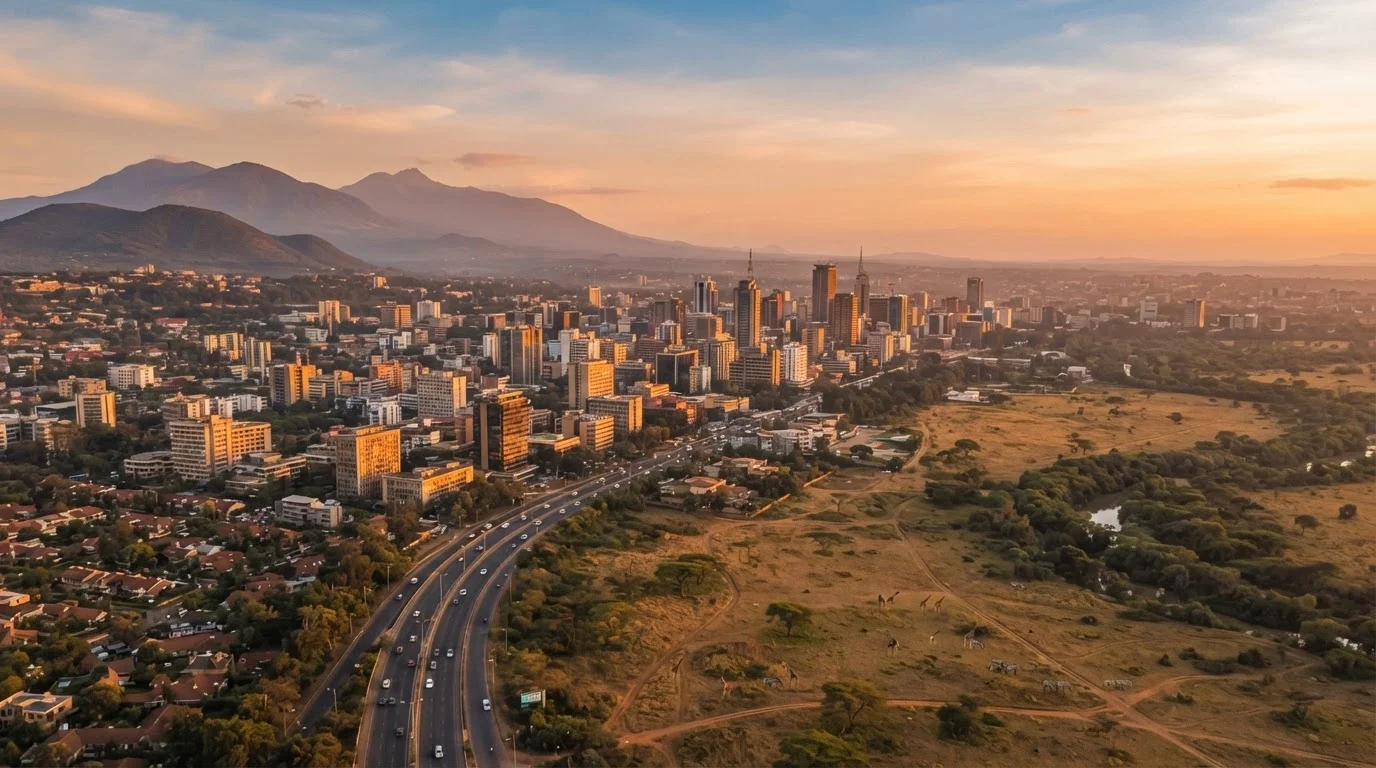
While some wilderness safari camps do command premium prices — reflecting small-group conservation models, remote locations, and highly skilled guiding — they represent one narrow slice of what African travel looks like. Budget-friendly guesthouses, mid-range lodges, urban hotels, and self-drive itineraries exist across the continent. Cities like Cape Town, Nairobi, Accra, and Marrakesh offer the full range of accommodation options that travelers expect from any international destination. The idea that you must either rough it completely or spend a fortune collapses quickly once travelers look beyond the single-image version of the continent they've absorbed from media.
Myth
African countries all use the same currency, so you only need one type of cash.
Fact
Each African nation has its own currency, and exchange availability, card acceptance, and mobile payment norms differ widely.
South Africa uses the rand, Kenya the shilling, Morocco the dirham, Nigeria the naira, and so on across 54 distinct economies. Currency exchange infrastructure, ATM availability, card acceptance, and the prevalence of mobile money platforms (which are widely used in parts of East Africa) vary considerably. Arriving in a new African country with the wrong currency or an untested bank card can create real problems. Financial preparation for any African trip should be country-specific, and travelers are advised to research local payment norms and notify their bank before departure — standard practice for any international travel, but especially important here given the diversity involved.
Myth
Wildlife safaris are the only reason to travel to Africa.
Fact
Africa offers ancient ruins, world-class beaches, vibrant modern cities, mountain trekking, and rich culinary and music cultures.
The safari narrative dominates Western perceptions of African travel to a degree that obscures most of what the continent actually offers. Egypt's ancient monuments predate the Roman Empire. Morocco's medina cities are UNESCO World Heritage Sites with centuries of architectural layering. Zanzibar's coastline draws beach travelers from across the world. Cape Town is consistently ranked among the world's most scenic cities. Ethiopia's highlands offer serious trekking. Lagos and Nairobi have dynamic contemporary arts and food scenes. Focusing exclusively on wildlife tourism means ignoring a vast cultural, historical, and geographic richness that makes Africa one of the most rewarding places on the planet to explore.
What Good Africa Trip Planning Actually Looks Like
Correcting misconceptions is only the first step. The real work is treating each African destination the way you'd treat any serious international trip: with country-specific visa research, up-to-date health guidance from a travel medicine clinic, accurate safety assessments from government advisories, and logistics planning suited to where you're actually going.
54
Sovereign countries on the African continent
Africa contains 54 internationally recognized nations, each with distinct governance, entry requirements, and travel conditions.
~11.7M
Square miles of land area
Africa is the world's second-largest continent by area, larger than the combined landmass of the US, China, India, and most of Europe.
2,000+
Languages spoken across the continent
Africa is the world's most linguistically diverse continent, with estimates of over 2,000 distinct languages in active use.
That might mean coordinating a multi-country itinerary across East Africa's Great Rift Valley, or simply spending two weeks exploring Morocco's medinas and Saharan routes — a journey that surprises many first-time visitors in ways our Morocco planning guide covers in depth. It might also mean working with a travel specialist who has on-the-ground knowledge of specific regions — an option more practical and affordable than many assume, as explored in our piece on travel agent misconceptions.
Always Research Each Country Individually
Entry visa rules, vaccination requirements, currency, safety conditions, and infrastructure quality differ from country to country across Africa. No single source of guidance applies continent-wide. Before booking, consult your government's official travel advisory for each specific destination, and visit a travel medicine clinic for personalized health recommendations based on your exact itinerary.
Whatever your destination, the foundational principle is the same: Africa rewards travelers who arrive with specific knowledge rather than continental generalizations. The continent is too vast, too varied, and too genuinely remarkable to be reduced to a single travel narrative.
This article is for general informational purposes only. Entry requirements, health recommendations, and safety conditions change frequently. Always verify current visa rules, vaccination requirements, and travel advisories with your government's official travel authority and a qualified travel medicine provider before booking.