

Key Takeaways
Why Etiquette Is a Travel Skill, Not Just Politeness
Cultural etiquette tends to get framed as a checklist of dos and don'ts — remove your shoes here, tip 20% there. But at its core, respectful travel is a way of thinking: it's about recognizing that every destination has its own internal logic, and that your job as a visitor is to engage with that logic rather than override it.
This mindset matters for practical reasons too. Travelers who demonstrate cultural awareness often have richer experiences — they're invited in rather than managed, and they avoid friction that can derail a trip. It also matters for the communities you're visiting. Mass tourism can strain local resources and erode traditions; individual behavior, multiplied across thousands of visitors, has real consequences.
A good first step is thorough pre-trip research. Our pre-trip destination checklist walks through how to investigate cultural customs alongside logistics like visas and safety advisories — treating them as equally important travel preparation.
Core Etiquette Principles That Apply Almost Everywhere
While specific customs vary widely, a handful of principles tend to serve travelers well across most destinations and situations.
These principles apply whether you're navigating a morning market in Southeast Asia, visiting a historic cathedral in Europe, or attending a family-style meal as someone's houseguest. For a deeper look at how cultural attentiveness shapes the slow travel philosophy, see our piece on slow travel and what it means to stay longer..
Common Situations Where Etiquette Often Trips Up Travelers
Even well-intentioned visitors can stumble in a few predictable places:
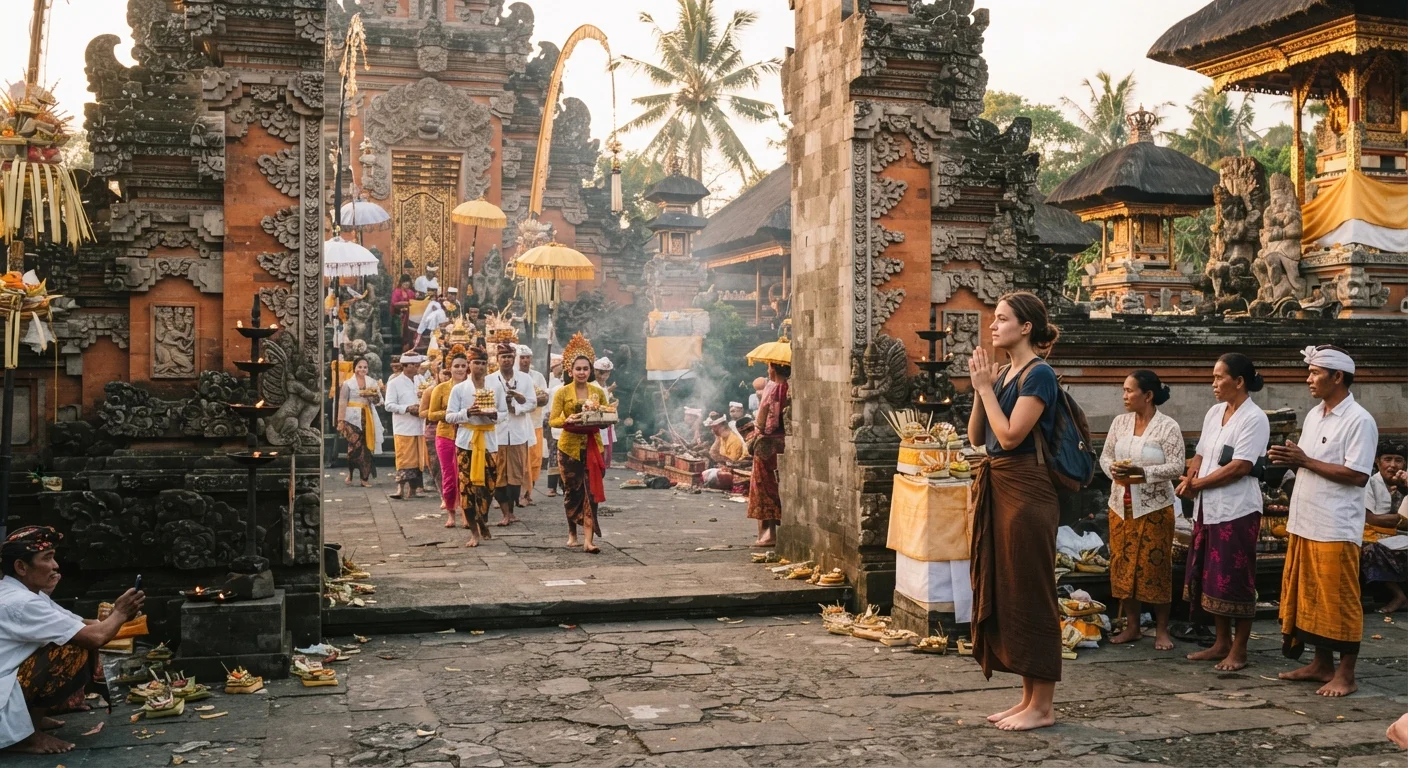
- Religious and sacred sites: Dress requirements are frequently non-negotiable — covered shoulders, covered knees, removed shoes. These aren't suggestions, and ignoring them can mean being refused entry or causing genuine offense. When in doubt, carry a scarf or lightweight layer.
- Photography: Always ask before photographing people, especially in traditional clothing, at work, or in moments of religious significance. Many communities have seen their sacred practices commodified through tourism photography, and their hesitation deserves respect, not a workaround.
- Tipping and transactions: Tipping customs differ enormously. In some countries, leaving a tip is standard and appreciated; in others, it can be considered rude or unnecessary. Research this before you go — it's a small detail that carries outsized social weight.
- Personal space and touch: Norms around physical greetings (handshakes, cheek kisses, bows) and personal space vary by culture and sometimes by gender. Follow the other person's lead rather than imposing your own default.
When You're Unsure, Ask a Local
If you're genuinely uncertain whether something is appropriate — attending a local ceremony, photographing a particular site, joining an activity — the most respectful move is to ask someone local rather than assume. Most people respond warmly to honest, curious questions. An inquiry itself demonstrates that you care about getting it right.
If you're arranging travel through a service or agent, don't hesitate to ask specifically about cultural etiquette at your destination. A productive travel consultation is a good opportunity to get destination-specific guidance from someone with on-the-ground knowledge.
Start Practicing Before You Land
Etiquette preparation happens at home. Read accounts by travelers who've been honest about cultural missteps, not just those who present a glossy version of the destination. Look for guidance from writers or locals of that culture when possible — their perspective on what matters to residents tends to be more accurate than tourist-facing summaries.
Some destinations have very particular dynamics around how tourists are expected to behave — and what the gap between expectation and reality looks like. Our honest look at who thrives in Southeast Asia is a good example of the kind of nuanced regional framing that can prevent real missteps.
This article provides general travel information for educational purposes. Customs, entry requirements, and local laws change — always verify specifics with official government sources and local authorities before traveling.