

Key Takeaways
Lower purchase price than most RV types
New pop-up campers frequently start below $15,000, and quality used units can be found for considerably less. This is a meaningful difference compared to even entry-level hard-sided travel trailers.
Towable by mid-size SUVs and light trucks
Most pop-ups fall within the towing capacity of vehicles like mid-size pickup trucks and larger SUVs, eliminating the need to purchase a heavy-duty tow vehicle.
Compact storage footprint
When folded, many pop-ups stand under two feet tall and fit in a standard residential garage or driveway - a storage advantage hard-sided trailers rarely offer.
Access to smaller and more remote campsites
The compact folded dimensions let pop-ups reach dispersed forest sites, tight national park loops, and primitive campgrounds that exclude larger rigs.
Closer-to-nature camping experience
Canvas and vinyl walls allow ambient sounds, breezes, and natural light in ways that fully enclosed RVs do not, which many campers find genuinely appealing.
Canvas walls offer limited weather protection
Soft-sided walls provide minimal insulation against cold temperatures and are less effective barriers against wind-driven rain than hard-sided construction. Extended use in cold or wet climates can be genuinely uncomfortable.
Manual setup takes time and effort
Fully deploying a pop-up camper typically takes 20-30 minutes, and doing so in rain, darkness, or high wind adds difficulty. Campers who move sites frequently will encounter this labor regularly.
Less livable interior space
Pop-up interiors are functional but limited - headroom, kitchen equipment, and bathroom facilities are typically more basic than those found in hard-sided trailers at similar price points.
Canvas degrades over time without maintenance
The soft side panels are susceptible to mildew, UV degradation, and tears if not properly cleaned, dried, and stored. Replacement canvas can be a significant repair expense.
Limited insulation reduces year-round usability
Pop-ups are most practical in mild three-season conditions. Extreme heat and cold make them less comfortable, limiting the camping season compared to well-insulated hard-sided alternatives.
Our Verdict
Pop-up campers occupy a genuinely useful niche in the RV market - they lower the financial and logistical barriers to entry without requiring a dedicated tow vehicle or a large storage footprint. That said, their reliance on soft walls and manual setup means they reward campers who are comfortable with a bit of hands-on work and don't need climate-controlled comfort in all conditions.
Best for budget-conscious first-timers, families with a capable SUV or light truck, and campers who value access to remote sites over interior amenities.
What Is a Pop-Up Camper?
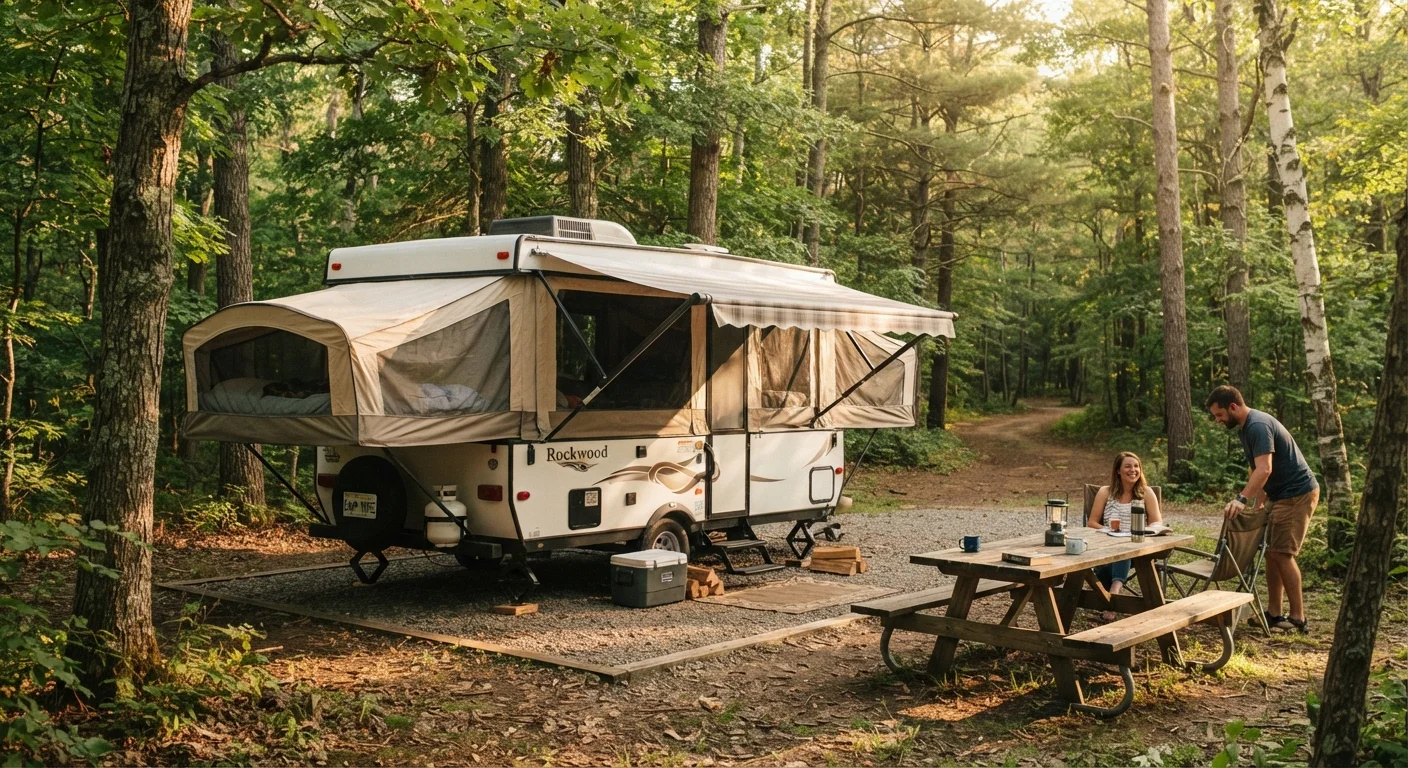
A pop-up camper - also called a fold-down camper or tent trailer - is a towed recreational unit with a hard-sided base and a collapsible roof structure. When folded for travel, the unit sits low and aerodynamic behind the tow vehicle. At the campsite, the roof cranks upward (manually or with a powered lift), and soft canvas or vinyl side sections expand outward to reveal sleeping bunks, a dining area, and often a small kitchen.
Most pop-ups weigh between 1,500 and 3,000 pounds when loaded, making them compatible with a wider range of tow vehicles than conventional travel trailers. If you're weighing the broader choice between towed units and self-propelled rigs, this side-by-side comparison of motorhomes and towables offers useful context.
The Advantages of Going the Pop-Up Route
For many buyers, pop-up campers solve several problems at once - cost, storage, and towing capacity - without forcing major compromises on the camping experience itself.
Lower purchase price than most RV types
New pop-up campers frequently start below $15,000, and quality used units can be found for considerably less. This is a meaningful difference compared to even entry-level hard-sided travel trailers.
Towable by mid-size SUVs and light trucks
Most pop-ups fall within the towing capacity of vehicles like mid-size pickup trucks and larger SUVs, eliminating the need to purchase a heavy-duty tow vehicle.
Compact storage footprint
When folded, many pop-ups stand under two feet tall and fit in a standard residential garage or driveway - a storage advantage hard-sided trailers rarely offer.
Access to smaller and more remote campsites
The compact folded dimensions let pop-ups reach dispersed forest sites, tight national park loops, and primitive campgrounds that exclude larger rigs.
Closer-to-nature camping experience
Canvas and vinyl walls allow ambient sounds, breezes, and natural light in ways that fully enclosed RVs do not, which many campers find genuinely appealing.
1,500-3,000 lbs
Typical loaded weight range for pop-up campers
This range puts most pop-ups within the towing capacity of mid-size trucks and larger SUVs, unlike many conventional travel trailers.
~18-24 in
Approximate folded roof height when stored
This collapsed profile allows many pop-up campers to fit inside a standard residential garage, a storage advantage hard-sided trailers rarely share.
Their lower profile when folded also reduces aerodynamic drag compared to a full-height travel trailer, which can translate to better fuel economy during towing. And because they collapse to roughly 18-24 inches in height, many owners store them in a standard residential garage or driveway - a practical advantage that hard-sided trailers rarely offer.
The Trade-Offs You Should Know About
Pop-up campers require an honest assessment of their limitations. The soft-wall construction that makes them packable is also the source of their biggest drawbacks.
Canvas walls offer limited weather protection
Soft-sided walls provide minimal insulation against cold temperatures and are less effective barriers against wind-driven rain than hard-sided construction. Extended use in cold or wet climates can be genuinely uncomfortable.
Manual setup takes time and effort
Fully deploying a pop-up camper typically takes 20-30 minutes, and doing so in rain, darkness, or high wind adds difficulty. Campers who move sites frequently will encounter this labor regularly.
Less livable interior space
Pop-up interiors are functional but limited - headroom, kitchen equipment, and bathroom facilities are typically more basic than those found in hard-sided trailers at similar price points.
Canvas degrades over time without maintenance
The soft side panels are susceptible to mildew, UV degradation, and tears if not properly cleaned, dried, and stored. Replacement canvas can be a significant repair expense.
Limited insulation reduces year-round usability
Pop-ups are most practical in mild three-season conditions. Extreme heat and cold make them less comfortable, limiting the camping season compared to well-insulated hard-sided alternatives.
Setup time is real. Raising the roof, unfolding the bunks, attaching the canvas zipper connections, and leveling the unit typically takes 20-30 minutes - longer in wind or rain. For campers who arrive after dark or move sites frequently, this routine can become a friction point. Common RV misconceptions, including assumptions about setup ease, are worth reviewing before any purchase decision.
Who Pop-Up Campers Actually Work For
The camper who benefits most from a pop-up is someone entering the RV lifestyle without certainty about long-term use patterns. The lower upfront investment reduces the financial risk of discovering that RV camping isn't the right fit. If it is, the pop-up can serve as a stepping stone toward a more fully equipped rig.
Families with children often find pop-ups a comfortable starting point - the expanded bunk ends provide reasonable sleeping space, and the open canvas sides create a closer-to-nature feel that appeals to younger campers. For solo travelers or couples planning longer trips in variable weather, a hard-sided trailer or motorhome may be a better fit from the outset.
Campsite Size Restrictions Matter
Many national forest dispersed camping areas and some state park loops post maximum RV length restrictions, often in the 20-25 foot range. A folded pop-up typically measures well under 20 feet, which means access to sites that would be off-limits to longer rigs. Before booking, check the specific site's posted length limit - these vary and are worth confirming with the managing agency.
Pop-up campers also shine in campground contexts where space is limited. Many national forest dispersed sites and some state park loops have size restrictions that effectively exclude larger RVs. See our breakdown of U.S. campground types for details on site size considerations. And if you're planning your first outing, this beginner's RV trip guide covers everything from hookups to campground etiquette.