

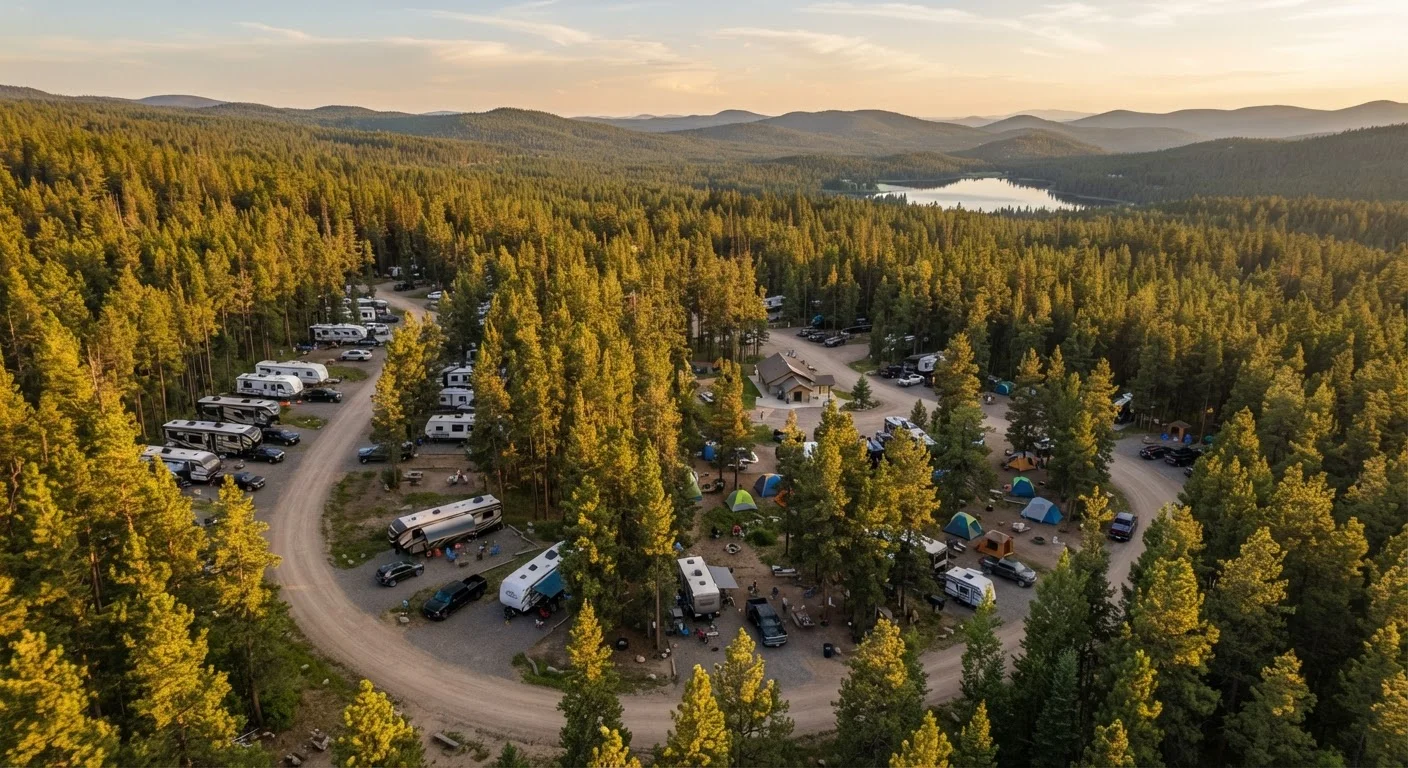
The Four Main Campground Categories
Choosing where to camp shapes the entire experience - from hookups and shower facilities to reservation requirements and noise levels. In the United States, campgrounds broadly fall into four categories: national park campgrounds, state park campgrounds, private campgrounds, and dispersed camping on public land. Each operates under different agencies, fee structures, and rules.
If you're planning a trip with an RV, understanding which campground types support your rig - and what level of amenities to expect - is as important as understanding the vehicle itself. See our guide to connecting utilities at an RV hookup site for details on electric, water, and sewer connections once you've arrived.
National Park Campgrounds
Campgrounds inside National Park Service (NPS) units are among the most sought-after in the country. They sit within protected federal land - think Yellowstone, the Grand Canyon, or Shenandoah - and are managed directly by the NPS or under concessionaire contracts.
- Reservations: Many popular sites fill months in advance. Recreation.gov is the federal booking platform for most NPS campgrounds.
- Amenities: Vary widely. Some campgrounds offer flush toilets, dump stations, and bear boxes; others are primitive with vault toilets only. Full electrical hookups are rare in NPS campgrounds.
- Fees: Typically range from roughly $15 to $35 per night as of recent years, though sites with hookups or higher demand may cost more. The America the Beautiful annual pass covers entrance fees but not campsite fees.
- RV suitability: Length limits apply at many sites - sometimes as short as 21 feet. Always check the NPS site for your destination before booking with a larger rig. If you're weighing Class A, B, or C motorhomes, vehicle length is a key variable to consider.
State Park Campgrounds
State parks offer a strong middle ground: managed landscapes, reliable facilities, and often easier reservations than their federal counterparts. Each state runs its own reservation system - Reserve California, ReserveAmerica, and state-specific portals are common.
- Facilities: Most developed state park campgrounds include picnic tables, fire rings, restrooms, and at least cold-water showers. Hookup sites (electric and water, sometimes full hookups) are more common here than in NPS campgrounds.
- Cost: Generally comparable to or slightly below national park rates, though this varies significantly by state and site type.
- Crowds: Popular coastal and lakefront state parks can book up quickly on summer weekends, but overall competition is typically less intense than top NPS sites.
- RV suitability: Many state parks have a mix of tent-only and RV-accommodating loops, with varying length limits. Check the park's individual site maps before booking.
Private Campgrounds and RV Parks
Private campgrounds are operated by businesses, membership organizations, or landowners. They range from basic roadside stopover parks to full resort-style facilities with swimming pools, Wi-Fi, laundry, and planned activities. Franchised networks and independent parks both operate in this space.
Full hookup
A campsite offering simultaneous connections to electric power (30-amp or 50-amp), a freshwater supply line, and a sewer drain. It is the most amenity-rich type of RV site.
Dispersed camping
Camping outside of a designated campground on public federal land such as BLM or U.S. Forest Service territory. No facilities are provided, and Leave No Trace practices are expected.
Dump station
A sanitation facility at a campground where RV and camper owners can empty their gray and black water holding tanks. Commonly found at developed campgrounds but absent at primitive and dispersed sites.
Concessionaire
A private company contracted by a public agency (such as the NPS) to operate campgrounds, lodges, or other visitor services within a public park or recreation area.
Primitive camping
Camping at a designated site that offers minimal or no infrastructure - typically just a cleared pad and possibly a fire ring, with no water, electricity, or flush toilets.
- Hookups: Full hookups - electric (30-amp or 50-amp), water, and sewer - are standard at many private RV parks, making them especially practical for larger rigs. If you're new to hookup connections, see our RV utility hookup guide.
- Reservations: Most accept reservations through their own websites or third-party platforms. Membership programs (some requiring annual fees) can provide discounted nightly rates at affiliated parks.
- Cost: Nightly rates vary broadly - basic sites may start around $30-$40, while resort-style parks with full amenities can exceed $80-$100 per night in high-demand areas.
- Suitability: Private parks generally accommodate the widest range of RV sizes and are the default choice for large Class A motorhomes or fifth wheels. Even a pop-up camper will find private sites accessible and convenient.
Dispersed Camping on Public Land
Dispersed camping means camping outside of designated campgrounds on land managed by federal agencies - primarily the Bureau of Land Management (BLM) and the U.S. Forest Service (USFS). It is typically free or very low cost, but it comes with important rules and limitations.
- Where it's allowed: On most BLM and USFS land, unless posted otherwise. Check the specific field office or ranger district maps before heading out.
- Length of stay: Most areas allow stays of up to 14 consecutive days in one location before you must move at least 25 miles away.
- No facilities: There are no toilets, water, trash service, or hookups. Leave No Trace principles apply strictly - pack out everything you bring in.
- Access: Many dispersed areas require high-clearance or 4WD vehicles to reach. Road conditions are unpredictable and may change seasonally. Verify road suitability for your vehicle size before departing.
- Fire rules: Campfire restrictions vary by season and local conditions. Always check current fire restrictions with the managing agency before building a fire.
This article provides general information about campground categories in the United States. Rules, fees, and reservation systems change over time - always verify current details directly with the managing agency or campground before your trip.