

Key Takeaways
Summary
28 items · 30-60 minutes
Why a Pre-Trip Checklist Matters for RV Owners
An RV is simultaneously a vehicle, a home, and a network of interconnected mechanical and utility systems. Unlike a standard car, a missed item - an unsecured slide-out, a loose propane connection, or an underinflated rear axle tire - can have serious consequences for you, your passengers, and other drivers on the road.
Whether you drive a Class A diesel pusher or tow a fifth-wheel trailer, a consistent walk-around routine removes the guesswork. If you're still evaluating whether RV ownership is right for you, renting an RV first can reveal what these systems demand in real-world conditions before you commit.
Use the checklist below every time you prepare to depart. The groups are organized in a logical walk-around sequence to keep you efficient.
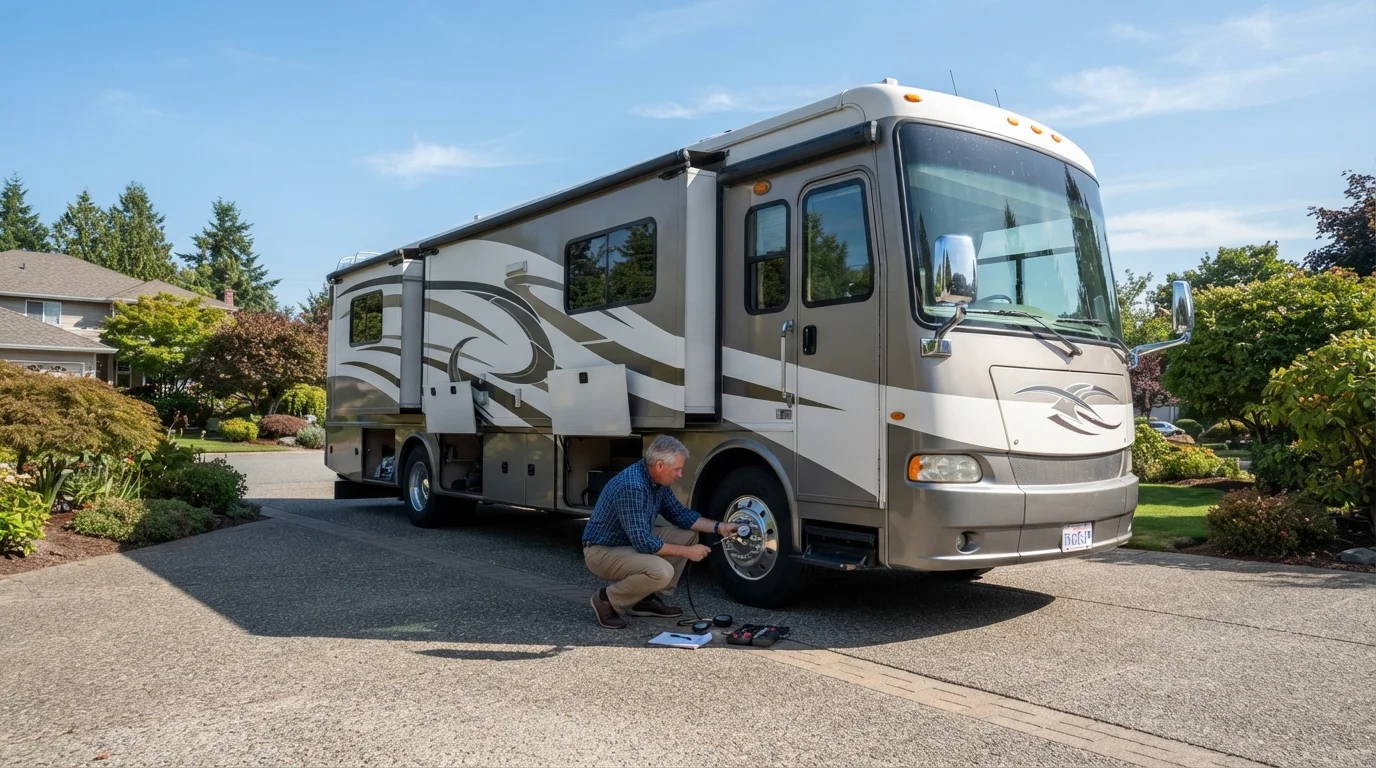
Tire pressure gauge (heavy-duty)
Accurately measures air pressure in high-load RV tires, which often require 80-120 PSI and exceed the range of standard car gauges.
Torque wrench
Verifies lug nuts are tightened to the manufacturer's specified torque, reducing risk of wheel separation.
LP gas leak detector or soapy water solution
Identifies propane leaks at hose connections and the regulator during the pre-trip propane check.
Battery hydrometer or digital voltmeter
Tests house and chassis battery state of charge before departure to avoid mid-trip power failures.
Printed or digital checklist
Provides a consistent, repeatable inspection sequence so no group is skipped under time pressure.
The Complete Pre-Trip Inspection Checklist
Work through each group in order. Items marked must are non-negotiable safety checks. Should items are strongly recommended on every trip. Nice-to-have items add peace of mind and are especially worthwhile on longer journeys.
Tires and Wheels
Exterior and Structure
Towing and Hitch Systems
Propane and Fuel Systems
Electrical and Battery
Water and Waste Systems
Interior Readiness
Never Travel With Slide-Outs Extended
Driving with a slide-out even partially extended can cause catastrophic structural damage to the RV and creates a hazard to other vehicles. Always visually confirm from both sides that every slide is fully retracted and the travel latch is engaged before pulling out of your site or driveway.
For seasonal trips, your inspection priorities may shift - summer heat stresses tires and cooling systems differently than cold weather stresses batteries and plumbing. See seasonal vehicle prep guidance for temperature-specific considerations.
After the Inspection: Before You Pull Out
Once you've worked through the checklist, do a final slow drive-around of your campsite or driveway to confirm nothing has been left behind - utility hookup cables, leveling blocks, wheel chocks, and outdoor mats are all common items left on the ground.
Propane While Driving: Know Your RV's Rules
Some RV refrigerators must run on propane while traveling; others can switch to 12-volt DC power. Consult your owner's manual to determine the correct setting for your unit. Driving with propane flowing through a system that hasn't been inspected is a genuine fire and explosion risk - if you smell gas at any point, stop safely, exit the vehicle, and do not operate any ignition sources.
Pair your mechanical preparation with destination research. Our pre-trip destination checklist covers entry requirements, road conditions, and campground availability - the logistical half of a well-prepared RV trip.
This article is for general informational purposes only. Always consult a qualified RV technician or certified mechanic for maintenance, repairs, or safety inspections beyond your skill level. Do not perform electrical, propane, or structural repairs unless you are trained to do so safely.