

Key Takeaways
Summary
22 items · 45–90 minutes
Why Seasonal Transitions Are Hard on Vehicles
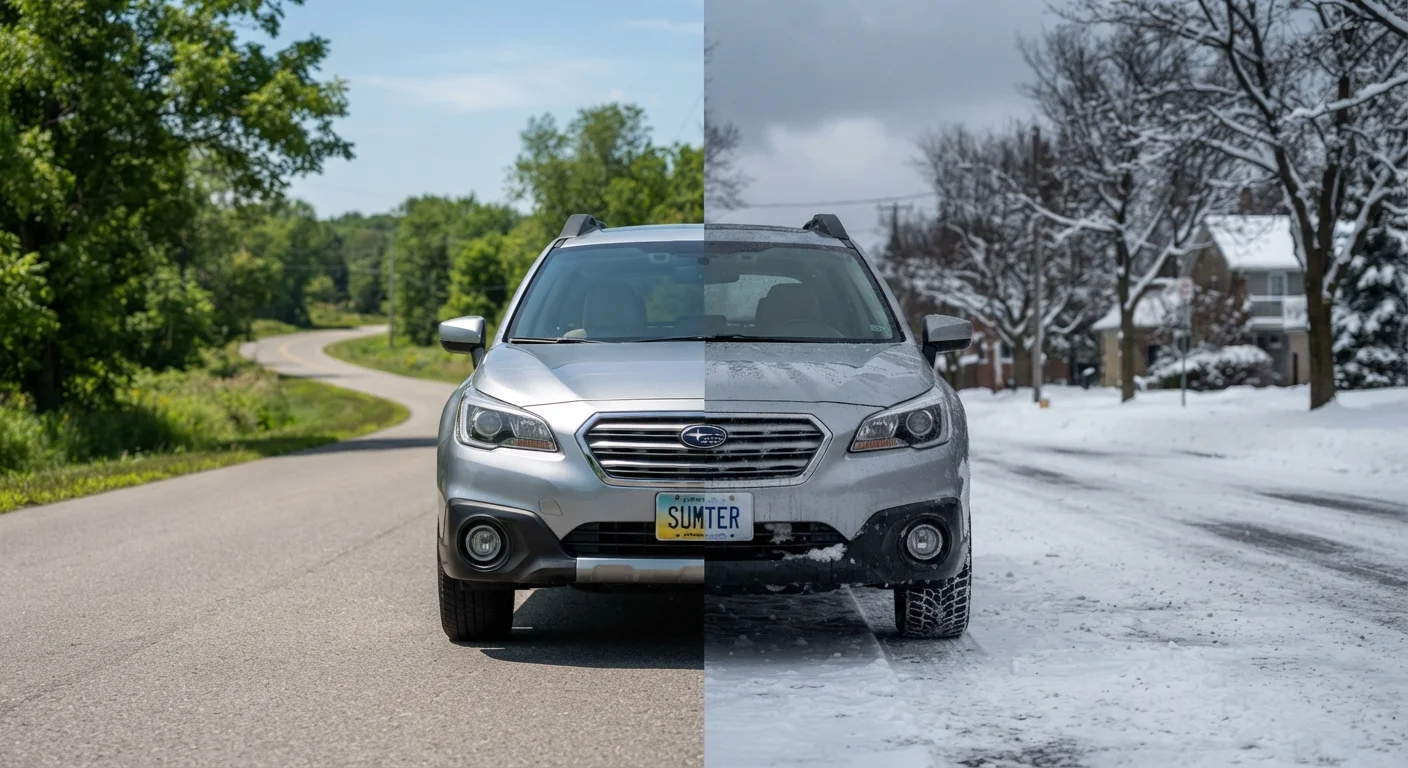
Every change of season brings a shift in temperature range, road conditions, and how your vehicle's systems are stressed. Summer heat accelerates fluid breakdown, overworks cooling systems, and causes tire pressure to fluctuate. Winter cold thickens fluids, drains battery capacity, and hardens rubber seals that rely on flexibility to do their job.
The goal of a seasonal vehicle inspection isn't to overhaul your car twice a year — it's to catch the specific vulnerabilities that predictably emerge as conditions shift. Most items on this checklist take minutes to verify; a few warrant a professional look. Either way, a small investment of time now is far less costly than a breakdown or safety failure later.
For a broader foundation of what your vehicle needs at regular intervals, see our complete overview of scheduled vehicle maintenance. If you also own an RV or camper, the preparation required before storage goes further — our RV winterizing walkthrough covers those specific steps.
Tools You'll Need
Most of this checklist can be completed with basic tools you likely already own or can pick up inexpensively. Gather the following before you start so the inspection goes efficiently.
Tire pressure gauge
Accurately measures tire PSI so you can adjust to manufacturer-recommended levels.
Battery load tester or voltmeter
Evaluates battery health and cold-cranking capacity before extreme temperatures expose weakness.
Coolant test strips or refractometer
Checks antifreeze concentration to confirm freeze protection is adequate for your climate.
Tread depth gauge
Provides a precise measurement of remaining tire tread to determine if replacement is needed.
Flashlight or work light
Illuminates the engine bay, undercarriage, and wheel wells for a thorough visual inspection.
Wire brush and baking soda
Removes corrosion from battery terminals to maintain a solid electrical connection.
The Seasonal Prep Checklist
Work through each group systematically. Items marked must are non-negotiable for safe seasonal operation. Items marked should are strongly recommended. Nice-to-have items are worth considering depending on your climate and driving habits.
Tires
Battery and Electrical
Fluids
Belts, Hoses, and Seals
Brakes and Suspension
Visibility and Comfort Systems
Brake Concerns Require Professional Inspection
Brakes are a safety-critical system — if you hear grinding, feel pulsation through the pedal, or notice the vehicle pulling to one side when braking, do not defer evaluation. Have a qualified mechanic inspect the brakes before driving the vehicle in demanding conditions. Seasonal prep is not a substitute for addressing active brake symptoms.
When to Call a Mechanic
Several items on this checklist — brake inspection, coolant system evaluation, A/C refrigerant service, and belt or hose replacement — are best handled by a qualified mechanic if you're not experienced with vehicle systems. Attempting these without the right tools or knowledge can introduce new problems or create safety risks.
Don't Skip the Battery Test Before Winter
A battery that starts your car reliably in 70°F weather can fail outright at 20°F. Cold temperatures significantly reduce a battery's available cranking power while simultaneously demanding more from the starter motor. Have any battery older than four years load-tested by a mechanic or at an auto parts store before winter arrives — don't wait for a no-start situation to find out it's failing.
Coolant Flushes Need a Qualified Eye
Mixing incompatible coolant types can cause silicate gel deposits that clog the cooling system. If you're unsure what type of coolant your vehicle uses, or when it was last flushed, have a qualified mechanic inspect the system before you top it off or drain it yourself. Your owner's manual will specify the correct coolant specification.
For a detailed look at what each fluid in your vehicle actually does and what warning signs to watch for, our vehicle fluid checks guide is a useful companion to this checklist. Owners of classic vehicles should also consult our classic car winter storage guide, as older vehicles have additional vulnerabilities during seasonal transitions.