Key Takeaways
Concours d'Elegance
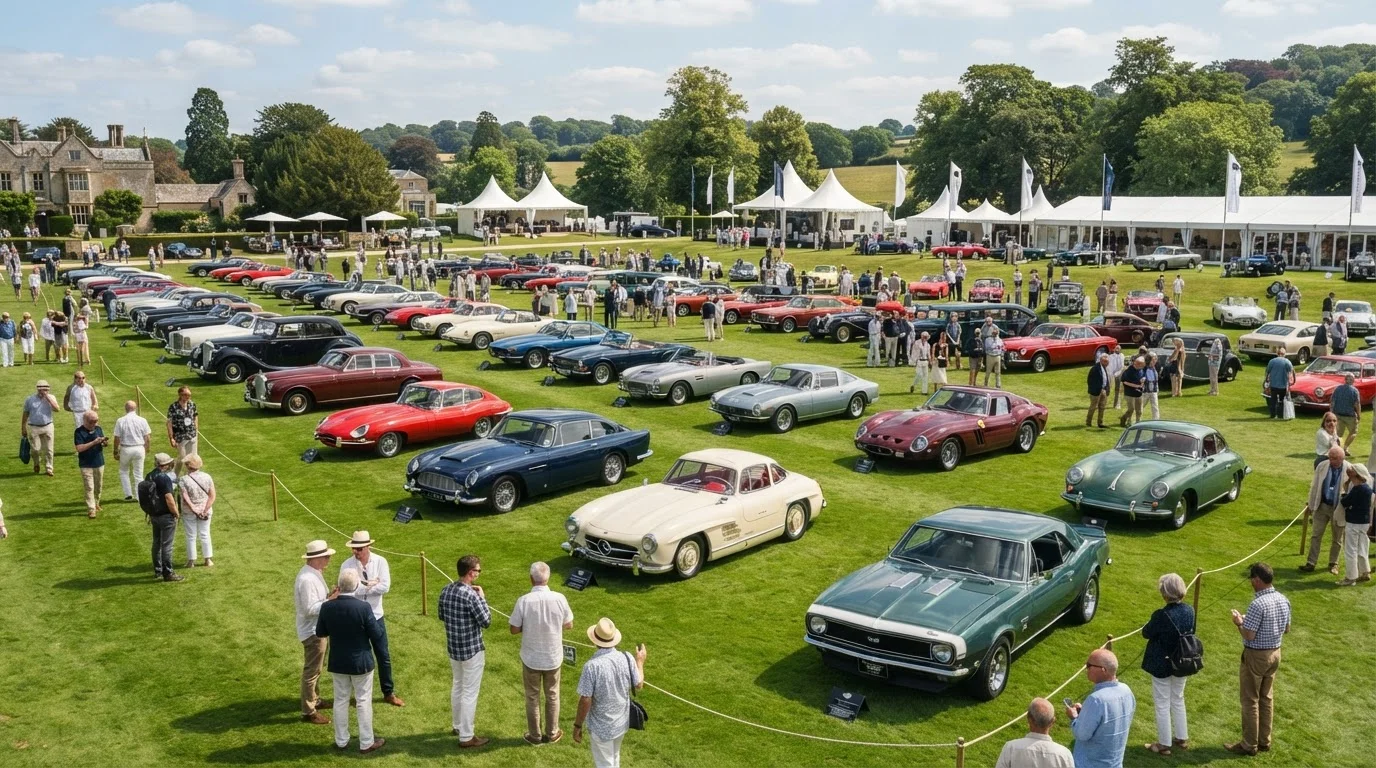
A concours d'elegance (French for "competition of elegance") is a formal judged event where classic, antique, and collector vehicles are evaluated on authenticity, condition, and historical accuracy. Unlike casual car shows, concours events follow strict judging criteria and award trophies or titles to the finest examples in each class. They represent the highest tier of the classic car show world.
Judging standards at major concours events often reference marque-specific factory specifications, requiring documentation such as build sheets, broadcast codes, or Protect-O-Plate cards to verify originality.
The Spectrum of Classic Car Events
Not all classic car shows are created equal. At one end of the spectrum sits the informal weekend cruise-in - a relaxed gathering in a parking lot where owners display their vehicles, swap stories, and enjoy community camaraderie. At the other end sits the formal concours d'elegance, where world-class collector cars compete under the scrutiny of trained judges using detailed scoring sheets.
Between those poles, you'll find marque-specific meets (events dedicated to a single manufacturer or model line), club-sponsored regional shows, charity events with casual voting, and multi-class outdoor exhibitions. Understanding where a particular event falls on this spectrum shapes everything - the dress code, the atmosphere, the judging rigor, and the caliber of vehicles on display.
If you're new to the hobby, it helps to first understand what qualifies as a classic vehicle, since shows are often organized around specific eras, categories, or legal definitions that vary by club and registry.
1,000+
Collector car events held annually in the U.S.
Industry observers and enthusiast organizations estimate that more than a thousand collector car shows and concours events take place across the United States each year, ranging from local cruise-ins to nationally recognized competitions.
~70 years
Age of the Pebble Beach Concours d'Elegance
The Pebble Beach Concours d'Elegance, one of the most recognized concours events in the world, has been held on the Monterey Peninsula in California since 1950, making it one of the longest-running events of its kind in North America.
How Concours Judging Works
At a concours d'elegance, vehicles are divided into classes - typically by era, country of origin, body style, or marque. Judges are usually experienced collectors, restorers, or marque specialists assigned to specific classes. They evaluate each car systematically, working from a standardized score sheet.
Common judging categories include: paint and finish quality, chrome and brightwork condition, engine compartment correctness, interior originality, undercarriage cleanliness, and documentation accuracy. Points are deducted for non-factory components, incorrect finishes, or missing period-correct details. A car with a beautiful restoration but the wrong-color seat piping can lose meaningful points.
Authenticity is often weighted heavily. Judges at major events may reference factory build records to confirm original specifications. This is why the philosophy behind a restoration matters enormously - a concours-level rebuild is fundamentally different from a driver-quality preservation project.
“A concours is not about the shiniest car - it's about the most correct car. Authenticity is the standard, and every detail is evidence.”
— Ken Gross, Automotive curator, historian, and longtime concours judge
What First-Time Spectators Should Know
Arriving as a spectator is the lowest-pressure way to experience these events, and it's genuinely educational. Plan for more walking than you expect - major concours events can sprawl across acres of fairgrounds or estate lawns. Wear comfortable shoes, dress for the weather, and bring sun protection for outdoor venues.
Engage with vehicle owners when they're not being judged. Most enthusiasts are eager to share their car's history, the restoration process, and what makes that particular model significant. These conversations are often where the real knowledge transfer happens.
Talk to Owners During Non-Judging Hours
Most concours schedules designate specific windows for active judging when owners step back from their vehicles. Outside those windows, owners are typically happy to discuss their car's history and restoration. Ask open-ended questions - "What was the most challenging part of the restoration?" almost always leads to a fascinating answer.
Pay attention to the class signage posted with each vehicle. It typically lists the year, model, body style, and sometimes the owner's name and restoration notes. Reading those placards closely gives you context that transforms a pretty car into a historical artifact.
Entering Your Vehicle: What's Required
If you're considering displaying your own vehicle, start by researching the event's class structure and eligibility rules well in advance. Most concours events require pre-registration with a vehicle description, photographs, and sometimes documentation of originality such as a factory window sticker, build sheet, or prior judging records.
Prepare your vehicle methodically. Clean the engine bay, detail the undercarriage, and address any incorrect components before the event. If you're unsure whether your car is concours-ready, attending as a spectator first - and speaking with judges or participants - provides invaluable feedback. Our guide to evaluating a classic car's condition covers many of the same checkpoints judges use.
Also be aware that certain commonly held beliefs about what makes a classic valuable don't always translate directly to concours scoring - rarity and market price are separate considerations from judging correctness.
Building Community Through Car Shows
Beyond the competition, shows serve as one of the most effective networking environments in the hobby. Marque clubs recruit members at events, restoration specialists exhibit their work, and parts vendors often set up nearby. For someone considering their first classic car purchase, attending a few shows first is a practical research method - you'll gain a sense of which eras excite you, which marques have active communities, and what a well-maintained example actually looks like in person.
Introduce yourself to club representatives and ask about membership. Many regional clubs host their own events, provide technical resources, and maintain lists of trusted restorers and suppliers. The relationships built at shows often outlast any single trophy or award.
This article is for general informational purposes only. Event rules, eligibility criteria, and judging standards vary by organization. Always consult the specific event's official guidelines before registering a vehicle for display or competition.