Key Takeaways
Option A
Frame-Off Restoration
The total-commitment, concours-level rebuild.
Best for: Collectors seeking show-quality results, maximum originality, or long-term investment-grade preservation of significant vehicles.
Option B
Driver-Quality Preservation
The practical, use-it-and-enjoy-it approach.
Best for: Enthusiasts who want a reliable, presentable classic they can drive regularly without fear of damaging an irreplaceable finish.
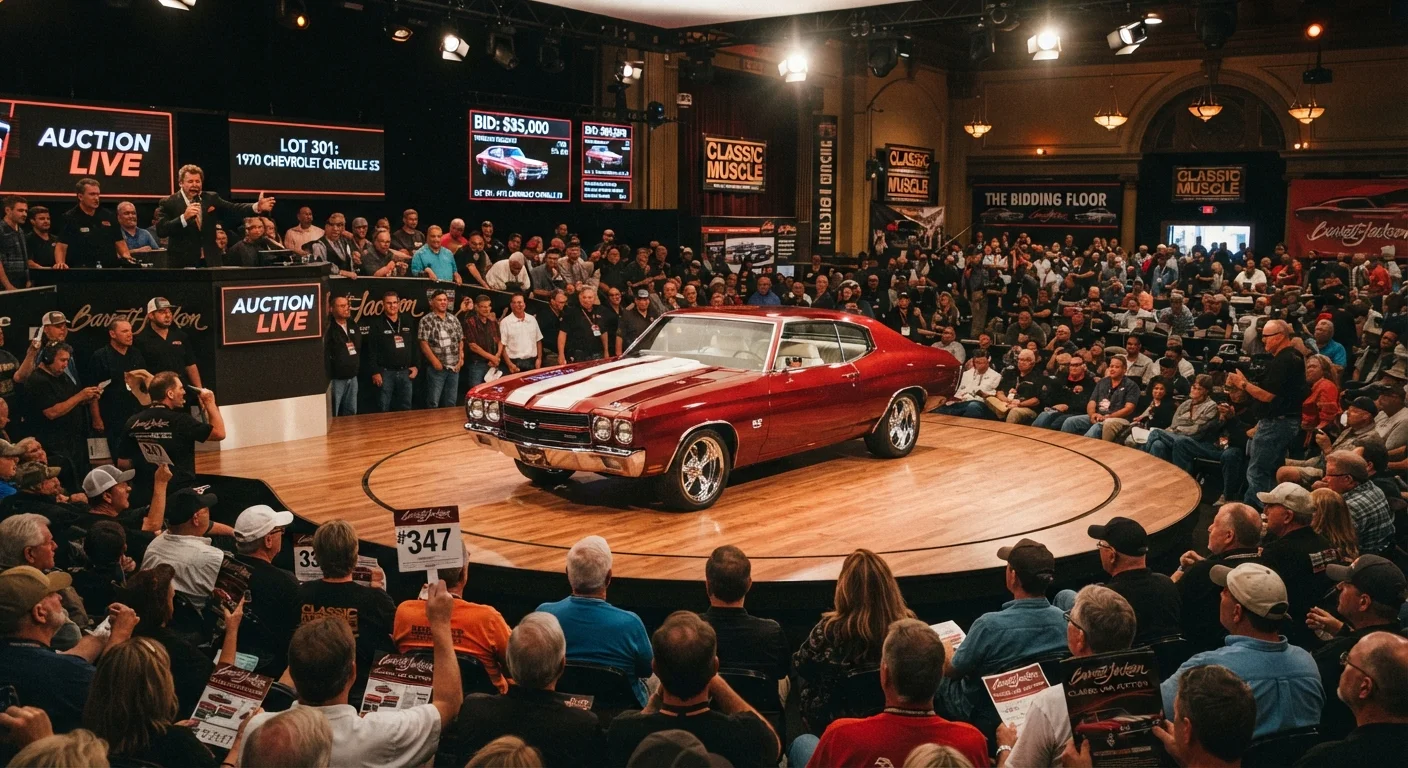
If you plan to show the car at concours or judged events
Frame-Off Restoration
Judged shows reward period-correct finishes, correct stampings, and documented restoration work. A driver-quality car rarely competes at that level.
If you want to drive the car regularly on weekends or road trips
Driver-Quality Preservation
A solid, mechanically sorted driver lets you enjoy the car without the anxiety of exposing an expensive restoration to road debris, weather, and parking lots.
If the vehicle is a rare, numbers-matching example of significant historical value
Frame-Off Restoration
Historically significant cars can justify the cost and effort of a full restoration - especially if documentation and provenance can be preserved alongside it.
If you're working with a limited budget or a common model
Driver-Quality Preservation
For popular models without exceptional rarity, the cost of a frame-off restoration routinely exceeds what the finished car is worth on the market.
If you want flexibility to modify or upgrade the drivetrain
Driver-Quality Preservation
Preserving a driver-quality car leaves room for practical upgrades. See the originality vs. restomod debate for a deeper look at that decision.
What Each Approach Actually Means
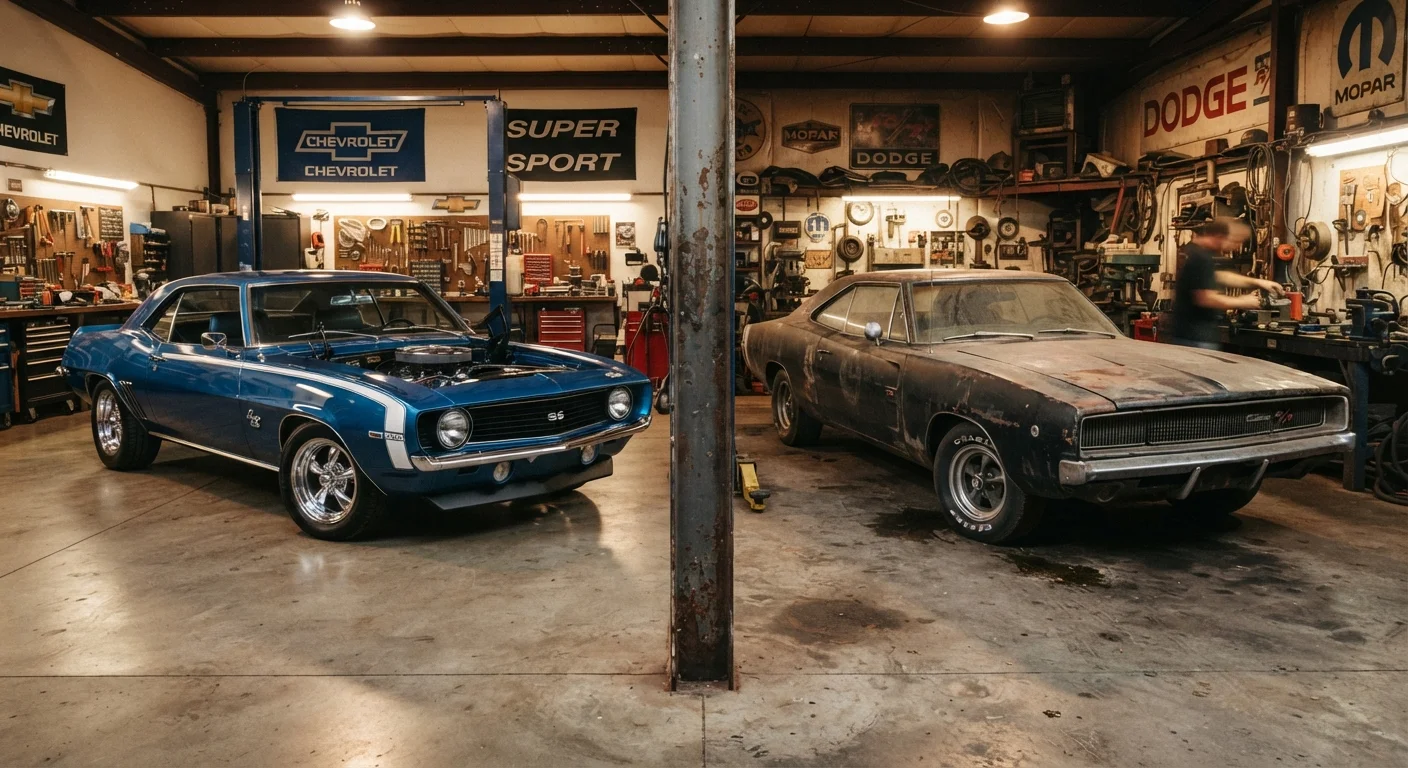
The terms get used loosely in classified ads and club conversations, so a working definition matters. A frame-off restoration means the body is completely separated from the frame or unibody structure, every component is removed, cleaned, inspected, and rebuilt or replaced, and the car is reassembled to match its original factory specification as closely as possible. The goal is typically a vehicle that looks and functions as it did on the showroom floor - or better.
Driver-quality preservation, by contrast, accepts the car as a living artifact. The focus is on mechanical reliability, structural soundness, and cosmetic tidiness - not perfection. Original paint showing honest age, a rebuilt carburetor, and a solid floor are all consistent with this approach. The car is meant to be used, not displayed under fluorescent lights.
Before committing to either path, a thorough pre-purchase evaluation is essential. Our classic car buyer's checklist walks through what to examine before any money changes hands.
| Criterion | Frame-Off Restoration | Driver-Quality Preservation |
|---|---|---|
| Typical cost range | $40,000-$100,000+ | $5,000-$20,000 |
| Project timeline | 2-4+ years | Months to 1-2 years |
| Daily/weekend drivability | Limited - high anxiety | High - intended use |
| Show eligibility | Concours and judged classes | Driver/touring classes |
| Originality preserved | Rebuilt to spec; original parts replaced | Original components retained where possible |
| Parts sourcing demands | High - period-correct required | Flexible - reproductions acceptable |
| Risk of value loss | High if done poorly or undocumented | Lower - reversible decisions |
Cost, Time, and Scope: The Real Differences
Frame-off restoration is one of the most resource-intensive projects in the hobby. A typical full restoration on a mid-complexity American classic - think a 1960s muscle car or postwar convertible - routinely runs between $40,000 and $100,000 or more at a professional shop, depending on parts availability, body condition, and how deeply the owner pursues originality. Timelines of two to four years are common. Even dedicated home restorers face substantial costs in parts, paint materials, and specialized tooling.
Driver-quality work is far more bounded in scope. Addressing rust at manageable stages, rebuilding or replacing worn mechanical components, freshening the interior with correct but not concours-grade materials, and applying a quality detail can transform a tired driver into a presentable, reliable classic for a fraction of the cost. Many enthusiasts complete this work incrementally over a few seasons.
$80,000+
Typical cost for full professional restoration
Industry estimates from restoration shops suggest complex American classics routinely exceed $80,000 for a complete frame-off rebuild at a professional facility.
2-4 years
Average frame-off project timeline
Classic car restorers and hobbyist publications consistently report multi-year timelines for thorough frame-off projects, even with experienced teams.
Rising
Collector demand for unrestored survivors
Auction results at major classic car sales over the past decade show growing premiums for documented, unrestored original-condition vehicles versus comparable restored examples.
It's also worth noting that parts sourcing affects both approaches differently. A full restoration demands period-correct components - a challenge explored in our guide to finding reliable classic car parts. Driver-quality work allows more flexibility with quality reproduction or even compatible modern parts.
Value, Patina, and the Collector Market
One persistent myth is that a frame-off restoration always increases a car's value. In practice, the market is more nuanced. A poorly documented or incorrectly executed restoration can actually diminish a vehicle's collector value - particularly if original stampings, date-coded parts, or factory finishes are lost in the process. Our breakdown of classic car value myths covers this in detail.
Authentic, unrestored examples in honest condition - sometimes called survivors - have gained significant appreciation among serious collectors over the past two decades. A one-owner car with original paint and verifiable low mileage can command premiums that a freshly restored counterpart cannot. This shift reflects a broader recognition that genuine originality, once erased, cannot be recovered.
Driver-quality preservation, done thoughtfully, keeps options open. It maintains the car's usability while avoiding irreversible decisions. If the vehicle later proves to be a more significant example than originally thought, a driver-quality car can still be upgraded in scope - a fully stripped and rebuilt restoration cannot be undone.
Documentation Is Critical Either Way
Whether you pursue a full restoration or driver-quality preservation, maintaining thorough records adds measurable value. Keep receipts, photographs, inspection reports, and a written history of every significant repair or decision. For restored vehicles especially, documentation of original parts, paint codes, and assembly details can be the difference between a car that commands collector-level interest and one that does not.
For owners who enjoy displaying their cars, understanding the show circuit before investing in a full restoration is worthwhile. Our guide to classic car shows and concours events explains how judging standards vary and what level of preparation different events actually require.