Key Takeaways
Why Classic Parts Sourcing Requires a Different Approach
Sourcing parts for a modern vehicle is largely a logistics question - the manufacturer's supply chain is active, fitment data is standardized, and most components are readily available. Classic vehicle ownership presents a fundamentally different challenge: the original supply chain is long gone, production records may be incomplete, and the quality of available replacements varies enormously.
If you're new to classic ownership, the foundational guide to buying your first classic car provides useful context on what to expect from the ownership experience before you encounter your first parts search. And for a broader orientation on the parts landscape, the Vehicle Parts & Services hub covers general sourcing and maintenance principles that apply across vehicle types.
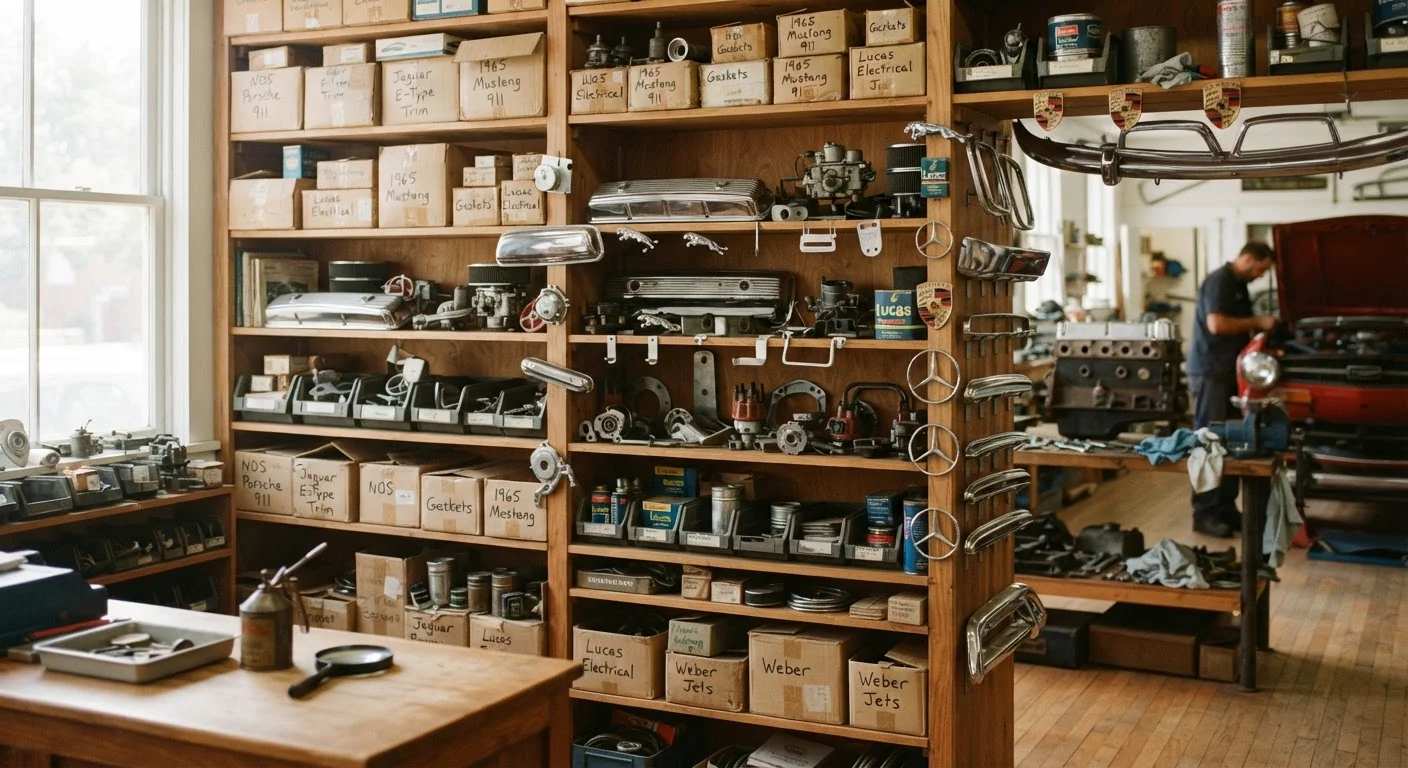
Understanding the three primary sourcing channels - NOS, reproduction, and salvage - and knowing when each is appropriate is the core competency that separates experienced restorers from frustrated beginners.
What you will need
Evaluating Quality and Avoiding Common Pitfalls
Once you have identified a part and a potential source, quality evaluation becomes the critical step. For mechanical components, cross-reference casting numbers, date codes, and factory part numbers against documented references. Marque clubs and published registry guides are authoritative sources for this information.
Join the Club Before You Shop
Marque-specific clubs - organizations dedicated to a single make or model - often maintain vetted vendor lists, technical advisers, and classified sections where members sell parts at fair prices. Membership fees are typically modest, and the knowledge access alone can save significant time and money.
For safety-critical systems - brakes, steering, fuel delivery - the bar must be higher still. Understanding how brake components work together helps you recognize when a replacement part's specifications are inadequate for the job. When a part's safety implications are unclear, the right move is to consult a mechanic with documented experience in vintage vehicles.
Never Compromise on Safety-Critical Parts
Brake lines, master cylinders, steering components, and fuel system parts directly affect vehicle control and fire risk. For these items, use only parts from suppliers with documented quality standards and traceable materials. When in doubt, consult a qualified mechanic specializing in vintage vehicles before installation.
Finally, consider how your parts decisions affect long-term vehicle character. The choice between frame-off restoration and driver-quality preservation shapes every sourcing decision you'll make - aligning your parts strategy with your overall restoration philosophy prevents costly rework later.
Counterfeit and Mislabeled Parts Are a Real Risk
The vintage parts market is not immune to misrepresentation. Items labeled 'NOS' may be reproductions, and reproductions may be made from substandard materials. Always request documentation, inspect packaging, and cross-reference part numbers against factory literature or trusted registries before finalizing a purchase.