Key Takeaways
How Rust Actually Spreads Through a Classic Vehicle
Rust is an electrochemical process. When iron-containing steel is exposed to oxygen and moisture simultaneously, it forms iron oxide - the reddish compound most people recognize. What makes this destructive on classic vehicles is not the initial surface reaction but the cascade it triggers beneath paint, undercoating, and seam sealer where no one is watching.
Classic vehicles built before modern galvanized steel and two-stage cathodic primer systems were common are particularly vulnerable. Their steel was often protected by a single layer of primer and paint applied over bare metal. Once that barrier is compromised - by a stone chip, a flexing panel, a failed seam seal, or simply age - moisture finds its way in and the reaction begins from the inside out.
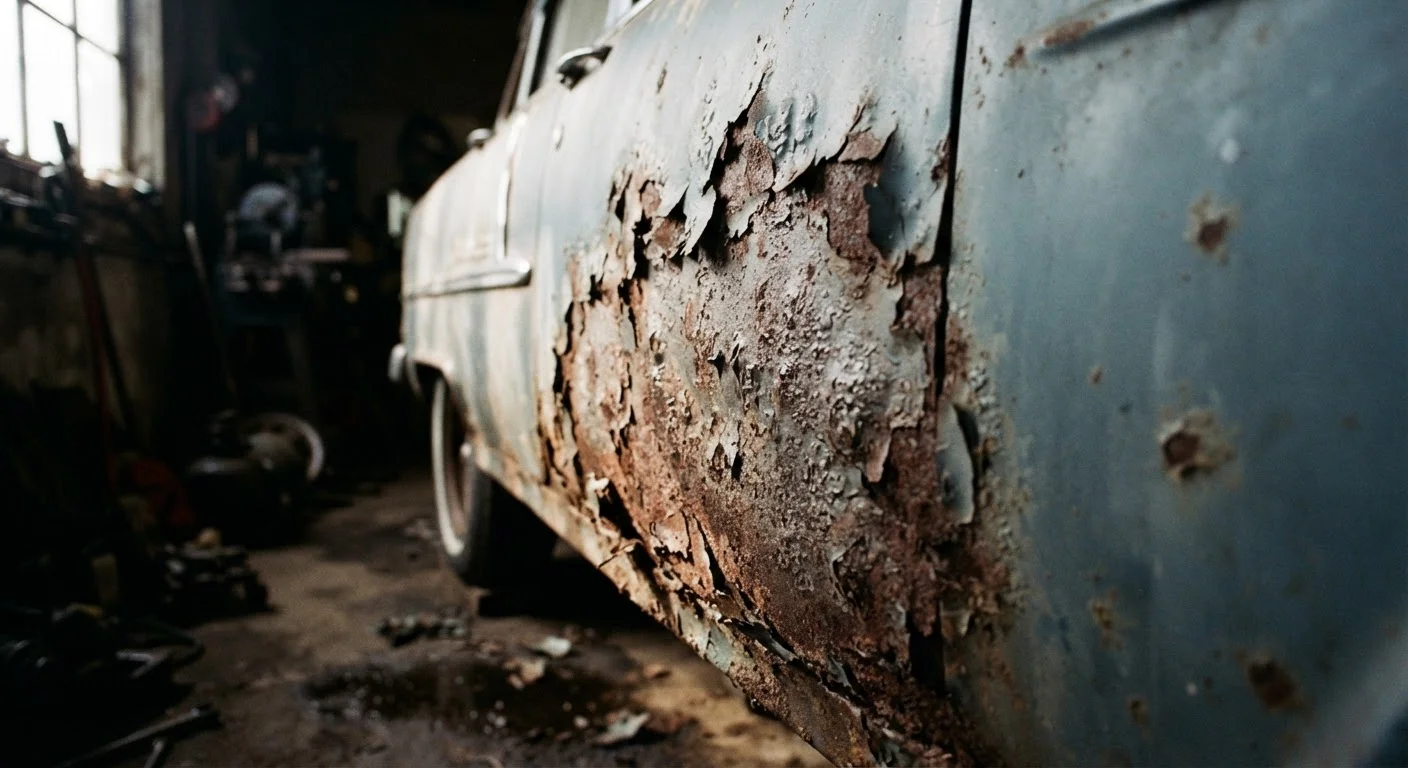
This inside-out progression is why rust so frequently surprises owners. A panel can look presentable from the outside while actively corroding from within, particularly in double-skin areas like door bottoms, rocker panels, and trunk floors where condensation forms and cannot escape. By the time bubbling appears on the paint surface, the steel underneath has often already pitted or thinned significantly.
~$3B+
Annual U.S. vehicle corrosion repair costs
The Federal Highway Administration has documented billions in annual corrosion-related costs across U.S. transportation infrastructure and vehicles, with passenger vehicles representing a major share.
6-12 months
Typical time before surface rust becomes structural
Restoration specialists commonly note that untreated surface rust in moisture-prone zones can penetrate panel steel within one to two seasonal cycles, depending on climate and environment.
The most corrosion-prone areas on most American classic vehicles from the 1950s through the 1980s include: floor pan seams, frame rails (especially near body mounts), lower cowl sections, inner and outer rocker panels, trunk floor and spare tire wells, and the lower sections of A and B pillars. Understanding where to look is the first step toward catching damage before it becomes irreversible.
Common Mistakes That Let Rust Win - and How to Stop Them
Most classic vehicle owners don't lose their cars to a single catastrophic event. They lose them slowly, through a series of small oversights compounded over years. The mistakes below represent the most common ways corrosion gains a foothold - and how to interrupt the process at each stage.
Inspecting only visible exterior panels and ignoring the underside of the vehicle.
Why it happens: Buyers and owners naturally focus on what's easy to see - paint, chrome, and body lines. Crawling beneath a vehicle requires more effort and equipment, so it's often skipped.
Leaving small paint chips and scratches unaddressed for extended periods.
Why it happens: Minor paint damage feels like a low-priority cosmetic issue, especially when a full repaint is planned later. Owners procrastinate, not realizing bare steel oxidizes within days in humid conditions.
Storing a classic vehicle in conditions that concentrate moisture around the body.
Why it happens: Concrete garage floors emit ground moisture, and an enclosed space without ventilation creates condensation cycles that repeatedly wet and dry the underbody. Many owners assume indoor storage equals safe storage.
Ignoring drainage channels, seams, and body cavities where debris and water collect.
Why it happens: Cowl vents, door bottoms, trunk seams, and quarter panel cavities accumulate leaves, dirt, and standing water over decades. These areas are out of sight and rarely part of a routine wash.
Treating rust as a cosmetic problem rather than a structural progression.
Why it happens: Surface rust - the reddish discoloration on an otherwise solid-feeling panel - looks superficial and is easy to dismiss. Most owners underestimate how quickly scale rust and then penetrating rust follow.
Structural Rust Can Make a Vehicle Unsafe
Corrosion in frame rails, subframe mounting points, and floor pans is not merely a cosmetic concern - it can compromise the vehicle's structural integrity in ways that are not visible during a casual walkaround. Before driving a classic vehicle of unknown history, have it evaluated by a qualified mechanic or restoration specialist who can inspect the underbody properly. Do not assume a solid-looking exterior means the structure beneath is sound.
Once you understand which mistakes accelerate hidden corrosion, the path forward becomes clearer. Addressing rust at the surface level is genuinely manageable for most owners. Waiting until it reaches structural components - frame rails, floor pans, or subframe mounting points - typically means the repair scope expands from bodywork into fabrication and, in some cases, full restoration versus preservation decisions that fundamentally change the vehicle's trajectory and value.
If you're evaluating a new acquisition rather than maintaining one you already own, applying this knowledge before purchase is far more cost-effective than discovering problems afterward. A structured walkaround that includes underbody time is an essential part of any serious evaluation - see our classic car buyer's inspection guide for a step-by-step framework.
Repainted Surfaces Can Conceal Active Rust
A fresh coat of paint on a classic vehicle does not mean rust has been treated or removed. In many cases, sellers or previous owners paint over surface rust to improve appearance without addressing the underlying corrosion. Within months, the paint will bubble and fail - but by then the steel beneath may have deteriorated significantly further. Always probe suspicious areas with a magnet and look for uneven panel thickness or soft spots.