

The Three Cab Styles You'll Encounter
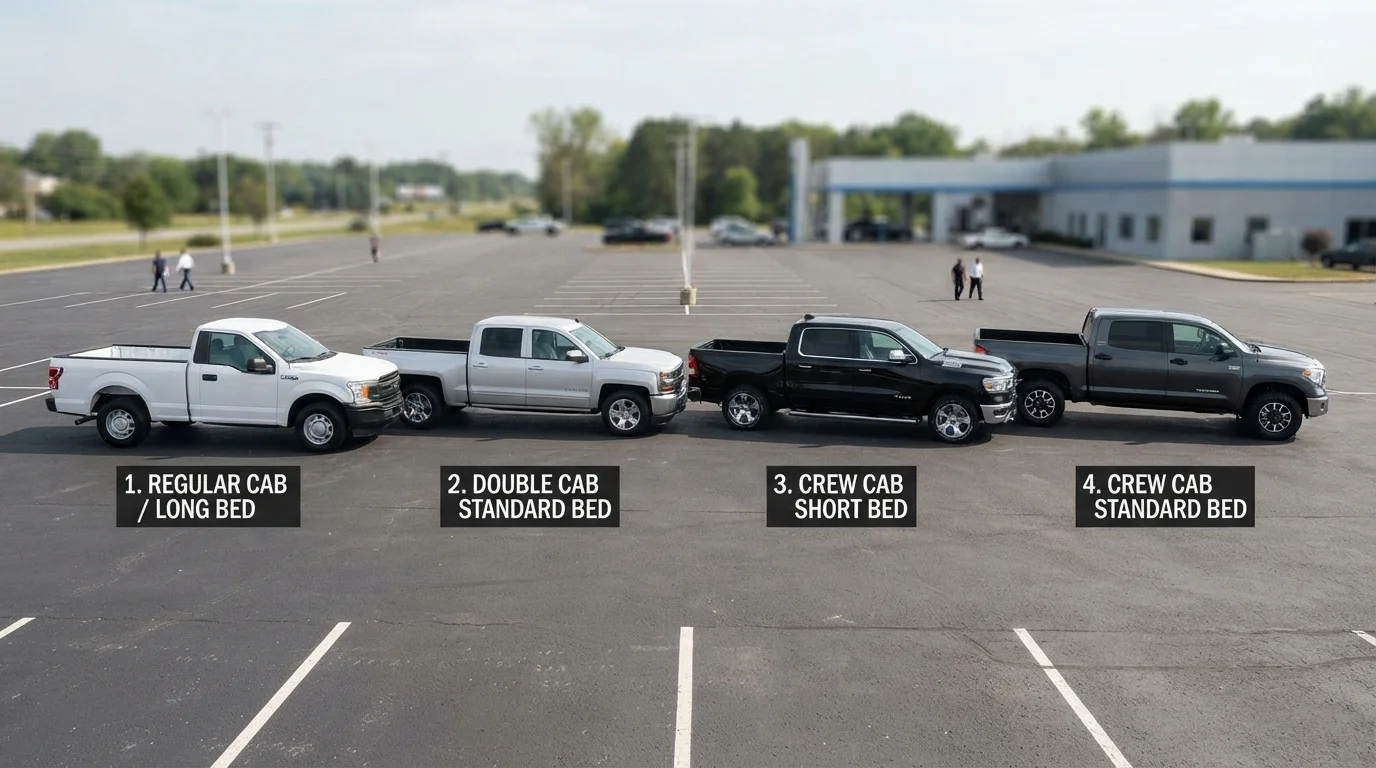
Walk any dealership lot and you'll see the same three cab configurations repeated across nearly every pickup truck sold in the U.S. Each refers to the passenger compartment size and door arrangement—and each involves a trade-off between seating capacity and bed length.
Regular Cab (Standard Cab)
The regular cab is the original pickup configuration: one row of seating, two doors, and maximum bed length for a given overall vehicle size. It seats two to three passengers. This is the working professional's choice—contractors, farmers, and fleet operators who prioritize cargo space and don't need room for passengers.
Extended Cab (SuperCab, Double Cab, King Cab)
Extended cabs add a second row of seating—typically accessed via small rear-hinged doors or a fold-forward front seat. Rear headroom and legroom are limited; it's adequate for occasional passengers or extra gear storage, not comfortable long-haul seating. The bed is shorter than a comparable regular cab. Naming varies by manufacturer but the concept is consistent.
Crew Cab (CrewMax, Mega Cab, Quad Cab)
Crew cabs have four full-size doors and a true second-row seat with adult-sized legroom. This is the family-friendly configuration and the dominant choice in current U.S. truck sales. The trade-off: crew cabs almost always pair with a shorter bed, and the overall vehicle length is substantial. For a broader look at how trucks compare with other body styles, see our guide to vehicle categories.
Bed Lengths and What They Actually Fit
Bed length is measured as interior cargo box length, not the full truck. Most full-size pickup trucks are offered in short, standard (sometimes called regular), and long bed variants. Exact measurements vary slightly by manufacturer.
Payload Rating
The maximum combined weight a truck can carry in its cab and bed, including passengers and cargo. Exceeding this limit is unsafe and may void the vehicle warranty.
Crew Cab
A four-door cab configuration with a full rear-row seat offering adult-sized legroom. The most common configuration in current U.S. full-size truck sales.
Extended Cab
A cab style with a small secondary seating area behind the front row, often accessed through rear-hinged doors. Provides limited rear passenger or storage space.
Long Bed
A truck cargo box approximately 8 feet in interior length. Preferred for heavy hauling and accommodating full sheets of building material flat.
GVWR
Gross Vehicle Weight Rating — the maximum allowable total weight of the truck including its own curb weight plus payload. Used to determine truck class and registration requirements.
Towing Capacity
The maximum weight a truck can pull via a hitch or fifth wheel. Distinct from payload rating and specified separately for each vehicle configuration.
- Short bed: Approximately 5.5–5.8 feet. Pairs most commonly with crew cabs. Easier to maneuver and park in urban environments; limits what you can haul flat.
- Standard bed: Approximately 6.4–6.7 feet. A middle-ground option offering better utility without the full length penalty. Often paired with extended cabs.
- Long bed: Approximately 8 feet. The workhorse option. Essential for carrying full sheets of plywood or drywall flat, hauling livestock, or maximizing payload volume. Typically paired with regular or extended cabs.
A practical note: an 8-foot long bed on a crew cab produces a vehicle that can exceed 22 feet in overall length—longer than many parking spaces. If you're considering this combination, verify it fits your garage and your regular parking situations before committing.
Bed length also intersects with fifth-wheel and gooseneck towing. Some configurations require a bed extender or special hitch placement to avoid cab contact during tight turns. This is worth confirming against the specific truck's towing specs. See also: light-duty vs. heavy-duty truck classifications, which covers how duty ratings affect towing and payload limits.
Payload Rating: The Number That Matters Most for Work
Payload rating is the maximum weight a truck can carry in its bed and cab combined—passengers, cargo, and anything else loaded on the vehicle. It is not the same as towing capacity, and the two are often confused.
3
Standard U.S. pickup cab configurations
Regular, extended, and crew cab styles account for virtually all pickup trucks sold in the American market.
~2,500 lbs
Typical maximum payload for light-duty trucks
Payload ratings vary significantly by configuration; always consult the door-jamb sticker for the specific vehicle as built.
22+ ft
Potential overall length of crew cab with long bed
A crew cab paired with an 8-foot bed can exceed the length of many standard parking spaces, a practical consideration for daily drivers.
Every new truck has a specific payload rating printed on a sticker inside the driver's door jamb. This number is calculated for that exact vehicle as built—cab style, bed length, engine, axle ratio, and options all affect it. A crew cab with a gas engine may have a lower payload rating than a comparable regular cab with a diesel, even within the same model line.
Exceeding payload capacity is a safety and legal issue. Overloaded trucks handle poorly, stress suspension and brake components, and may void warranty coverage. If you're using a truck for regular hauling, verify the actual door-jamb sticker rating rather than relying on advertised maximums, which typically represent the highest-spec configuration in a model family.
For consumers deciding whether a full-size truck makes sense as an everyday vehicle, it's worth reading about the real trade-offs of daily driving a full-size truck. And if you're still weighing truck ownership against other vehicle types, matching a vehicle type to how you actually use it offers a practical decision framework.
This article is for general informational purposes only. Vehicle specifications, ratings, and configurations vary by manufacturer, model year, and trim. Always verify specifications directly with the manufacturer or a licensed dealer before making a purchase decision.