

| Potential OBD-II fault codes | More than 5,000 (SAE International OBD-II standard) |
| TPMS required on all new U.S. passenger vehicles since | 2008 model year (NHTSA TREAD Act mandate) |
| Pressure drop that triggers TPMS alert | 25% below recommended PSI (NHTSA specification) |
| Red light color convention | Stop or act immediately — serious risk (Industry standard across manufacturers) |
| Amber/yellow light color convention | Caution — service soon, monitor closely (Industry standard across manufacturers) |
| Green/blue light color convention | Informational — system or feature is active (Industry standard across manufacturers) |
Why Warning Light Color Matters First
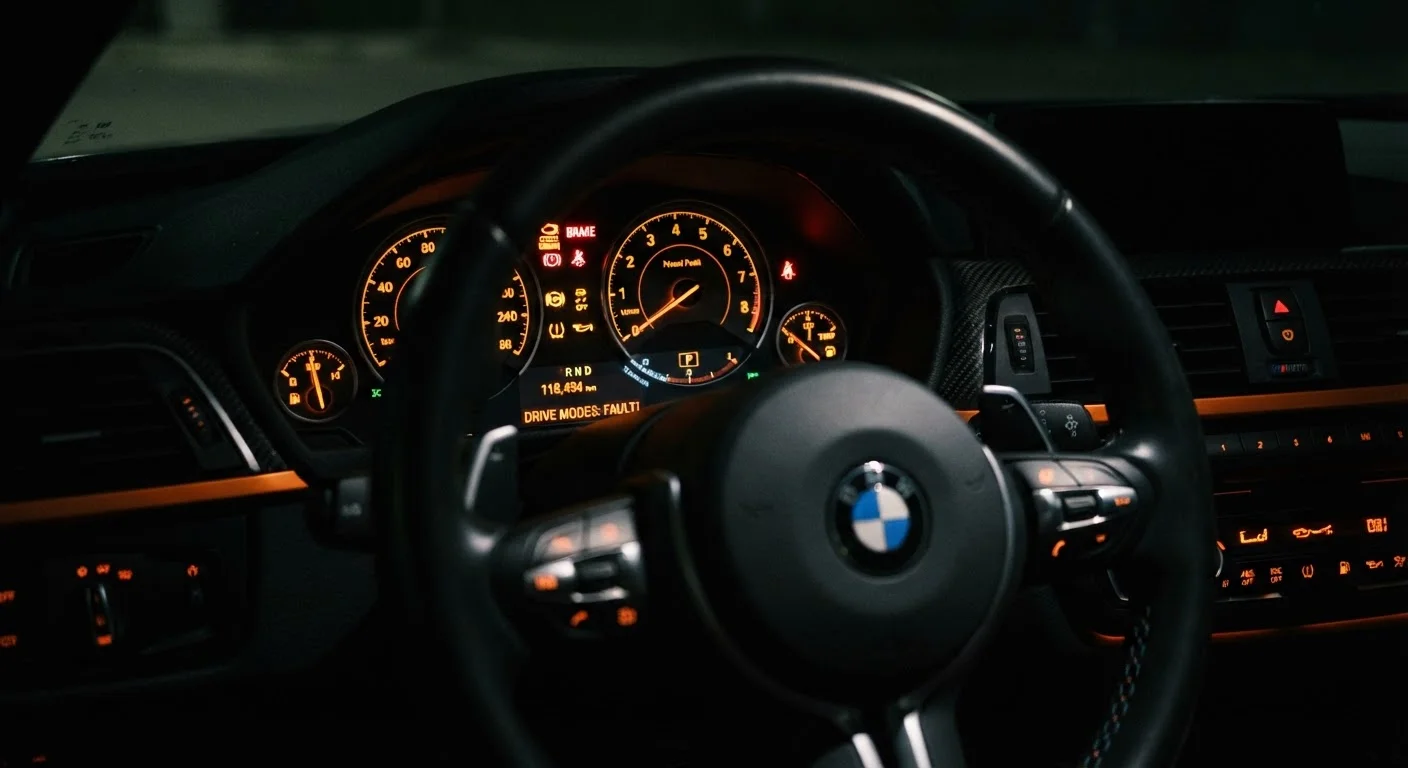
Before decoding any specific symbol, understand the color system built into virtually every modern dashboard. Red lights signal conditions that are potentially dangerous or damaging right now — stop driving as soon as it is safe and address the issue immediately. Amber or yellow lights indicate a system that needs attention soon but is not typically an emergency. Green and blue lights are informational, confirming that a feature such as high beams or cruise control is active.
This color logic is consistent across nearly all manufacturers and model years. Internalizing it helps you react appropriately the moment a light appears — even before you can identify the specific symbol.
| Potential OBD-II fault codes | More than 5,000 (SAE International OBD-II standard) |
| TPMS required on all new U.S. passenger vehicles since | 2008 model year (NHTSA TREAD Act mandate) |
| Pressure drop that triggers TPMS alert | 25% below recommended PSI (NHTSA specification) |
| Red light color convention | Stop or act immediately — serious risk (Industry standard across manufacturers) |
| Amber/yellow light color convention | Caution — service soon, monitor closely (Industry standard across manufacturers) |
| Green/blue light color convention | Informational — system or feature is active (Industry standard across manufacturers) |
The Most Common Warning Lights Decoded
Below are the indicators drivers encounter most frequently, what they actually mean, and how urgently each typically warrants a response.
Check Engine Light (CEL)
An amber engine-shaped icon is one of the most misunderstood lights on any dashboard. It signals that the vehicle's OBD-II system has logged a fault code — but a steady light is not the same as a flashing one. A steady CEL means schedule a diagnostic soon; the vehicle is generally safe to drive short distances. A flashing CEL typically indicates active engine misfiring, which can damage the catalytic converter quickly — reduce speed, minimize electrical load, and have the vehicle inspected the same day. See vehicle fluid checks every driver should understand for fluid-related issues that often accompany engine faults.
Oil Pressure Warning
A red oil can symbol — often confused with an oil-change reminder — means oil pressure has dropped to a dangerous level. Stop the engine as soon as it is safe to do so. Driving with critically low oil pressure can cause severe, often irreversible engine damage within minutes. Check the oil level after the engine cools; if it reads normal and the light persists, the pressure sensor or oil pump may be at fault. This requires a qualified mechanic.
Engine Temperature Warning
A red thermometer icon indicates the engine is overheating. Pull over safely, shut off the engine, and do not open the hood or radiator cap until the engine has fully cooled — pressurized coolant can cause serious burns. Persistent overheating warrants professional diagnosis to identify whether the issue is a coolant leak, thermostat failure, or a more serious problem.
Battery / Charging System
An amber or red battery symbol indicates the charging system is not maintaining adequate voltage. Turn off non-essential electrical loads (heated seats, climate control) and head to a service facility; the vehicle may not restart once the engine is shut off.
Tire Pressure Monitoring System (TPMS)
A horseshoe-shaped icon with an exclamation point means one or more tires is at least 25% below the recommended cold inflation pressure. Check all four tires with a gauge and inflate to the pressure listed on the driver's door jamb placard — not the maximum value printed on the tire sidewall. Remember that TPMS only alerts after a significant pressure drop has already occurred; monthly manual checks remain important.
Brake System Warning
A red circle with an exclamation point or the word BRAKE can indicate low brake fluid, a brake system fault, or an engaged parking brake. Confirm the parking brake is fully released first. If the light persists while driving, have the brake system inspected before traveling further — brake failure is a direct safety risk.
Check Engine Light (CEL)
An amber or orange engine-shaped indicator triggered when the vehicle's OBD-II system detects an emissions- or engine-related fault. It can signal anything from a loose gas cap to a misfiring cylinder.
OBD-II
Onboard Diagnostics, second generation — a standardized system used in most U.S. vehicles since 1996 that monitors engine and emissions performance and stores readable fault codes.
TPMS
Tire Pressure Monitoring System — a federally mandated sensor system that warns drivers when one or more tires drops significantly below the recommended inflation pressure.
DTC (Diagnostic Trouble Code)
An alphanumeric code stored by the OBD-II system when a fault is detected. Technicians use a diagnostic scanner to read these codes and identify the source of a warning light.
Responding Wisely: Immediate Action vs. Schedule Soon
Not every warning light demands that you pull over on the spot. Use this framework to calibrate your response:
- Stop immediately (red lights, flashing CEL): Oil pressure loss, engine overheating, active brake faults, and a flashing check engine light all require prompt action to prevent injury or irreversible mechanical damage.
- Schedule within a few days (steady amber lights): A steady CEL, TPMS alert, or battery warning generally means the vehicle remains drivable for short distances, but delaying too long can turn a minor fix into a major repair.
- Monitor and document: Some lights appear briefly and self-clear. Note the conditions — speed, engine load, outside temperature — and report them to your mechanic. The OBD-II system may still hold a stored fault code even after the light goes out.
Your Owner's Manual Is the Authoritative Source
Warning light symbols and their specific meanings vary by manufacturer and model year. While most follow industry color conventions, some automakers use proprietary icons or additional indicators not covered here. Always cross-reference an unfamiliar light with your vehicle's owner's manual. A qualified mechanic with a diagnostic scanner can provide a precise, vehicle-specific diagnosis.
A basic OBD-II scanner can read the specific fault code behind a check engine light before your shop visit, giving you useful context and helping you ask better questions. However, clearing the code without fixing the underlying problem will only cause it to return. For any diagnosis involving safety-critical systems — brakes, steering, engine cooling — always defer to a qualified technician.
If you're evaluating a used vehicle and notice active warning lights, use every available tool to investigate. A vehicle history report can surface prior repair records that may explain a persistent light — and questions about any open warning lights are worth raising directly with a seller. For guidance on that process, see questions worth asking a dealer before you agree to anything.
This article provides general educational information about vehicle warning indicators and is not a substitute for diagnosis by a qualified mechanic. Warning light meanings can vary by vehicle make, model, and year — always consult your owner's manual and a licensed service professional for guidance specific to your vehicle.