

Key Takeaways
Start here
Why Fluid Checks Matter
Core knowledge
Engine Oil
Build on it
Coolant (Antifreeze)
Safety critical
Brake Fluid
Complete the picture
Transmission Fluid, Power Steering, and Washer Fluid
Take action
Warning Signs and When to Act
Why Fluid Checks Matter
A modern vehicle depends on multiple fluid systems working in concert. These fluids lubricate moving parts, transfer heat away from critical components, transmit hydraulic force, and keep visibility clear. When any one of them falls outside acceptable levels or degrades in quality, the consequences can range from minor inconvenience to expensive mechanical failure.
The good news is that most fluid checks take only a few minutes and require no special tools. Understanding what each fluid does—and what its condition tells you—is one of the most practical skills any driver can develop. This guide is part of a broader look at scheduled vehicle maintenance and how routine upkeep protects your investment over time.
Dipstick
A long, thin metal rod inserted into a fluid reservoir that, when withdrawn, shows the current fluid level against two marked reference points.
Hygroscopic
A property of certain fluids—including brake fluid—that causes them to absorb moisture from surrounding air over time, which can degrade their performance.
Coolant reservoir
A translucent plastic tank connected to the radiator that holds excess coolant and allows easy visual inspection of fluid level without opening the radiator cap.
Hydraulic pressure
Force transmitted through a fluid in a closed system—used in both the braking system and power steering to amplify driver input into mechanical action.
Fluid degradation
The gradual breakdown of a fluid's chemical properties due to heat, contamination, or age, reducing its ability to perform its intended function.
Engine Oil
Engine oil lubricates dozens of metal components inside your engine, reducing friction and carrying heat away from areas the cooling system can't reach. It also suspends microscopic contaminants and carries them to the oil filter. Over time, oil breaks down and accumulates combustion byproducts, which is why regular changes are necessary.
To check oil level, park on level ground, wait for the engine to cool, then locate the dipstick (usually marked with a bright handle). Pull it out, wipe it clean, reinsert it fully, and pull it again. The oil should fall between the two marks on the dipstick. Healthy oil ranges from amber to light brown; a milky appearance can signal coolant contamination and warrants immediate professional attention.
For guidance on how often to change your oil, see our article on oil change intervals.
Check Oil on Level Ground
Always check your engine oil with the vehicle parked on a flat surface and the engine off for at least five minutes. An uneven surface or a warm engine can give a false low reading. Make this a habit before long road trips or once a month as part of a quick walk-around inspection.
Coolant (Antifreeze)
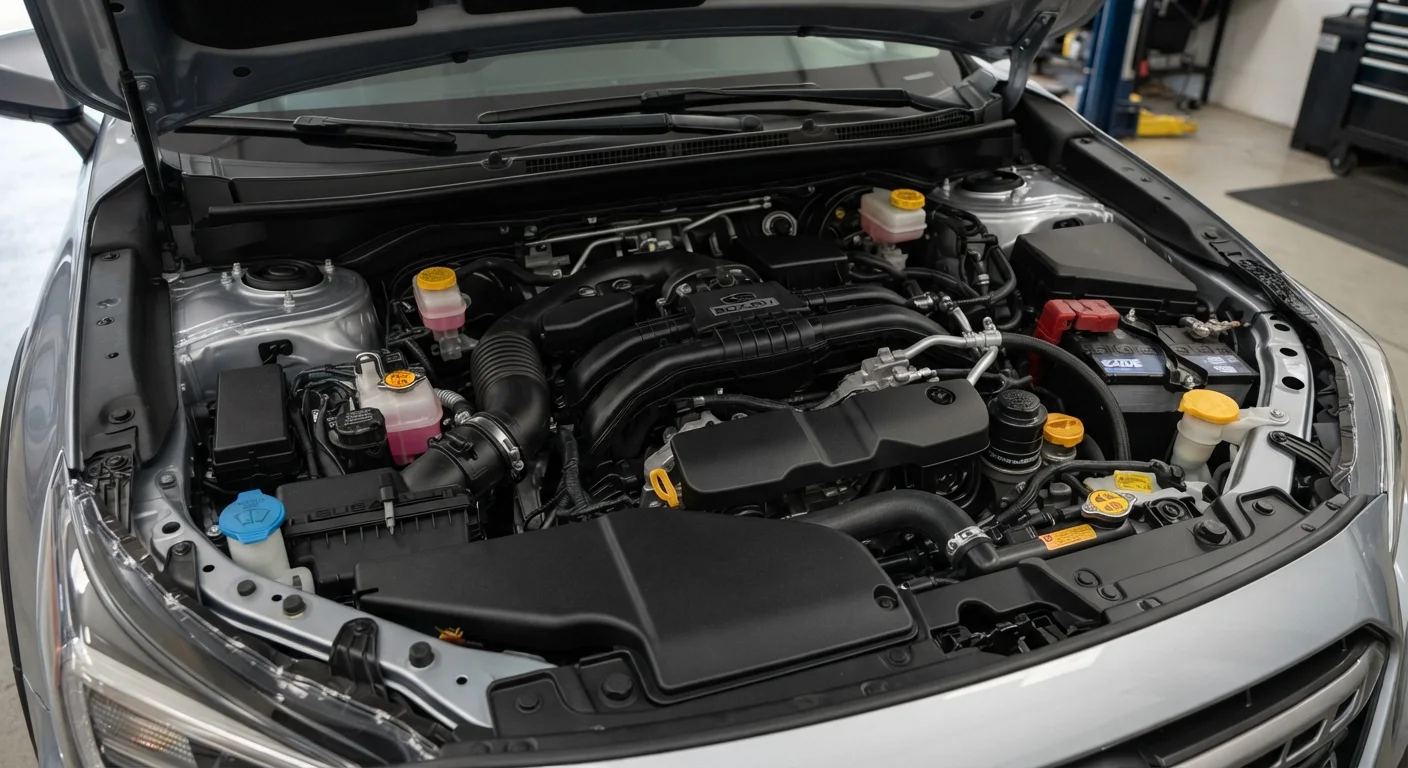
Coolant circulates through the engine and radiator to regulate operating temperature. It also prevents freezing in cold climates and raises the boiling point of water in the system. Most modern vehicles use a dedicated coolant reservoir that's separate from the radiator cap—check the level against the MIN and MAX markings on the side of the translucent reservoir.
Never open a hot radiator cap; pressurized coolant can cause serious burns. Check coolant when the engine is cold. If the level is consistently dropping, there may be an internal or external leak. Coolant color and formulation vary—your owner's manual specifies which type is compatible with your vehicle. Mixing incompatible formulations can reduce effectiveness. Weather changes can stress the cooling system, so seasonal vehicle prep is a good time to inspect it carefully.
Brake Fluid
Brake fluid transmits the hydraulic pressure that activates your brake calipers when you press the pedal. It operates under high heat and must maintain a stable boiling point to function correctly. Brake fluid is hygroscopic—meaning it absorbs moisture from the air over time. As water content increases, the fluid's boiling point drops, which can cause brake fade under hard use.
The brake fluid reservoir is typically a small translucent container near the back of the engine bay, mounted on the brake master cylinder. Check that the level is between MIN and MAX. Fluid that appears very dark or has been in service for several years may warrant replacement regardless of level. For a deeper understanding of how hydraulic pressure fits into the broader brake system, see our guide to how brake components work together.
Low Brake Fluid May Signal a Leak
If your brake fluid level drops noticeably between checks, don't simply top it off and move on. A significant drop often points to a leak in the brake lines, calipers, or master cylinder—or may indicate worn brake pads that have consumed the fluid volume. Have a qualified mechanic inspect the system promptly, as brake failure poses serious safety risks.
Transmission Fluid, Power Steering, and Washer Fluid
Transmission fluid lubricates the gears and clutches inside an automatic or manual transmission. In many automatic vehicles, it can be checked via a dipstick similar to the oil dipstick, though some sealed transmissions require a lift for inspection. Healthy transmission fluid is typically pink or red; a dark brown color or burnt smell suggests degradation.
Power steering fluid (in vehicles without electric power steering) enables easy steering by transmitting hydraulic force to the steering rack. Its reservoir is usually labeled and located near the front of the engine bay. Low levels or a whining noise when turning can indicate a leak.
Windshield washer fluid is the least mechanically critical but affects visibility. Use a premixed washer solution rather than plain water, as plain water can freeze in cold weather and may leave mineral deposits on the windshield. Never substitute other household liquids—they can damage seals and spray nozzles.
Vehicle Owner's Manual
Your owner's manual specifies the exact fluid types, capacities, and service intervals for your specific vehicle—it's the most reliable reference available and is often accessible digitally through the manufacturer's website.
Scheduled Maintenance Overview
Understanding how fluid checks fit into broader maintenance milestones helps you stay ahead of wear. A complete maintenance schedule guide explains what to expect at each service interval.
Warning Signs and When to Act
Dashboard warning lights are often the first electronic alert that something is wrong with a fluid system. Understanding what those lights mean helps you respond appropriately. Our article on what dashboard warning lights are telling you provides a detailed breakdown.
Beyond warning lights, pay attention to these physical signals:
- Puddles under the vehicle: Any fluid pooling beneath a parked car deserves investigation. Color and location help identify the source.
- Unusual smells: A sweet smell often indicates coolant; a sharp, acrid smell can point to burning oil or overheating brake fluid.
- Changes in performance: Sluggish shifting, a spongy brake pedal, or difficulty steering can all relate to fluid condition or level.
- Engine temperature gauge: A rising temperature gauge is a direct signal to stop driving and allow the engine to cool before inspecting coolant.
When in doubt, have a qualified mechanic inspect the vehicle. Many fluid-related issues are inexpensive to address early and costly if left unattended.
This article is for general informational and educational purposes. Always consult your vehicle's owner's manual and a qualified mechanic for maintenance decisions specific to your vehicle.