

Key Takeaways
Option A
Caulk
The rigid, permanent sealant for stationary gaps.
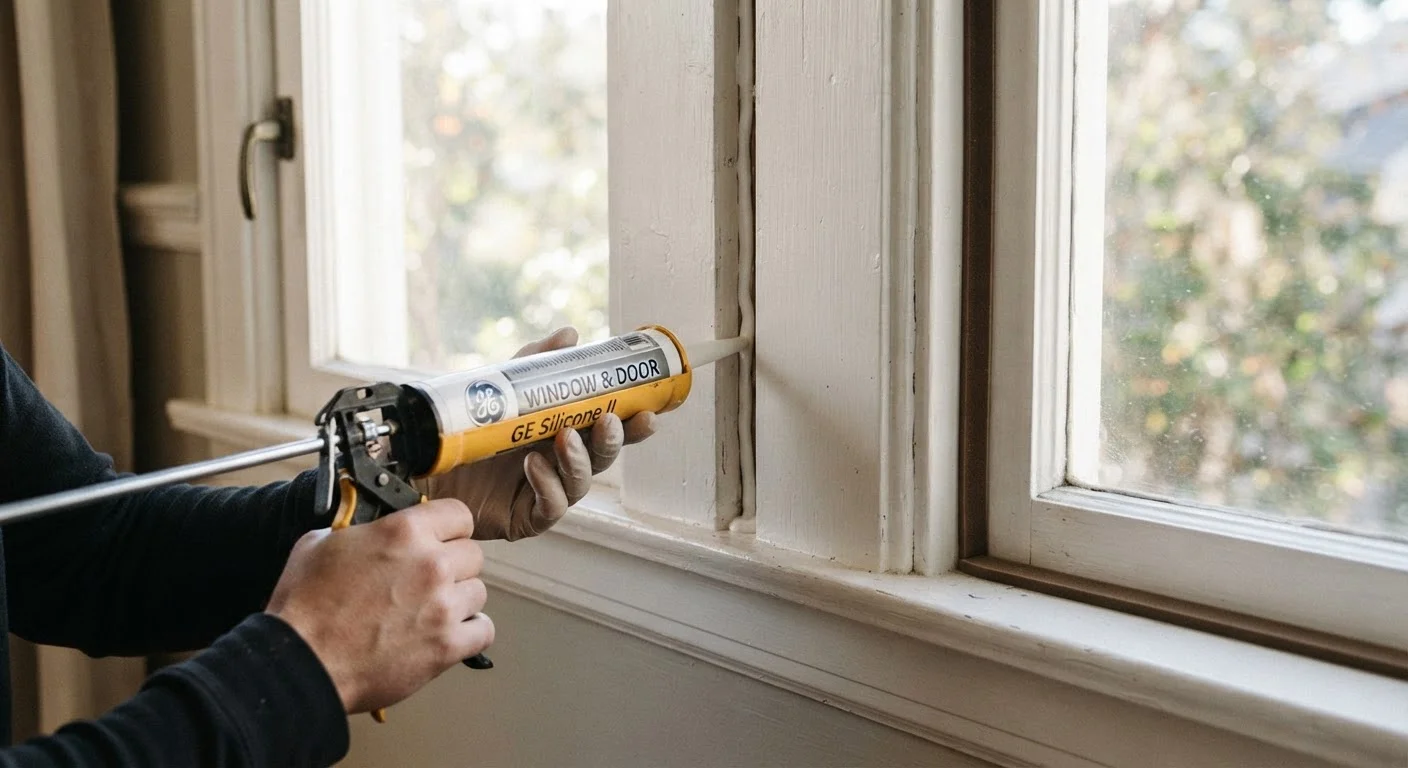
Best for: Sealing fixed joints and cracks around window frames, door trim, baseboards, and exterior penetrations where surfaces do not move.
Option B
Weatherstripping
The flexible, compressible seal for moving parts.
Best for: Creating an airtight closure on doors and operable windows that open, close, and flex with every use.
If you are sealing a crack along a window frame or door casing
Caulk
These are stationary joints that do not flex with use. Caulk bonds permanently to both surfaces and stays put where movement is not a factor.
If you need to stop drafts where a door or operable window meets its frame when closed
Weatherstripping
Weatherstripping compresses and releases thousands of times without cracking, making it suited to surfaces that move every time you open or close the door.
If you are sealing exterior penetrations like where pipes or wires enter the wall
Caulk
A paintable or silicone caulk forms a durable, weatherproof bond around fixed utility openings that weatherstripping cannot conform to.
If you are tackling a whole-home draft-reduction project
Both materials
A complete air-sealing strategy typically uses caulk on fixed joints and weatherstripping on all operable openings — each material covering what the other cannot.
Why the Distinction Matters
Air leaks through gaps in your home's envelope can quietly drive up heating and cooling costs and contribute to moisture problems over time. The fix sounds simple — seal the gaps — but the material you choose matters enormously. Caulk and weatherstripping are both sealing products, but they are engineered for fundamentally different conditions. Applying caulk where weatherstripping belongs (or vice versa) often results in cracked, peeling, or ineffective seals within a single season.
The single most important question to ask before you buy anything is: Does this surface move? If the answer is yes, weatherstripping is almost always the right category. If the answer is no, caulk is generally the better fit. From there, the specific product within each category depends on location, exposure, and the size of the gap.
Understanding this distinction also connects to broader water-intrusion concerns. As explored in our guide on common home water damage entry points, gaps and failed seals are among the most frequent causes of moisture getting into places it should not reach.
Where Each Material Belongs
Caulk is a flexible-when-wet, rigid-when-cured compound applied to stationary joints. Common locations include:
- The joint between a window or door frame and the exterior wall cladding
- Interior trim along baseboards and crown molding where small gaps have opened
- Where pipes, cables, or ducts penetrate walls, ceilings, or floors
- Gaps between the sill plate (the wooden beam at the bottom of your wall frame) and the foundation
Weatherstripping is a compressible material installed along the edges of any opening that moves — doors, casement windows, sliding windows, and attic hatches. It creates a seal only when the door or sash is in the closed position, then releases cleanly when you open it. Common forms include:
- Foam tape: Inexpensive and easy to apply; best for low-traffic windows and secondary doors
- V-strip (tension seal): A folded plastic or metal strip that grips the sides of a door or window channel; durable and nearly invisible
- Door sweeps and door shoes: Installed along the bottom of doors to seal the gap at the threshold
- Bulb or compression seals: Rubber or vinyl profiles that compress against a stop when the door closes; common on entry doors
| Criterion | Caulk | Weatherstripping |
|---|---|---|
| Best application | Stationary joints and cracks | Moving doors and operable windows |
| Flexibility after cure | Rigid to semi-flexible | Compresses and rebounds repeatedly |
| Typical lifespan | 5–15 years depending on exposure | 2–5 years on high-use doors |
| DIY difficulty | Low — caulk gun and steady hand | Low to moderate — measure and cut to fit |
| Paintable | Yes (latex); No (silicone) | Generally no |
| Water resistance | High (silicone); Moderate (latex) | Varies by material (rubber best) |
| Failure mode | Cracking, shrinking, pulling away | Compression loss, tearing, flattening |
Choosing the Right Caulk Type
Not all caulk is interchangeable. The three types most homeowners encounter are:
- Silicone caulk
- Highly water-resistant and flexible even when cured. Best for exterior use, bathrooms, and areas with temperature swings. It cannot be painted, so color-matching matters upfront.
- Latex (acrylic) caulk
- Paintable and easier to tool smoothly. Suitable for interior trim, baseboards, and interior window casing where moisture exposure is minimal.
- Siliconized latex (hybrid) caulk
- Combines paintability with improved moisture and movement resistance. A versatile middle-ground for both interior and sheltered exterior joints.
For exterior applications on wood or composite siding, check that the product is rated for outdoor use and temperature ranges typical of your climate. Most caulk tubes list an application temperature range — applying caulk in very cold conditions can prevent proper adhesion and curing.
Permits and Professional Work
Applying caulk and weatherstripping are among the few home maintenance tasks that rarely require permits. However, if air-sealing work is part of a larger renovation — such as adding insulation or modifying a wall assembly — local building codes may apply. When in doubt, check with your local building department before starting. For gaps near gas lines, electrical panels, or structural elements, consult a licensed professional rather than attempting to seal independently.
Maintenance Expectations and When to Replace
Neither caulk nor weatherstripping lasts forever, and knowing the typical lifespan of each helps you budget and plan proactive inspections rather than reacting to obvious drafts.
Up to 30%
Home heating and cooling energy lost through air leaks
The U.S. Department of Energy estimates that air leaks through gaps, cracks, and openings can account for up to 30% of a home's heating and cooling energy use.
$50–$150
Typical DIY cost to weatherstrip one exterior door
Material costs vary by product type; a quality door sweep, compression seal, and V-strip kit for a single entry door typically falls in this range at most home improvement retailers.
Caulk on well-protected interior joints can remain intact for a decade or more. Exterior caulk, particularly on south- or west-facing walls exposed to UV and temperature cycling, may start to crack, shrink, or pull away from the substrate within five to seven years. Inspect exterior caulk lines annually — typically in early fall before heating season — and look for visible cracks, gaps, or sections that flex when pressed but no longer adhere on both sides.
To replace failing caulk: remove all old material with a utility knife or caulk-removal tool, clean the surfaces thoroughly, allow them to dry completely, then apply fresh caulk in one steady bead. Tooling the bead smooth (with a wet finger or plastic tool) improves both adhesion and appearance.
Weatherstripping on a frequently used exterior door typically shows wear within two to five years. Signs of failure include visible light around the door perimeter when closed, cold air you can feel with your hand near the seal, and rubber or foam that appears flattened, torn, or no longer springs back when compressed. Replacement is usually straightforward — most adhesive-backed and nail-on strips are sold in door-length kits and require only basic tools. For severe or recurring wear, inspect whether the door itself is misaligned, since a sagging or warped door will wear out any weatherstripping quickly regardless of quality.
The principle of replacing degraded flexible seals applies across many contexts — for instance, the same inspection logic used for rubber gaskets on classic vehicles applies when evaluating the condition of compression seals around your entry doors.