Key Takeaways
Why Rubber Ages Regardless of Mileage
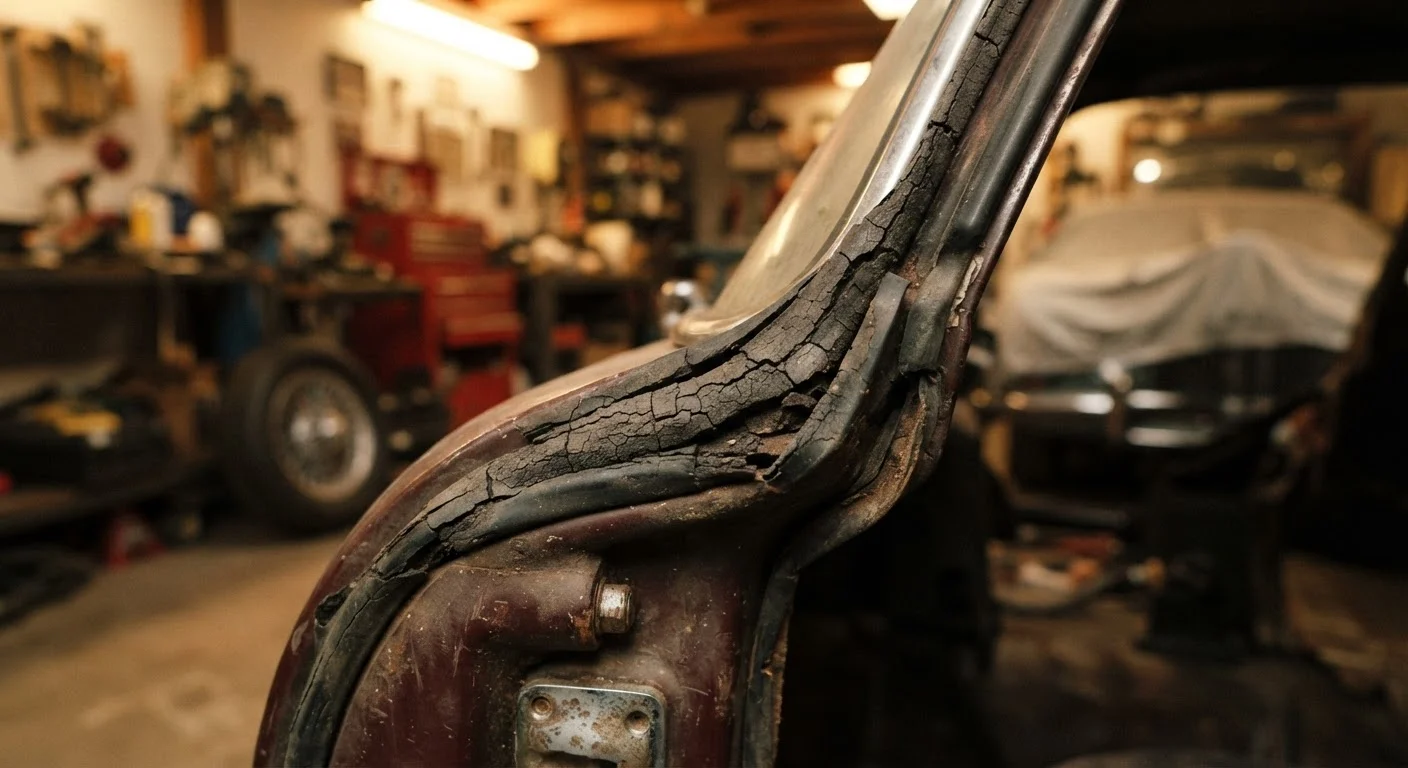
One of the most common misconceptions in classic car ownership is that low mileage equals low wear. For rubber components - door seals, window gaskets, valve cover gaskets, radiator hoses, and brake system seals - time is the real adversary. Chemical breakdown occurs through oxidation, UV exposure, ozone in the atmosphere, and heat cycling, even when a vehicle spends decades in a garage. Rubber polymers harden, lose elasticity, and eventually crack or crumble under these conditions.
On vehicles built before the 1980s, many rubber compounds were formulated quite differently than modern materials. Early neoprene, natural rubber blends, and cork-rubber composites each age in distinct ways and respond differently to restoration treatments. Understanding what you have before choosing a remedy is essential. If you're evaluating a vehicle you don't yet own, a structured pre-purchase inspection checklist can help you assess rubber condition before committing.
Identifying Failure: What to Look and Feel For
Rubber failure rarely announces itself dramatically. More often, it's a gradual accumulation of small symptoms that collectively point to a problem. Knowing what to look for lets you catch deterioration before it causes secondary damage.
Inspect all visible rubber components at least once per season, looking for cracking, hardness, and deformation.
Seasonal inspections catch deterioration early, before hairline cracks become full breaks that allow water, air, or fluids to penetrate. A component that looks intact from a distance can be dangerously brittle on closer examination.
Check fluid-facing seals for seepage by looking for staining, oily residue, or soft deposits at joints and mating surfaces.
Gaskets and O-rings that contain oil, coolant, or brake fluid don't fail all at once. Micro-seepage often precedes a full leak by months and leaves visible residue at joints, pan rails, or master cylinder bodies.
Use your nose as a diagnostic tool - a musty or damp odor inside the cabin often signals a failing seal before visible water intrusion appears.
Water entering through a degraded windshield gasket or cowl seal can soak carpeting and padding without pooling visibly on the floor. Mold and mildew develop quickly in compressed insulation materials.
Note wind noise or whistling at highway speed as a symptom of weatherstripping compression failure.
Door and window seals rely on compression to create an airtight barrier. As rubber hardens over time, it loses its ability to compress adequately against the body, creating air gaps that produce noise and allow moisture infiltration.
Water intrusion through failed seals can accelerate floor pan rust - a connection explored in depth in our article on how rust spreads unseen through classic vehicles.
Maintenance and Conditioning to Extend Seal Life
Not every aging rubber component needs immediate replacement. Where elasticity remains partially intact, consistent maintenance can meaningfully extend service life. The goal is to slow oxidation, restore suppleness, and prevent further cracking.
Use the Right Conditioner for the Compound
Not all rubber conditioners are appropriate for all compounds. Petroleum-based products can cause some rubber formulations to swell or degrade further. Silicone-based conditioners are generally safe for most weatherstripping and exterior seals, while specialized products exist for fuel system rubber. Always verify compatibility with the specific material before applying, especially on fuel hoses, carburettor gaskets, or brake components.
Proper storage conditions are just as important as active maintenance. Heat and UV radiation are among the most damaging forces acting on rubber, so a climate-controlled environment or even a breathable car cover dramatically slows deterioration. For guidance on preparing a classic for extended downtime, see our article on classic car storage and long idle period protection.
Sourcing Replacement Materials Responsibly
When conditioning is no longer sufficient, replacement becomes necessary. Sourcing the right material for an older vehicle requires more care than simply ordering the cheapest available option. Incorrect compounds can cause incompatibility with brake fluid, fuel, or coolant chemistry - leading to accelerated failure or, in the case of brake seals, a safety risk.
Reproduction rubber parts vary widely in quality. New Old Stock (NOS) seals may carry original compound properties but could have already degraded in storage. Reproduction parts from reputable specialty suppliers often use improved modern compounds that outperform the originals in longevity while maintaining correct profiles. Our guide on finding reliable parts for a classic vehicle covers how to evaluate sourcing options across NOS, reproduction, and salvage channels.
Brake System Seals Require Professional Attention
Rubber components within the braking system - wheel cylinder cups, master cylinder seals, and caliper piston boots - directly affect vehicle safety. Unlike cosmetic weatherstripping or even engine gaskets, failure of these components can result in brake loss. Any suspected deterioration in brake system rubber should be evaluated and addressed by a qualified mechanic, not treated as a DIY task unless you have verifiable experience with hydraulic brake systems.
For owners navigating the broader question of how deeply to restore versus preserve, rubber decisions often reflect a larger philosophy. That conversation is addressed thoroughly in our article on frame-off restoration versus driver-quality preservation.
10-15 yrs
Typical outdoor rubber service life before significant hardening
Industry restoration guides generally estimate most exterior rubber compounds begin significant degradation within 10-15 years of manufacture, accelerating with UV and heat exposure.
~50%
Reduction in seal effectiveness with severe compression set
Rubber weatherstripping that has taken a permanent compression set loses a significant portion of its sealing ability, with industry estimates commonly citing losses exceeding 50% of original sealing force.