

Key Takeaways
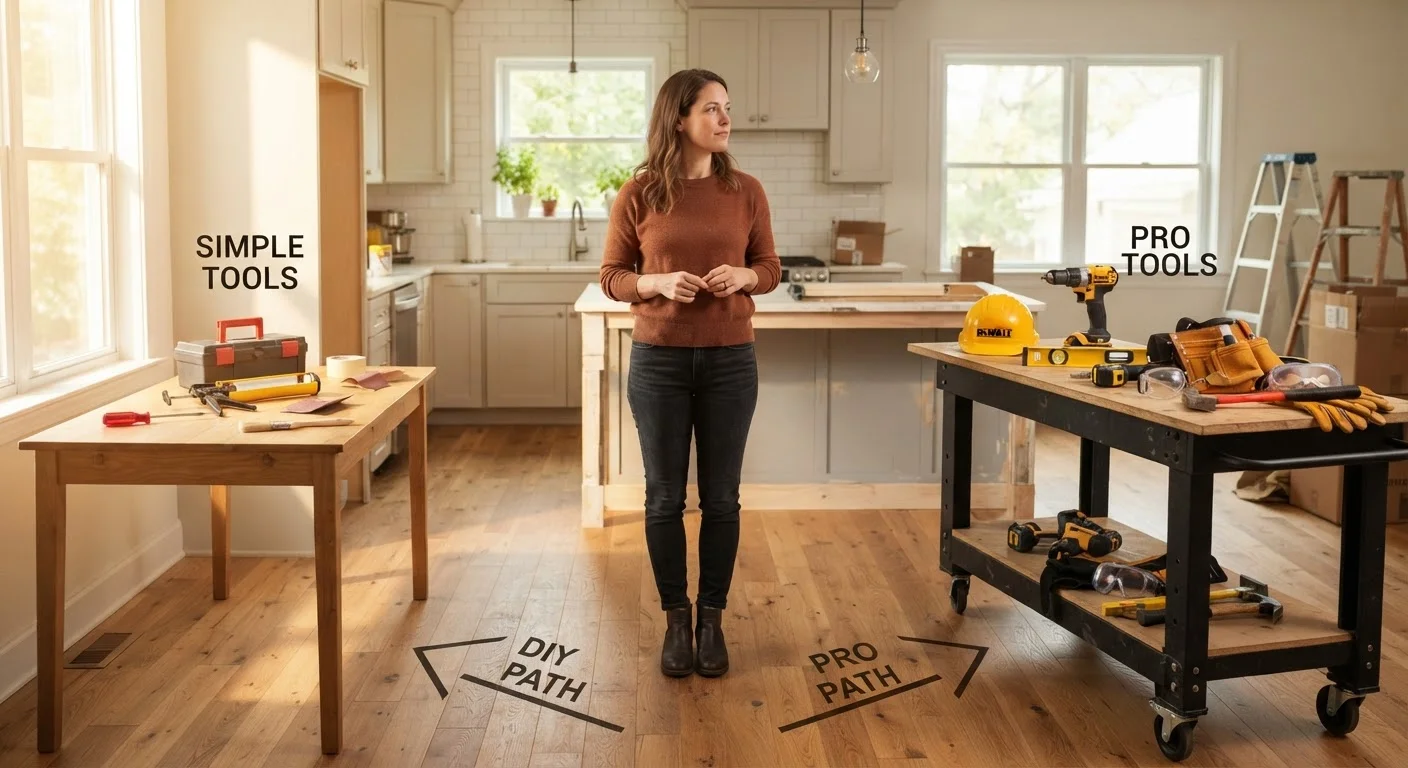
Option A
DIY Repairs
The hands-on, cost-conscious approach for manageable tasks.
Best for: Homeowners comfortable with basic tools tackling low-risk, low-complexity maintenance and cosmetic fixes.
Option B
Calling a Professional
The licensed, liability-aware solution for complex or hazardous work.
Best for: Repairs involving electrical systems, structural elements, gas lines, or anything regulated by local building codes.
If you want to handle routine upkeep on a budget
DIY Repairs
Tasks like patching small drywall holes, re-caulking a tub, or replacing a showerhead carry low risk and require only basic tools and a little patience.
If the repair involves electricity, gas, or structural elements
Calling a Professional
Licensed tradespeople carry the permits, training, and liability insurance that protect your home, your family, and your mortgage investment.
If you're preparing a home for sale
Calling a Professional
Properly permitted, inspected work holds up to buyer scrutiny and avoids disclosure complications that can derail a transaction.
If you're a first-time homeowner building confidence
DIY Repairs
Starting with small, clearly defined tasks — like fixing a running toilet flapper or replacing outlet covers — builds skills without significant financial risk.
The Core Distinction: Risk, Skill, and Consequence
Every homeowner eventually faces the same fork in the road: handle a repair yourself or call in someone licensed to do it. The right answer depends on three overlapping factors — the risk level of the task, the skill it actually requires, and the consequence of getting it wrong.
Low-consequence tasks with forgiving margins — think patching a nail hole, replacing a faucet aerator, or re-caulking a window — are reasonable DIY territory for most adults willing to watch a reliable tutorial and take their time. High-consequence tasks, where a mistake could mean a house fire, a flooded subfloor, or a failed inspection, belong in the hands of a licensed professional regardless of how approachable they might seem on the surface.
The challenge is that the internet makes almost everything look doable. A confident 10-minute video rarely shows the moment a homeowner discovers knob-and-tube wiring behind the drywall, or realizes the shutoff valve doesn't fully close. That gap between the video and reality is where costly mistakes live.
As you build your home maintenance habits — something the first year of homeownership will make very real very quickly — developing an honest assessment of your own skill level is as important as any tool you own.
What Belongs in the DIY Column
A repair is generally a safe DIY candidate when it meets most of these criteria: no permit is required, the work is reversible if something goes wrong, materials are inexpensive, and the learning curve is shallow. Common examples include:
- Cosmetic repairs: Spackling, interior painting, replacing outlet covers and switch plates, patching small holes in drywall
- Basic plumbing maintenance: Replacing a toilet flapper, swapping a showerhead, unclogging a drain with a hand auger, or tightening supply lines under a sink
- Weatherization: Adding weatherstripping, sealing gaps around pipes with appropriate caulk, replacing a worn door sweep
- Minor exterior upkeep: Cleaning gutters, re-staking fence posts in soft soil, touching up exterior paint on trim
- Appliance basics: Replacing a refrigerator water filter, cleaning a dryer vent duct (from the interior side), or swapping a dishwasher door latch
These tasks share something important: the failure mode is manageable. If you mis-seat a toilet flapper, you'll notice immediately — water runs, you try again. The seasonal maintenance checklist is a useful framework for identifying which of these tasks come up predictably each year.
| Criterion | DIY Repairs | Calling a Professional |
|---|---|---|
| Typical cost | Materials only | Labor + materials + permit fees |
| Permit usually required | No | Often yes |
| Skill barrier | Low to moderate | Trade-level training |
| Risk if done incorrectly | Low — cosmetic or minor | High — safety or structural |
| Insurance implications | Minimal for low-risk tasks | Work is insured and licensed |
| Resale impact | Neutral for minor work | Positive with permits on record |
| Examples | Caulking, patching, fixture swaps | Electrical panels, gas lines, structure |
When to Call a Licensed Professional
Some work is regulated for good reason. Building codes exist because the consequences of failure — electrocution, gas leaks, structural collapse, toxic mold — are severe and sometimes irreversible. The following categories almost always warrant a licensed contractor:
- Electrical panel work, new circuits, or rewiring: Even replacing an outlet in an older home can reveal aluminum wiring or undersized breakers. Permits and inspections are standard.
- Gas lines and gas appliances: Any work involving gas supply lines, gas water heaters, or furnace components should be handled by a licensed plumber or HVAC technician. Leaks can be fatal.
- Structural repairs: Removing walls (especially load-bearing ones), repairing foundation cracks, or replacing roof decking requires engineering knowledge and typically a permit.
- Significant plumbing — beyond fixtures: Drain line replacement, main water line work, or anything touching the main stack. See our guide on what homeowners can check in their plumbing before problems escalate.
- HVAC installation or major repairs: Refrigerant handling requires EPA certification; improper ductwork affects air quality and energy bills.
Permits Protect You, Not Just the Code
A permit creates a paper trail showing that licensed work passed inspection — a record that matters when you sell your home or file an insurance claim. Many homeowners skip permits to save time or money, but the downstream cost of unpermitted work discovered during a sale can far exceed the original permit fee. When a contractor tells you a permit isn't needed for work that typically requires one, that's a warning sign worth taking seriously.
When a professional provides an estimate, it helps to understand what you're reviewing. The skills involved in reading a repair estimate — separating labor from materials, asking about permit fees — apply to home contractors as well.
The Hidden Costs of Getting It Wrong
Homeowners sometimes choose DIY primarily to save money, which is a reasonable goal. But the calculation changes when a failed repair creates a larger problem. Common scenarios where DIY attempts become expensive lessons include:
- Over-tightening supply lines or fittings, cracking plastic valve seats and causing slow leaks inside walls
- Installing a light fixture without turning off the correct breaker, damaging the fixture or creating a fire hazard
- Replacing roof shingles without addressing the underlayment, leaving the deck vulnerable to the next storm
Beyond repair costs, there are insurance and resale implications. Unpermitted work that a home inspector flags during a sale can delay closing, reduce the sale price, or require the seller to fund professional remediation. Some homeowners insurance policies may limit coverage for damage traced back to unpermitted or improperly completed work — always verify the terms of your policy with your insurer directly.
A good rule of thumb: if the repair would require a permit in your municipality, it requires a professional. Local building departments are generally willing to answer a quick call about whether a specific job needs a permit before you start.
~35%
DIY home repair attempts needing professional correction
Industry estimates suggest roughly one-third of DIY repair attempts on complex systems require a professional to correct errors, often at greater total cost than hiring out initially.
$150–$500
Typical cost of a professional home inspection consultation
A targeted consultation or diagnostic visit from a licensed contractor can identify whether a repair is within DIY scope before any work begins, potentially saving much more.