

Key Takeaways
Why Plumbing Checks Matter Before There's a Crisis
Plumbing rarely fails without warning. More often, a small drip under a cabinet, a gurgling drain, or a water bill that crept up quietly are the first signals — and most homeowners miss them until the damage is already done. Catching these early signs is less about technical skill and more about knowing where to look.
This guide walks through the checks a homeowner can realistically perform without special tools or a plumbing license. It also draws a clear line around the situations that call for a professional, because not every plumbing issue belongs on a weekend to-do list. If you're in your first year of homeownership and still building your maintenance rhythm, the broader picture is covered in our guide to first-year home maintenance.
What you will need
What to Inspect and How to Do It
Work through the steps below systematically. A notebook or phone camera helps you document anything that looks off, which is useful if you later consult a plumber. Aim to repeat this check at least twice a year — once in spring and once before winter.
Locate and test the main water shutoff valve
Find the main shutoff valve — typically near the water meter, in a utility room, or where the supply line enters the house. Turn it fully clockwise (off) and then back counterclockwise (on). It should move without sticking or crumbling. A valve that hasn't been operated in years can seize, which becomes a serious problem during an actual leak emergency.
Check water pressure at a faucet
Normal household water pressure falls between 40 and 80 psi (pounds per square inch). You can get a rough sense by feel — a weak trickle or an uncomfortably forceful spray are both worth investigating. For a precise reading, attach an inexpensive water pressure gauge to an outdoor hose bib (spigot) and read it while no other water is running. Pressure consistently above 80 psi can stress pipes and fixtures over time; pressure below 40 psi often signals a supply or regulator issue.
Inspect under-sink areas for moisture or staining
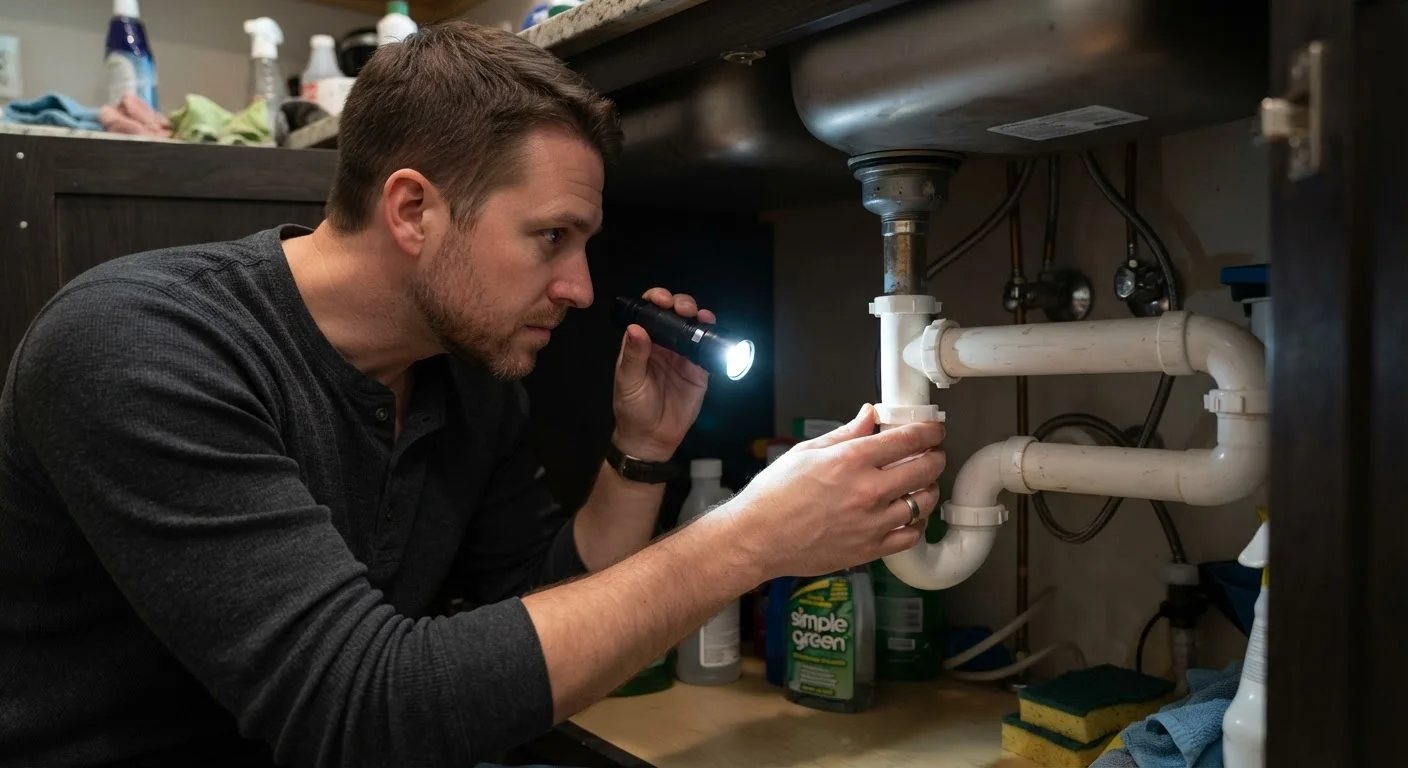
Open each cabinet below a sink — kitchen, bathrooms, and laundry. Look for water stains on the cabinet floor, soft or swollen particleboard, rust on the drain trap (the curved pipe), and any evidence of past drips on supply lines. Even dried staining indicates a past or intermittent leak that may still be active.
Run every drain and observe flow
Fill each sink and tub partially, then let it drain while watching the rate. A healthy drain empties briskly. Sluggish draining, gurgling sounds, or water backing up in a nearby fixture (e.g., running the bathroom sink causes the tub to gurgle) can indicate a partial blockage or a venting problem in the drain line. Note which fixtures are affected — multiple slow drains often point further down the drain stack than a single clog.
Inspect the water heater
Look at the base of the water heater for standing water or corrosion — these suggest a failing tank. Check the temperature and pressure (T&P) relief valve: there should be a small discharge pipe running from it toward the floor. Visually confirm the pipe is present and unobstructed. Also check the age: most tank-style water heaters are rated for 8–12 years. The manufacture date is typically encoded in the serial number (consult the manufacturer's label format for interpretation).
Check toilets for running or rocking
Lift the toilet tank lid and observe whether water is running continuously after a flush cycle completes. A running toilet — often a failed flapper valve — can waste a significant amount of water daily. Also gently push side-to-side at the base of the toilet bowl; any rocking motion indicates the wax ring seal at the floor may have failed, which can allow sewer gases and water to escape beneath the flooring.
Review your water bill for unexplained spikes
Compare the last three to six months of water bills. A steady or seasonal increase is normal; a sudden jump with no change in household habits is a red flag for an invisible leak — most commonly a running toilet, a dripping outdoor hose bib, or a slab leak (a pipe leak beneath the foundation). Your utility company can often confirm whether your usage spike aligns with a possible leak.
Build a Simple Plumbing Log
After each inspection, jot down the date, anything you observed, and any action taken. A one-page log stored with your home documents gives a plumber context when they visit and helps you spot patterns — like a drain that slows every fall when leaves hit the outdoor vents. This habit also supports your records if you sell the home or file an insurance claim.
When to Stop and Call a Licensed Plumber
Several findings during your walk-through should prompt a call to a licensed plumber rather than a DIY fix. These include:
- Active leaks behind walls or ceilings — visible staining, bubbling paint, or soft drywall suggests water is pooling inside the structure.
- Sewage or sulfur odors — these can indicate a broken drain line or venting problem, both of which carry health and structural risks.
- No hot water or inconsistent water pressure house-wide — may point to a failing water heater, pressure regulator, or main supply issue.
- Visible corrosion on the main shutoff valve or meter connection — these components typically require a licensed plumber or your utility company.
For a broader framework on deciding what's safely DIY and what isn't, see our guide on DIY versus professional repairs.
If You Smell Gas Near Plumbing, Leave Immediately
A sulfur or rotten-egg odor near gas-connected appliances (such as a gas water heater) is never a plumbing check you should continue investigating. Evacuate the home without operating any switches or appliances, then call your gas utility's emergency line and 911 from outside. Do not re-enter until cleared by emergency responders.
Water intrusion from plumbing problems can compound with exterior drainage issues. Our article on gutters, grading, and water damage entry points explains where indoor and outdoor moisture problems overlap.
This article is for general informational and educational purposes only. Plumbing work involving gas lines, structural elements, or mains connections should always be handled by a licensed professional. Verify local permit and code requirements with your municipality before undertaking any repairs.