

Key Takeaways
The Envelope Method
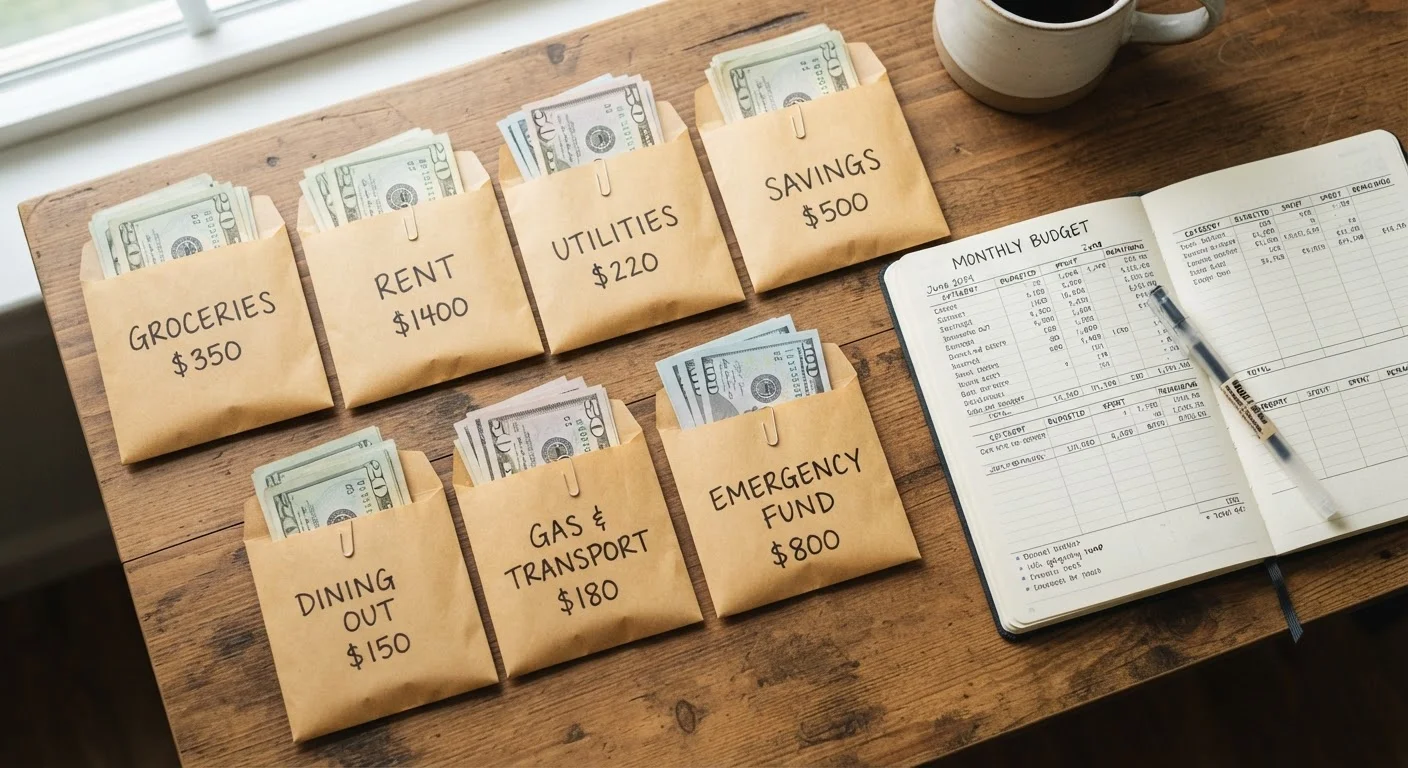
The envelope method is a cash-based budgeting system where you divide your take-home pay into physical envelopes, each labeled for a specific spending category — groceries, gas, dining out, and so on. Once an envelope is empty, spending in that category stops until the next pay period. The system works by making budget limits concrete and visible rather than abstract numbers in a bank account.
In behavioral economics, this approach leverages 'mental accounting' — the tendency for people to treat money differently depending on how it is labeled or stored, which can reduce overspending compared to a single pooled account.
How the Envelope Method Works in Practice
The mechanics are intentionally simple. When your paycheck arrives, you withdraw a set amount of cash and distribute it across labeled envelopes — one per spending category. Each envelope holds only what you've budgeted for that category during the pay period.
For example, if you budget $400 for groceries and $150 for dining out, those amounts go into separate envelopes. When you shop, you bring the right envelope and pay in cash. When it's gone, it's gone. There's no invisible buffer, no rounding up, no vague sense that you'll check your balance later.
This constraint is the point. Understanding how spending categories work is a useful first step — the envelope method then turns those categories into physical reality.
Start With Just Three Envelopes
If the system feels overwhelming, begin with only the two or three categories where you know you overspend most — often groceries, dining, and entertainment. A simple system you'll actually use beats a comprehensive one that gets abandoned in week two. You can add categories once the habit is established.
Fixed expenses like rent, insurance, and utilities are typically excluded from the envelope system. Those payments come straight from your checking account on their usual schedule. Envelopes are reserved for variable, day-to-day spending where limits are hardest to enforce.
The Psychology Behind Physical Cash
The envelope method's staying power isn't about envelopes — it's about the psychological experience of spending physical money. Research in behavioral economics has shown that paying with cash activates a measurable response sometimes called the 'pain of payment.' Handing over bills feels more real than tapping a card, which tends to slow spending down.
When your wallet is digital, overspending feels nearly invisible. The envelope method makes limits tactile and final. Watching an envelope thin out over the course of a month provides ongoing, real-time feedback that a bank statement reviewed once a month cannot replicate.
“The problem with invisible money is that invisible limits don't work. When spending has no physical consequence, the budget becomes a suggestion rather than a boundary.”
— Financial Educator, Consumer Money Management Program, Certified Financial Counselor and adult financial literacy educator
This is also why the method remains relevant even as card and app-based alternatives have proliferated. The structure it imposes — category by category, dollar by dollar — is something many people find clarifying rather than restrictive. It's a different relationship with money than most Americans grow up learning.
For a broader comparison of cash and app-based approaches, budgeting by hand versus budgeting with an app lays out the real trade-offs between each format.
Digital Envelopes: Same Structure, Different Feel
Several apps and bank features now offer 'digital envelope' or 'spending bucket' functionality. You allocate virtual amounts to categories, and the app tracks whether you've stayed within each one. The structure is identical to the paper version.
The difference is the friction. Declining a purchase because a physical envelope is empty is a hard stop. Ignoring a notification that your dining budget is exhausted is easy. Digital systems depend more on your willingness to check and respect the numbers — which is precisely where many people struggle in the first place.
~1 in 3
Americans who report regularly overspending their budget
According to recurring surveys by the National Endowment for Financial Education, a significant share of adults say they spend more than they intend to in a given month.
12–18%
Typical overspend on discretionary categories
Consumer spending research has consistently found that variable categories like food and entertainment are where households most frequently exceed their intended limits.
That said, digital envelopes are a reasonable middle ground for people whose lives don't accommodate cash-only spending — subscription services, online shopping, and bill autopay all make an all-cash household complicated. The envelope method and related cash-based budgeting approaches covers how to adapt the system to your actual lifestyle, including hybrid approaches.
The envelope method is one of several distinct frameworks worth knowing. Other budgeting methods may be a better fit depending on your income structure and financial goals — it's worth understanding the landscape before committing to one approach.
This article is for general informational purposes only and does not constitute personalized financial advice. Consult a qualified financial professional for guidance specific to your situation.