

Key Takeaways
Cash-Based Budgeting
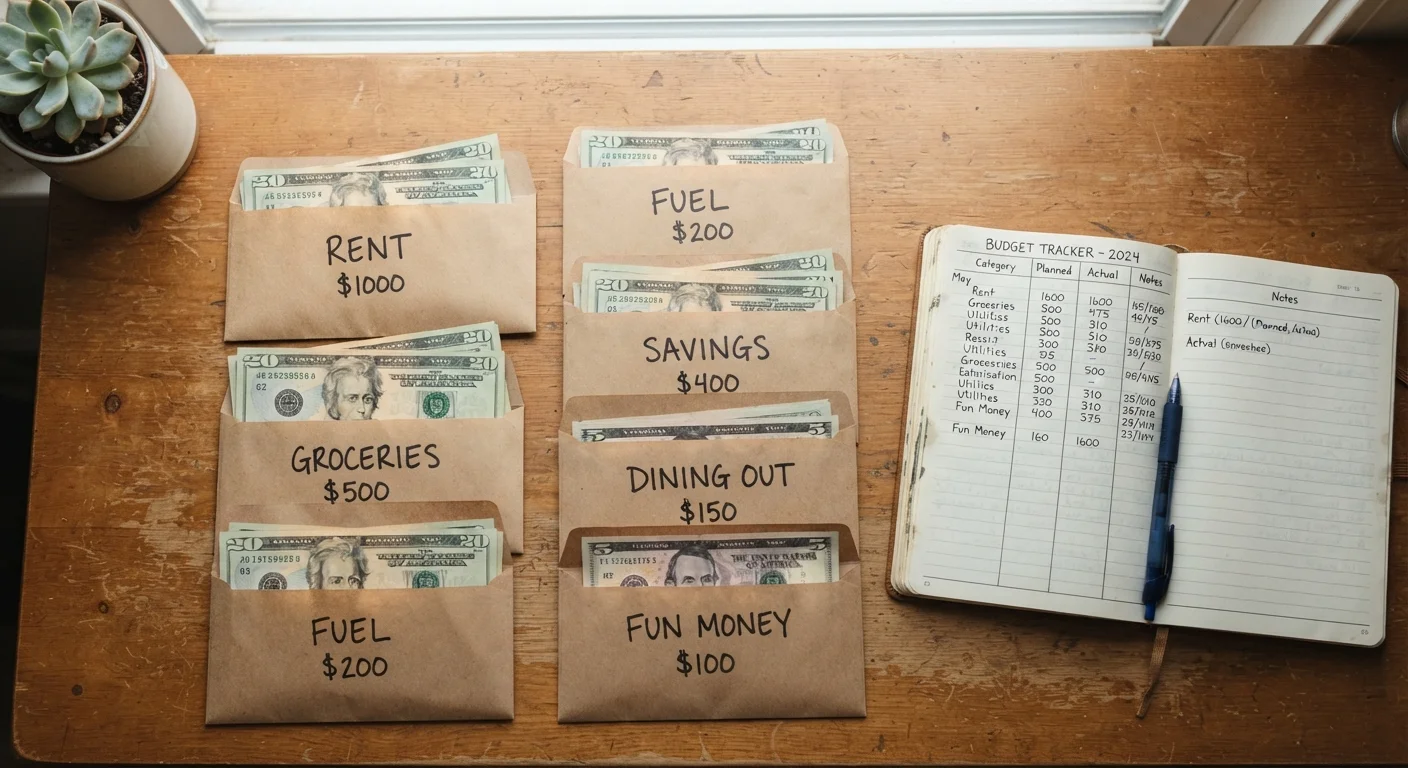
Cash-based budgeting is a spending system where you divide your income into dedicated categories — either using physical cash or separate accounts — and only spend what you've pre-allocated to each one. Once a category's funds are gone, spending in that area stops until the next budget period. The most well-known version is the envelope method, where you literally place cash into labeled envelopes for groceries, gas, dining out, and other spending categories.
Behavioral economists refer to this as 'mental accounting' made physical — the friction of handling cash or managing discrete accounts can reduce impulsive spending compared to a single pooled account.
How the Envelope Method Works
The envelope method is straightforward in design. At the start of each budget period — usually a month or a paycheck cycle — you withdraw cash and divide it among labeled envelopes that correspond to specific spending categories. Groceries might get $400, gas $120, dining out $150. When an envelope is empty, spending in that category stops.
The mechanism that makes it effective isn't complicated accounting — it's visibility. You can see exactly how much is left at any moment without logging into an app or scanning a statement. That tangibility tends to change spending behavior more than a number on a screen.
For a deeper look at the psychology and setup process, see our detailed envelope method guide.
Start with Just Two or Three Envelopes
New to the method? Don't try to create an envelope for every spending category at once. Pick the two or three areas where you most consistently overspend — often groceries, dining, or entertainment — and start there. Adding complexity too quickly is one of the main reasons people abandon the system early.
Digital Envelope Systems: The Same Logic, Fewer Bills
Carrying cash isn't practical for everyone — especially for online purchases, subscriptions, or situations where safety is a concern. Digital envelope systems solve this by replicating the category structure electronically.
Common approaches include:
- Bank sub-accounts: Many online banks allow you to create multiple savings or checking sub-accounts, each labeled for a specific purpose. You transfer the budgeted amount in at the start of each period and spend only from that sub-account.
- Budgeting apps: Apps that use virtual envelope or category logic let you assign income to buckets and track real-time spending against each limit — without touching paper money.
- Prepaid cards per category: Some households load separate prepaid debit cards with each category's allotment, then use only that card for those purchases.
The tradeoff is that digital systems require more discipline to maintain — it's easier to rationalize overspending when you're not watching physical cash disappear. See budgeting by hand vs. apps for a fuller comparison of tracking methods.
~33%
Americans with a detailed monthly budget
Surveys by Gallup and similar organizations have consistently found that fewer than one in three U.S. adults follows a formal, detailed household budget.
2x
Spending awareness with cash vs. card
Behavioral research, including work by the MIT Sloan School of Management, has found that consumers tend to feel greater purchase pain — and spend more carefully — when using physical cash compared to cards.
Who Benefits Most — and Where the System Has Limits
Cash-based budgeting tends to help people who:
- Consistently overspend in specific discretionary categories despite knowing their limits
- Find abstract numbers less motivating than physical constraints
- Are building a budget habit for the first time and need a tactile system to stay anchored
- Have variable income and want to allocate each paycheck deliberately as it arrives
The system is less suited to fixed expenses — rent, loan payments, utilities, and insurance are better handled through automatic transfers. Mixing automatic payments into an envelope framework often creates confusion rather than clarity.
It also has friction in a largely cashless world. Paying with physical cash at gas stations, online retailers, or using tap-to-pay systems isn't always convenient. Weighing cash against card payment methods can help you decide where cash actually makes sense for your routine.
Cash Envelopes and Credit Card Rewards
If you currently earn rewards or cash back on credit card spending, switching those categories to physical cash means giving up those benefits. For some people, the behavioral guardrails of cash outweigh the rewards value — for others, a digital envelope system using a dedicated debit card or sub-account may be a better fit. Weigh this tradeoff honestly based on your own spending patterns.
Adapting the Method to Make It Last
The most common reason envelope budgeting fails isn't the method itself — it's trying to maintain a version that doesn't fit real life. A few practical adjustments can make the difference:
- Hybrid approach: Use physical cash only for your two or three highest-risk categories (the ones where you most often overspend), and manage the rest digitally.
- Rollover rules: Decide upfront whether unused envelope money carries over to the next month or resets. Rollovers can reward restraint; resets force fresh allocation decisions each period.
- Irregular expenses: Create an envelope or sub-account specifically for infrequent but predictable costs — car registration, annual subscriptions, gifts — by setting aside a small amount each month.
Cash-based budgeting is one tool within a broader personal finance framework. For a complete picture of how budgeting fits alongside saving and goal-setting, our complete budgeting framework walks through every stage. You can also explore other budgeting methods to find the approach — or combination of approaches — that fits your situation.
This article is for general informational purposes only and does not constitute personalized financial advice. Consult a qualified financial professional for guidance specific to your circumstances.