

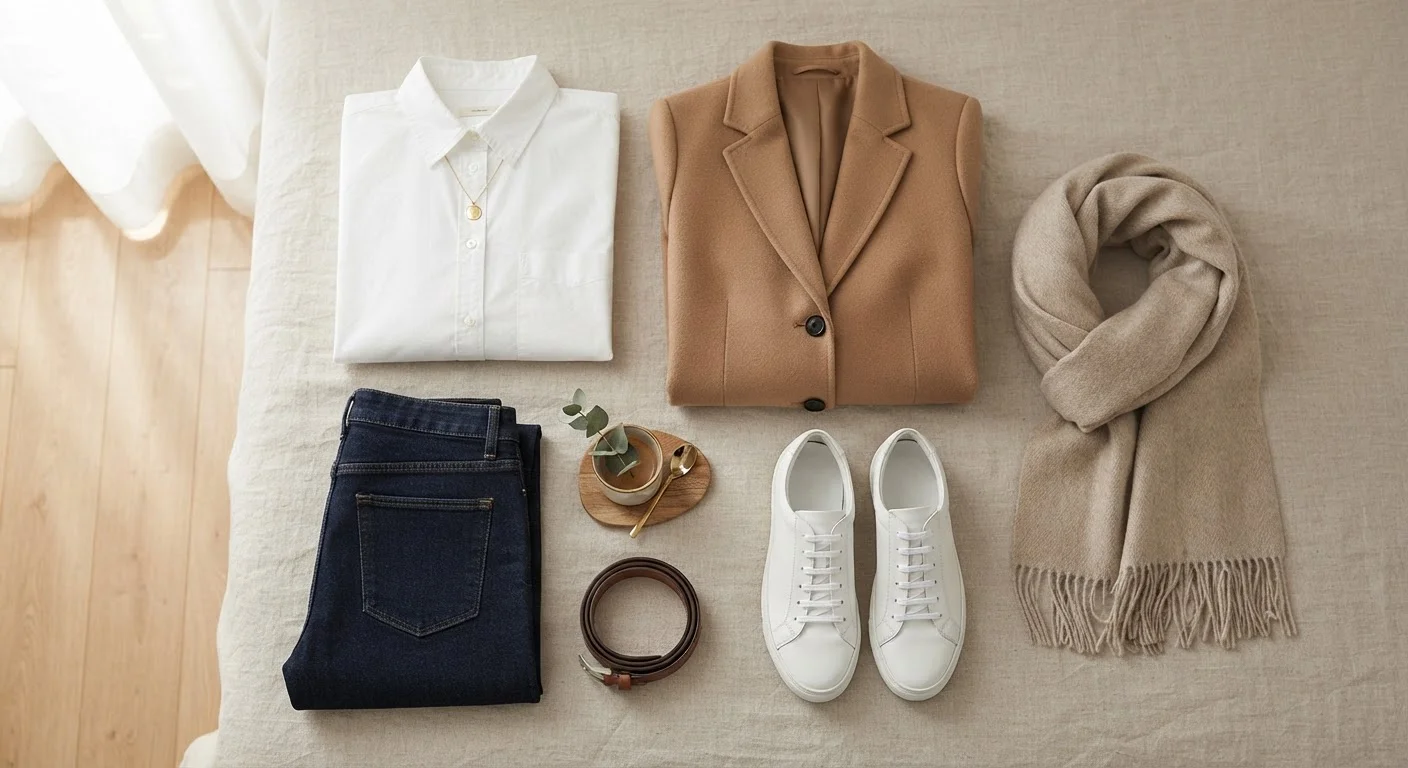
Key Takeaways
What Makes a Piece Truly Essential?
The word "essential" gets thrown around a lot in fashion, but it has a practical definition worth holding onto: a piece earns its place when it solves real problems in your closet, connects with multiple other items you own, and doesn't require special conditions to wear. That's a higher bar than most trend-driven purchases can clear.
If you're starting from scratch or reassessing what you have, a closet audit is a useful first step before adding anything new. It helps you see clearly which gaps are real and which ones are just the result of not using what you already own. From there, the list below focuses on categories — not specific products or brands — because the right version of each item varies by body type, climate, lifestyle, and personal taste.
Evaluate Before You Add
Before adding any new piece, ask whether it connects with at least three items already in your wardrobe. If it doesn't pair naturally with what you own, it's more likely to sit unworn than to become a true essential. This single habit prevents a surprising amount of wardrobe clutter and unnecessary spending. For more on building intentionally, see curating a wardrobe that reflects you.
The Essentials Worth Investing In
A well-fitted dark wash or mid-tone denim
Denim sits at the center of most American wardrobes for good reason: it resists wrinkles, pairs with almost anything, and holds up to regular wear. The specific cut matters less than the fit — a pair that fits cleanly through the hip and thigh without excess fabric reads as polished in a way that baggy or overly tight cuts don't.
Dark wash denim skews dressier and transitions more easily into smart-casual settings. Mid-tones are more casual but equally versatile for weekend and errands. Either can be layered under a blazer in fall, worn with a t-shirt in summer, or tucked into boots in winter. Look for fabric with a modest amount of stretch (around 2–3%) if you want comfort across longer days — but note that very high stretch percentages tend to cause the fabric to lose shape faster over time.
A clean fit through the hip and thigh reads as polished in almost any setting.
A structured blazer in a neutral tone
A blazer is one of the most efficient pieces in terms of effort-to-impact ratio. Throw one over a simple t-shirt or fitted top and the entire look reads as more intentional. Wear it open for a relaxed feel, or buttoned for more formality. It layers over a light sweater in spring or fall and anchors a full outfit in warmer months.
The most useful colors are those that pair with both warm and cool tones in your existing wardrobe: camel, charcoal, navy, and warm gray tend to work across the most combinations. For help navigating which tones work together, this breakdown of color coordination is a practical reference. Structured blazers also work across dress codes — a detail worth knowing if you navigate varied professional and social settings. See this guide to dress codes for context.
A blazer over a simple top raises the intentionality of a whole look with minimal effort.
A lightweight layering piece in a solid or subtle pattern
This could be a fine-knit cardigan, a longline open-front layer, or a relaxed button-front overshirt — the category is about function more than form. A good layering piece bridges temperature gaps (air-conditioned offices in summer, cool fall mornings) and adds visual depth to otherwise simple outfits.
Lightweight knits in natural fibers like cotton or a cotton-merino blend tend to breathe well, pack flat, and maintain their shape through repeated wearing and washing better than synthetics in this category. Avoid heavy textures here — this is a piece meant to be worn over things, so a bulky profile will quickly limit what it pairs with.
The best layering piece bridges temperature gaps without adding bulk or visual noise.
A clean, simple t-shirt or top that fits precisely
It sounds obvious, but a truly well-fitted basic top is harder to find than it should be. The criteria: shoulder seams that sit at the edge of the shoulder (not drooping), a length that hits at or just below the hip without being boxy, and a neckline that lies flat. These specifics matter because a basic that fits precisely looks intentional; one that doesn't fit tends to make every outfit feel thrown together.
White, black, and heathered gray are the most utility-forward colors, but a soft navy or warm cream can serve the same anchoring role. Having two or three of these in rotation — and replacing them when they stretch or fade — is one of the quieter ways a wardrobe stays looking sharp. Good garment care habits go a long way here: cold washes and air drying preserve fabric integrity significantly longer than hot machine cycles.
A precisely fitted basic top makes every outfit feel more intentional, not less.
Versatile footwear that spans casual and semi-dressy
Most wardrobes benefit from at least one pair of shoes that can reasonably cross the casual-to-smart-casual divide without looking out of place in either direction. Clean leather or leather-look sneakers, low-profile loafers, and simple ankle boots are common examples of silhouettes that achieve this. The key is simplicity — heavy branding, unusual silhouettes, or bold colorways narrow the range of outfits a shoe can anchor.
Footwear also has a disproportionate effect on how an overall outfit reads. Even small proportion mismatches — a heavy boot with a fitted trouser, or a delicate flat with a chunky oversized layer — can undermine an otherwise solid look. For more on those subtle outfit dynamics, this piece on common outfit errors covers proportions and layering in detail.
Simple footwear silhouettes in neutral tones can span casual and semi-dressy settings with ease.
A medium-weight outer layer that works in three seasons
A true-four-seasons coat is a challenging ask for most of the country, but a medium-weight outer layer — a trench, a wool-blend coat, or a structured quilted jacket — can realistically cover fall, winter in milder climates, and early spring. Layered over a heavier sweater, these pieces extend into colder stretches; worn over a single layer, they work for chilly mornings that warm into comfortable afternoons.
Fit is again the deciding factor. A coat that fits cleanly over a blazer or light knit without pulling at the shoulders reads as polished. One that's too fitted to accommodate any layers becomes a single-season piece by default. This is the category where spending more tends to pay off in durability and versatility — though building a versatile wardrobe on any budget is absolutely achievable with careful prioritization.
A medium-weight coat that fits over a blazer is effectively a three-season piece, not one.
Essentials Vary by Lifestyle and Climate
The categories above are frameworks, not universal prescriptions. Someone living in a warm, humid climate year-round will weight fabric breathability differently than someone navigating four distinct seasons. Lifestyle factors — commuting, physical work, frequent formal events — also shift which pieces carry the most utility. The goal is to identify the types that solve the most problems in your specific life, not to replicate any single wardrobe template.
Putting It All Together
Building a wardrobe that actually works year-round isn't about owning a precise list of items — it's about understanding why certain types of pieces pull more weight than others. Once you can identify what makes something versatile (fabric, silhouette, color range, layering potential), you'll make sharper decisions every time something needs to be replaced or added.
If you want to stretch these essentials further, mixing-and-matching strategies can dramatically expand the range of outfits you get without buying more. And if the whole concept of building a focused closet appeals to you, it's worth reading about what a capsule wardrobe actually involves before committing to that approach. For a broader framework on dressing well in daily life, this comprehensive guide covers everything from fit and fabric to outfit building and garment care.