

| Governing body (US) | Federal Trade Commission (FTC) (FTC Care Labeling Rule) |
| Symbol standard | ASTM D5489 / ISO 3758 (ASTM International) |
| Number of base symbol shapes | 5 (tub, triangle, square, iron, circle) |
| Cold water temperature (1 dot) | Up to 65°F (18°C) |
| Warm water temperature (2 dots) | Up to 105°F (40°C) |
| Hot water temperature (3 dots) | Up to 120°F (49°C) |
Why Care Labels Actually Matter
That little tag sewn into the seam of your favorite sweater isn't just scratchy nuisance fabric — it's a roadmap for keeping the garment alive longer. Ignoring it is one of the most common (and costly) wardrobe mistakes people make. Shrunk wool, faded denim, and melted embellishments are almost always preventable when you know what the symbols mean.
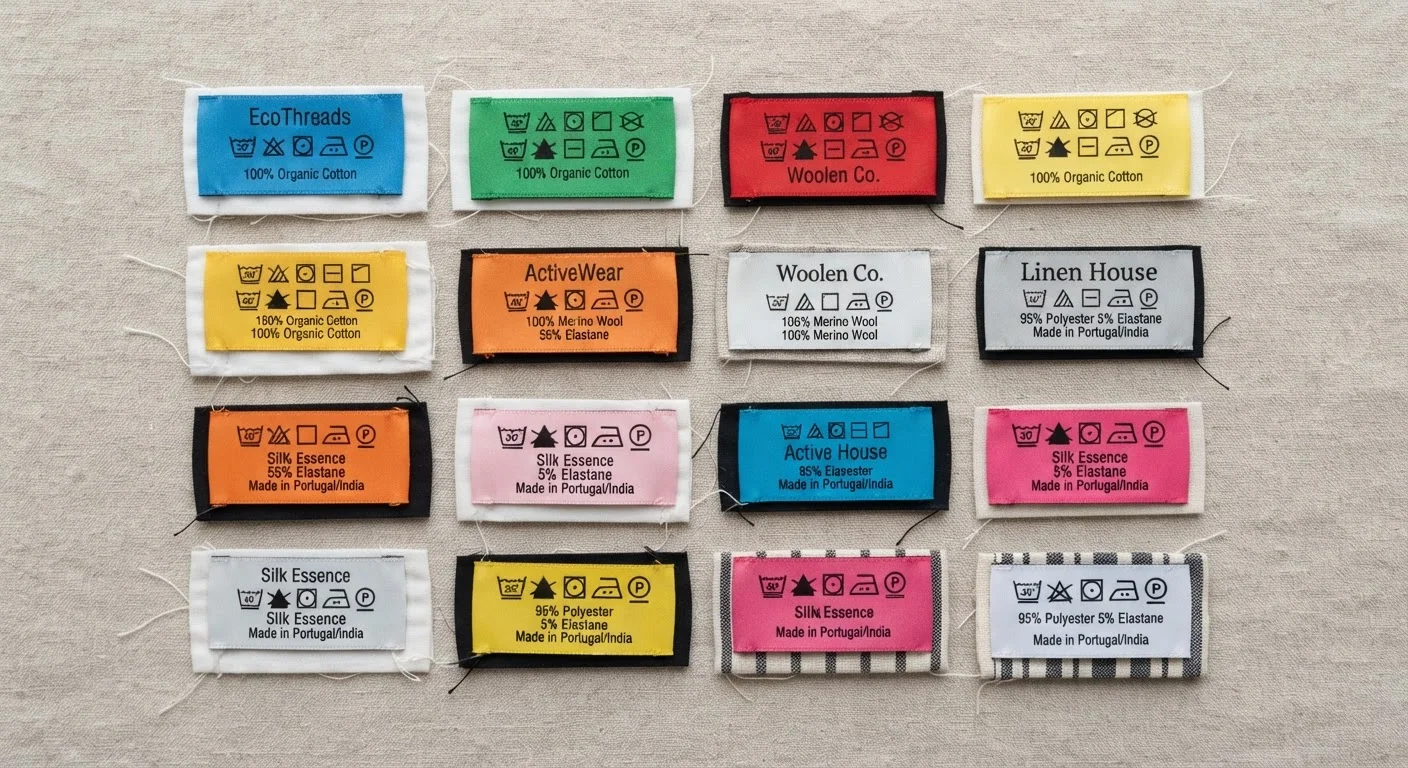
US clothing sold domestically is required by the Federal Trade Commission (FTC) to include care instructions, and manufacturers use a standardized set of symbols developed by ASTM International, harmonized with the international ISO system. Once you learn the five base symbols — tub, triangle, square, iron, and circle — you can decode virtually any label without a decoder ring.
Caring for clothes correctly also stretches your clothing budget. As part of a smart wardrobe strategy, good laundry habits complement everything from buying versatile pieces to doing a thorough closet audit so you know what you actually own. And if you want the full picture on how fabric choice affects care, natural vs. synthetic fabrics is worth a read alongside this guide.
| Governing body (US) | Federal Trade Commission (FTC) (FTC Care Labeling Rule) |
| Symbol standard | ASTM D5489 / ISO 3758 (ASTM International) |
| Number of base symbol shapes | 5 (tub, triangle, square, iron, circle) |
| Cold water temperature (1 dot) | Up to 65°F (18°C) |
| Warm water temperature (2 dots) | Up to 105°F (40°C) |
| Hot water temperature (3 dots) | Up to 120°F (49°C) |
The Five Symbol Categories, Decoded
Every care label draws from the same five icon families. Here's what each one means at a glance.
Washtub — Washing Instructions
A bucket or tub shape indicates machine or hand washing. Dots inside the tub indicate water temperature: one dot = cold (up to 65°F), two dots = warm (up to 105°F), three dots = hot (up to 120°F). A hand dipping into the tub means hand wash only. An X through the tub means do not wash at all (dry clean only).
Triangle — Bleaching
An empty triangle means any bleach is safe. Lines inside the triangle restrict you to non-chlorine (oxygen) bleach only. An X through the triangle means no bleach whatsoever — important for bright colors and delicate fibers.
Square — Drying
The square represents a dryer or drying method. A circle inside the square is a tumble dryer; dots inside the circle again indicate heat level (one dot = low, two = medium, three = high). A square with a horizontal line across the middle means dry flat. Vertical lines mean hang to dry. A curved line in the top corner means drip dry. An X through the square means do not machine dry.
Iron — Ironing and Pressing
The iron symbol uses dots for temperature just like the tub: one dot for low (synthetics), two for medium (wool, silk), three for high (cotton, linen). An X through the iron means do not iron. An X through steam lines beneath the iron means iron without steam.
Circle — Dry Cleaning
A plain circle means dry clean. Letters inside (P, F) tell the dry cleaner which solvents to use — this matters mainly to the professional, not you. An X through the circle means do not dry clean.
Care label
A tag permanently attached to a garment that provides manufacturer instructions for washing, drying, ironing, and dry cleaning. In the US, care labels are required by FTC regulation for most textile products.
Tumble dry
Drying a garment in a mechanical dryer using rotating heat. Dots inside the dryer symbol indicate the recommended heat level — fewer dots mean lower heat.
Non-chlorine bleach
Also called oxygen bleach or color-safe bleach, this is a gentler alternative to chlorine bleach. It is safe for most colors and fabrics where the care label shows a striped triangle.
Dry clean only
A care instruction indicating the garment must be professionally cleaned using chemical solvents rather than water. Using water on these items can cause shrinkage, distortion, or color loss.
Flat dry
A drying method where the garment is laid horizontally on a surface rather than hung. Used to prevent stretching in knits and loosely woven fabrics while wet.
Hand wash
A washing method using cool or lukewarm water and gentle agitation by hand, without a machine. Indicated by a hand dipping into the washtub symbol.
Common Mistakes (and How to Avoid Them)
When the Label Says "Dry Clean" vs. "Dry Clean Only"
"Dry clean" alone is often interpreted as a recommendation — meaning the manufacturer prefers it, but careful hand washing may be acceptable. "Dry clean only" is a firm instruction and should be followed precisely. When in doubt, especially with structured garments, silk, or vintage pieces, defer to a professional cleaner rather than risk permanent damage.
Even experienced laundry-doers trip over a few recurring errors. Here are the most common, with quick fixes:
- Ignoring the heat dots: High heat is the number-one killer of synthetic blends and merino wool. When in doubt, go colder — cold water cleans effectively for most everyday loads and is gentler on fibers.
- Assuming all darks are the same: Dark jeans and black rayon often have different care symbols even though they look similar in the basket. Check each tag individually.
- Skipping the dry-cleaning circle: "Dry clean" (a plain circle) is often a recommendation; "Dry clean only" (usually stated in text alongside the circle) is a firm instruction. Structured blazers and silk blouses typically fall in the latter camp.
- Missing the flat-dry symbol: Sweaters laid flat to dry lose their shape far less than those hung up while wet. The horizontal-line-in-square symbol is specifically telling you to lay the item down — it's not decorative.
Getting laundry right feeds directly into the broader goal of building a wardrobe that lasts. It's part of the same mindset covered in building a complete everyday wardrobe — treat your clothes well, and they return the favor.
~66%
Garment damage from incorrect home washing
Industry estimates suggest the majority of preventable garment damage — shrinkage, color loss, distortion — results from not following care instructions.
Cold
Best default wash temperature for most loads
Consumer testing organizations generally recommend cold water as a safe default that protects color, fiber integrity, and energy use for everyday clothing.