

Key Takeaways
Option A
Natural Fabrics
The breathable, classic choice rooted in nature.
Best for: People who prioritize breathability, skin comfort, and lower environmental impact in everyday wear.
Option B
Synthetic Fabrics
The durable, performance-driven modern alternative.
Best for: People who need wrinkle resistance, moisture-wicking performance, or longer-lasting stretch in active and casual wear.
If you run hot or live in a humid climate
Natural Fabrics
Cotton and linen allow air to circulate more freely, helping regulate body temperature during warm-weather wear.
If you want low-maintenance, wrinkle-free clothing
Synthetic Fabrics
Polyester and nylon resist wrinkles and dry quickly, making them practical for travel and busy schedules.
If you have sensitive skin or prefer natural fibers
Natural Fabrics
Fabrics like cotton and bamboo-derived fibers tend to be gentler and less likely to trap heat against the skin.
If you need activewear or athletic clothing
Synthetic Fabrics
Synthetics offer moisture-wicking performance, stretch retention, and durability that hold up through repeated workouts and washing.
If you want versatile, long-lasting wardrobe basics
Natural Fabrics
High-quality natural fiber staples — a cotton tee, a linen shirt — tend to age gracefully and pair well across many outfits.
What Makes a Fabric Natural or Synthetic?
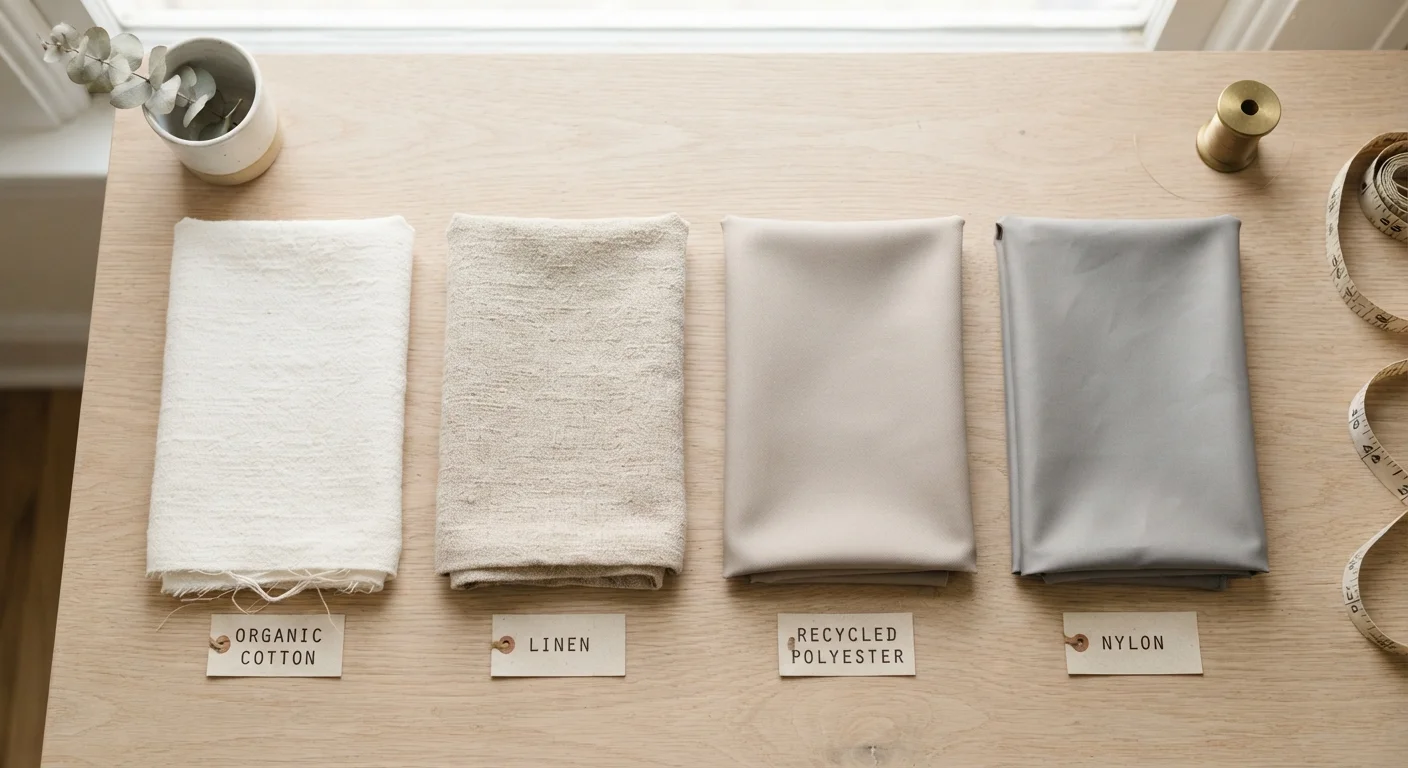
The label "natural fabric" refers to textiles made from plant or animal-derived fibers. Cotton comes from the cotton plant's seed pod, linen from flax, wool from sheep, and silk from silkworm cocoons. These fibers have been spun into cloth for thousands of years and remain staples of modern wardrobes.
Synthetic fabrics, by contrast, are manufactured from petroleum-based chemical compounds. Polyester, nylon, acrylic, and spandex (also called elastane) are the most common examples. They were developed largely in the mid-20th century to address specific functional gaps — stretchability, quick drying, and resistance to wear. Many garments today use a blend of both categories, combining the softness of cotton with the durability of polyester, for example.
Understanding where your clothes come from is a useful first step toward smarter shopping and care. For a broader overview of how fabric fits into building your wardrobe, see the Everyday Fashion guide which covers fit, fabric, and outfit-building in one place.
| Criterion | Natural Fabrics | Synthetic Fabrics |
|---|---|---|
| Common examples | Cotton, linen, wool, silk | Polyester, nylon, acrylic, spandex |
| Breathability | Generally high | Variable; often lower |
| Moisture wicking | Absorbs moisture | Wicks moisture away from skin |
| Wrinkle resistance | Low to moderate | High |
| Durability | Moderate (care-dependent) | High in most conditions |
| Washing ease | Varies; some need gentle care | Generally machine-washable |
| Heat sensitivity | Can shrink in high heat | Can melt or warp in high heat |
| Feel against skin | Often soft and natural | Can feel smooth or plasticky |
Comfort and Wearability: How Each Feels Day to Day
Comfort is deeply personal, but fabric type plays a real role in how a garment feels across different situations.
Natural fabrics are generally considered more breathable. Cotton's open fiber structure allows air to move through, and linen — despite its initial stiffness — becomes softer with wear and washing while staying cool in heat. Wool is uniquely versatile: it insulates in cold and can wick moisture in moderate temperatures. Silk feels luxurious but requires careful handling.
Synthetic fabrics excel in performance contexts. Nylon and polyester are engineered to move moisture away from the skin, making them popular in sportswear and outdoor gear. Spandex blended into almost any fabric adds stretch and shape retention, which is why it's found in everything from jeans to swimwear. However, fully synthetic fabrics can trap heat and cause discomfort in hot, humid conditions — a common complaint with 100% polyester shirts in summer.
~60%
Share of global fiber production that is synthetic
According to Textile Exchange's Preferred Fiber & Materials Market Report, synthetic fibers — led by polyester — account for roughly 60% of total global fiber production.
~24%
Global fiber share held by cotton
Cotton remains the most widely used natural fiber worldwide, representing approximately 24% of global fiber production, per Textile Exchange data.
Blended fabrics often hit a middle ground: a poly-cotton t-shirt may offer more durability than pure cotton while remaining softer and more breathable than pure polyester.
Care and Longevity: Reading the Rules
How you wash, dry, and store a garment depends heavily on its fiber content — and getting it wrong is one of the most common ways clothes get damaged prematurely.
Natural fabrics often require more attention. Cotton can shrink in high heat, linen wrinkles easily, and wool can felt (permanently mat together) if agitated in warm water. Silk is especially delicate — hand washing or dry cleaning is typically recommended. That said, natural fibers tend to respond well to gentle care and can last for years when treated correctly.
Synthetic fabrics are generally more forgiving in the wash. Polyester resists shrinking and holds its shape, and most synthetics dry quickly. One caveat: high heat can damage or melt synthetic fibers, so tumble drying on low or air-drying is usually recommended. Repeated washing of synthetics can also cause pilling over time.
Whatever the fabric, the care label is your clearest guide. Our article on reading care labels breaks down those small symbols in plain language so you can stop second-guessing the tag. Once you understand fabric care basics, it's worth building on those habits — our guide to caring for clothes so they last longer covers washing, storage, and repairs that genuinely extend garment life.
A Note on Fabric Blends and Labels
When a garment is labeled with a percentage — such as "60% cotton, 40% polyester" — it reflects the proportion of each fiber by weight. Care instructions must be followed for the most delicate fiber in the blend. For example, a cotton-silk blend should generally be treated as if it were fully silk. Always check the full care label rather than assuming based on the dominant fiber alone.
Making Smarter Fabric Choices for Your Wardrobe
Neither natural nor synthetic fabrics are universally better — each shines in specific contexts. A few practical principles can help guide your choices:
- Match fabric to function. Activewear and travel clothing benefit from synthetics' durability and moisture management. For daily wear in warmer climates, breathable natural fibers are often more comfortable.
- Consider care capacity. If you want to machine-wash everything on a normal cycle, look for cotton or polyester-cotton blends. If you're willing to hand wash or dry-clean, natural fabrics like linen and wool reward that extra effort.
- Blends are worth a closer look. Many well-made everyday staples — dress shirts, chinos, stretchy jeans — use blends to optimize comfort and durability simultaneously.
- Think about longevity. High-quality natural fiber garments can age gracefully; quality synthetics often hold color and shape well over time. In both cases, quality of construction matters as much as fiber type.
The natural-vs-synthetic question actually mirrors debates in other categories too — if you're curious, it's a similar conversation to what happens with natural vs. synthetic beauty ingredients, where the answer usually comes down to context and evidence rather than category labels.